
The Crunchy Delight: Meva Paag
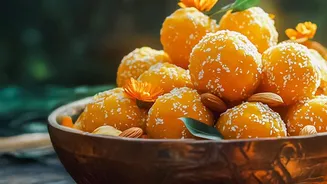
While many are familiar with Dhaniya Panjiri, its close cousin Meva Paag remains a hidden gem in many parts of India. Hailing from the Braj region of Uttar Pradesh, this is a brittle-like sweet made from makhana (fox nuts), melon seeds, and a mix of other
dry fruits, all bound together with hardened sugar syrup (chashni). Unlike the loose powder of panjiri, paag is set in a tray and cut into neat squares or diamonds. It offers a satisfying crunch and a concentrated burst of nutty flavour, making it a perfect high-energy offering for those fasting. The process involves carefully roasting the nuts and seeds, preparing the sugar syrup to the correct one-string consistency, and then quickly mixing everything before it sets. It’s a testament to the simple yet sophisticated art of Indian sweet-making that is deeply rooted in the traditions of Mathura and Vrindavan.
Southern Savouries: Thenkuzhal and Vella Seedai
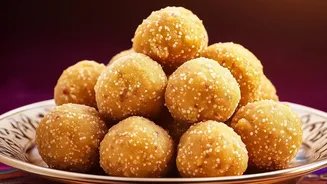
In South India, Janmashtami, or Gokulashtami, features a beautiful array of both sweet and savoury offerings. Two stars of the celebration are Thenkuzhal and Seedai. Thenkuzhal is a crispy, spiral-shaped snack made from rice flour and urad dal flour, seasoned with cumin or sesame seeds. It represents the playful, intricate nature of Krishna. Seedai, on the other hand, comes in two forms: Uppu (salt) and Vella (sweet). These are small, fried balls made from rice flour. The savoury version is spiced, while the sweet one incorporates jaggery and coconut. Their round shape is often seen as symbolic of the butterballs Krishna famously stole. Preparing these requires skill, especially in getting the dough consistency right to prevent the seedai from bursting in oil—a kitchen challenge many mothers and grandmothers relish as part of the festivities.
A Monsoon Special: Taler Bora
In Bengal and other parts of Eastern India, Janmashtami coincides with the monsoon season, which brings with it the ripe Asian Palmyra Palm fruit, or Taal. Taler Bora are sweet, deep-fried fritters made from the fragrant, golden pulp of this fruit, mixed with rice flour, semolina, and grated coconut. The pulp has a unique, slightly bitter-sweet taste and a heady aroma that is unlike anything else. These soft, spongy pakoras are a mandatory bhog for Gopal, and for many Bengalis, the smell of Taler Bora frying is intrinsically linked to the celebration of Krishna’s birth. The process of extracting the pulp is laborious but considered an act of devotion. Interestingly, the day after Janmashtami is often called Tal Nabami in Bengal, cementing the fruit's importance to the festival.
The Fasting Feast: Singhare ki Poori and Sabzi
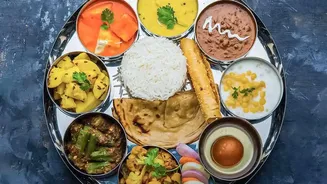
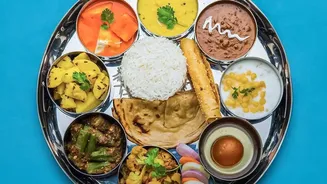
For those observing a strict fast (vrat) and avoiding grains, the options can seem limited. But the tradition of using alternative flours opens up a world of culinary possibilities. Singhare ka atta, or water chestnut flour, is a primary ingredient for Janmashtami fasting feasts. Instead of the usual kuttu, try making soft Singhare ki Poori. These gluten-free pooris are surprisingly light and have a slightly sweet, earthy flavour. They are typically paired with a simple, sattvic potato curry (vrat ke aloo) made without onions, garlic, or turmeric. The curry is seasoned only with rock salt (sendha namak), tomatoes, and green chillies, making it a perfect accompaniment. This complete meal is not just an offering but also a nourishing and comforting way to break the day-long fast, providing both energy and flavour.