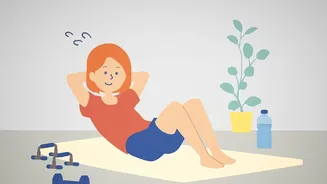








Embrace 'Exercise Snacking'
The idea that a workout only 'counts' if it's an hour long is a myth that holds many people back. Recent research shows that short bursts of activity throughout the day can be just as, if not more, beneficial. This approach, often called 'exercise snacking',
involves breaking up your movement into manageable, 10- or 15-minute chunks. Think a brisk walk on your lunch break, a few sets of squats while waiting for your coffee to brew, or doing push-ups during TV commercials. These mini-workouts add up, boost your metabolism, improve your mood, and are much easier to fit into a day that refuses to follow a plan.
Focus on Weekly, Not Daily, Goals
A missed workout on a Tuesday can feel like a failure, often leading to giving up for the rest of the week. Instead of a daily mandate, shift your focus to a weekly goal. Health guidelines often recommend 150 minutes of moderate-intensity activity per week. How you get there is up to you. Maybe it's two 30-minute sessions, five 20-minute walks, and some active chores on the weekend. This flexible approach gives you 7 days to hit your target, allowing for busy periods and low-energy days without derailing your progress. Tracking your weekly total in a journal or app can build momentum and provide a sense of accomplishment.
Create a 'Movement Menu'
Some days you have energy to burn; other days, just getting off the sofa feels like a win. A 'movement menu' gives you options to match your energy, time, and location. Your menu could include a 45-minute gym routine for high-energy days, a 20-minute bodyweight circuit for when you're at home, a 10-minute yoga stretch for low-energy mornings, and a simple walk-and-talk phone call for when you need to multitask. Having a list of pre-planned options removes the mental load of deciding what to do, making it easier to choose 'something' instead of 'nothing'.
Prioritise Consistency Over Intensity
Many people start a fitness journey with heroic, high-intensity workouts that are difficult to sustain. This often leads to burnout, injury, or a feeling of failure. Research on habit formation shows that consistency is a far better predictor of long-term success than intensity. Your body adapts and improves through repetition. It's more effective to engage in moderate activity a few times a week than to do one punishing workout and then be too sore or unmotivated to move for six days. Remember that any movement is better than no movement. The goal is to build a habit that lasts, not to burn out in a week.
Integrate Movement into Your Life
You don't need a gym to be active. The key is to find ways to weave movement into things you already do. Take the stairs instead of the elevator. Park farther away from the entrance at the grocery store. Do calf raises while brushing your teeth. Get off the bus one stop early and walk the rest of the way. These small choices accumulate and contribute significantly to your overall activity level without requiring you to block out dedicated 'workout' time. It's about shifting your perspective from seeing exercise as a separate event to seeing it as an integrated part of your daily life.
Prepare for Spontaneous Success
One of the biggest barriers to exercise is simple inconvenience. You can overcome this by preparing ahead of time. Keep a pair of walking shoes and a spare set of workout clothes in your car or at your desk. If you find yourself with an unexpected 20-minute gap in your day, you're ready to seize the opportunity for a quick walk or stretch. By removing the friction between the impulse to move and the ability to do so, you make it significantly easier to follow through and stay consistent, even when your schedule is anything but.