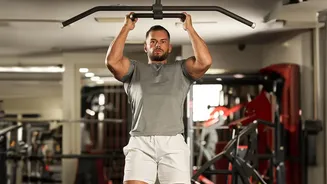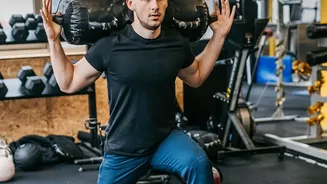






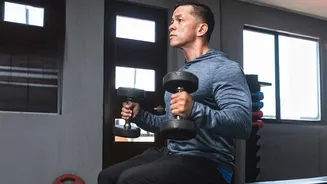
Not long ago, the weight room was seen as a place for bodybuilders and elite athletes. Now, from your grandmother to the teenager next door, more people are picking up weights. This isn't a fad; it's a shift driven by powerful scientific evidence.
From Niche Hobby to Health Essential
The
image of resistance training has undergone a major transformation. For decades, it was associated with building massive muscles, a pursuit reserved for a specific few. But a wealth of modern research has shattered this narrow view, repositioning strength training as a fundamental pillar of long-term health for everyone, regardless of age, gender, or fitness level. Public health bodies and medical professionals are increasingly recommending it, not for aesthetics, but for its profound benefits on overall well-being. This shift is powered by a deeper understanding of how our muscles work, not just to move us, but to keep our entire system functioning optimally.
The Science of a Stronger Life
So, what does the science say? Researchers now understand that skeletal muscle is a vital metabolic organ. When you engage in resistance training, you're not just building bigger biceps; you're improving your body's ability to manage blood sugar, which can lower the risk of type 2 diabetes. Studies have shown that regular strength training is linked to a longer life, with some research indicating a significant reduction in the risk of death from all causes. The benefits extend to heart health by improving blood pressure and cholesterol levels, and even to brain health, with evidence suggesting it can slow cognitive decline. For many, the most compelling finding is that the focus has shifted from performance to consistency; you don't need to train like an elite athlete to see significant results.
Strength for Every Generation
One of the most significant changes in perception is the embrace of resistance training for women and older adults. For women, the myth that lifting weights leads to 'bulking up' is finally being replaced by an understanding of its unique benefits. Strength training is one of the most effective ways to build and maintain bone density, which is crucial for reducing the risk of osteoporosis, a condition that disproportionately affects women as they age. For older adults, building and maintaining muscle mass—a process that combats age-related muscle loss, or sarcopenia—is key to preserving independence, improving balance, and reducing the risk of falls and fractures. Research shows it's never too late to start, with studies demonstrating that even people in their 80s can build muscle.
A Message That's Hitting Home
This new, science-backed understanding is spreading. Fitness influencers on social media are moving away from purely aesthetic goals to focus on strength and capability. Gyms and fitness centres are creating more inclusive and welcoming environments. Furthermore, updated guidelines from major health organisations, like the American College of Sports Medicine, have simplified the advice, emphasising consistency over complexity. They now recognise that meaningful results can be achieved at home with bodyweight exercises or resistance bands, removing the barrier of needing a gym membership. In India, consensus guidelines also recommend incorporating muscle-strengthening exercises into a daily activity plan for adults, highlighting its role in preventing chronic diseases like diabetes and heart disease.