




The Sun’s 11-Year Rhythm
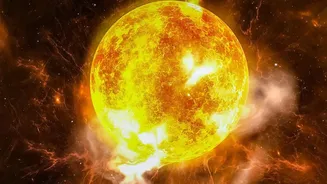
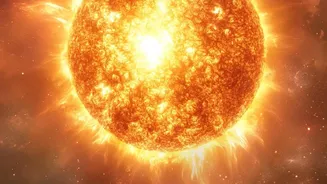
The sun operates on an approximately 11-year cycle, swinging between periods of quiet and storm. This rhythm is driven by the sun's magnetic field, which flips its north and south poles roughly every 11 years. The quietest phase is called the solar minimum,
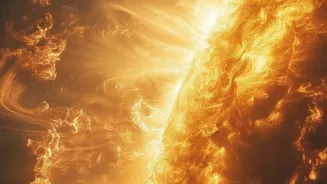
marked by very few sunspots—dark, cool areas of intense magnetic activity on the solar surface. As the cycle progresses, solar activity ramps up, leading to the solar maximum. During this peak, the sun's surface is crowded with sunspots, and it unleashes a higher frequency of powerful eruptions, such as solar flares and coronal mass ejections (CMEs). These events send massive bursts of energy and charged particles out into space. We are currently in Solar Cycle 25, which began in late 2019 and has proven to be more active than originally forecast, with its maximum activity phase occurring now and expected to continue into 2025.
Painting the Skies with Solar Wind
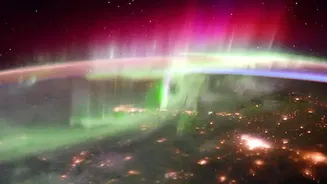
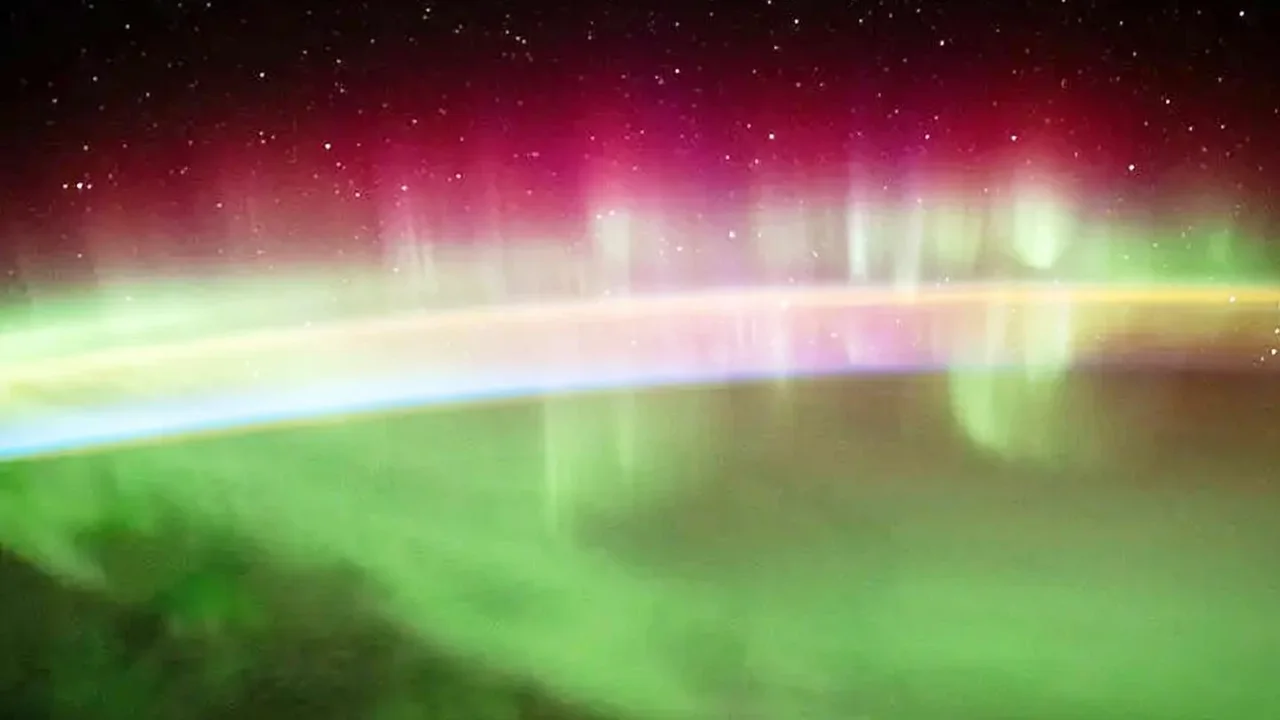
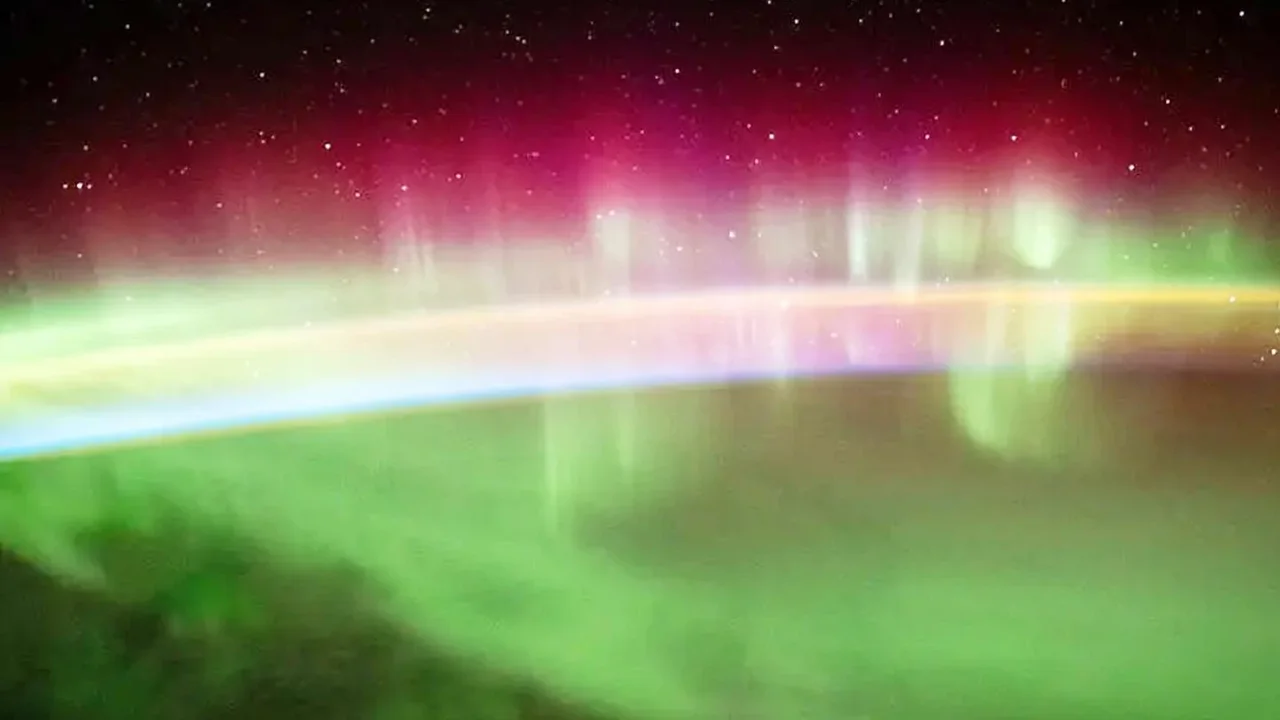
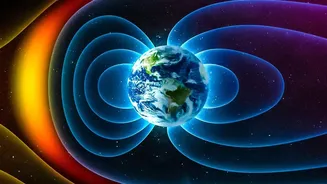
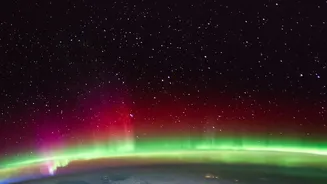
One of the most beautiful consequences of a solar maximum is the increased frequency and intensity of auroras—the Northern and Southern Lights. These vibrant displays are created when charged particles from the sun, carried on the solar wind, slam into Earth's magnetic field. Our planet's magnetosphere funnels these energetic particles toward the poles, where they collide with atoms of oxygen and nitrogen in the upper atmosphere. These collisions excite the atoms, causing them to release energy in the form of light, creating the mesmerising, dancing curtains of green, red, purple, and blue in the night sky. During a solar maximum, the sheer volume and energy of these particles are much greater, which can cause auroras to be not only more brilliant but also visible at much lower latitudes than usual, far from the polar regions where they are typically confined.
A Threat to Our Digital World
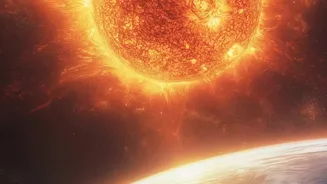
While visually stunning, the same solar energy that creates auroras poses a significant threat to our technology-dependent society. When a powerful coronal mass ejection (CME) strikes Earth, it triggers a geomagnetic storm. These storms can have several disruptive effects. Satellites in low-Earth orbit are particularly vulnerable; increased atmospheric drag can cause them to lose altitude, while high-energy particles can damage their sensitive electronics, affecting everything from television broadcasts to weather forecasting. GPS signals can be disrupted as they travel through a super-charged ionosphere, leading to inaccuracies or outages for navigation systems in cars, planes, and agriculture. On the ground, geomagnetic storms can induce powerful electrical currents in long conductors like power lines, potentially overloading transformers and causing widespread, long-lasting blackouts, as happened in Quebec in 1989.
Bracing for the Storm
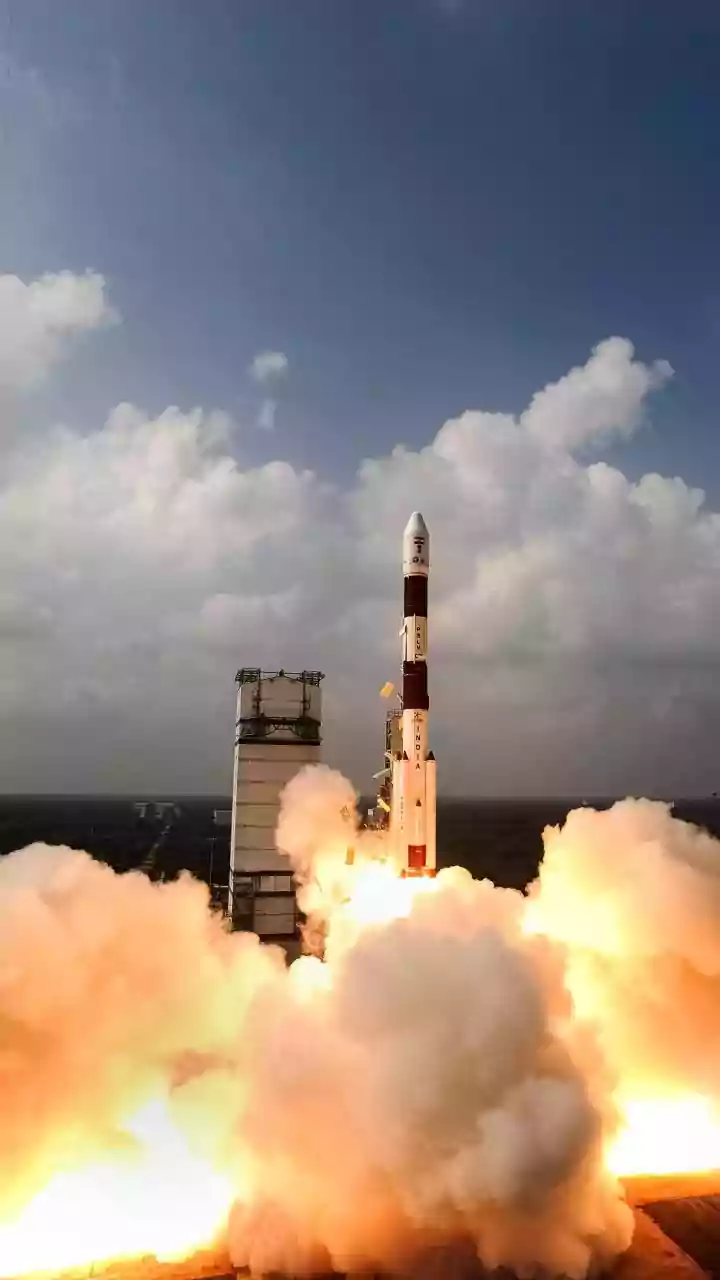
We cannot stop a solar storm, but we can prepare for one. Scientists at organisations like NASA and the National Oceanic and Atmospheric Administration (NOAA) constantly monitor the sun, tracking sunspots and CMEs to provide advance warnings of potential space weather events. This forecasting gives satellite operators time to put their spacecraft into a protective safe mode and allows power grid managers to take preventative measures to protect their infrastructure from damaging electrical surges. For the average person, the impacts are usually indirect but can be significant, ranging from a temporary loss of GPS on a smartphone to wider disruptions in communication and power. While modern infrastructure has more safeguards than in the past, the current solar maximum serves as a reminder of our planet’s connection to its star and our civilisation’s vulnerability to its powerful outbursts. New research even suggests that the most extreme storms could be more powerful than previously thought, highlighting the need for continued vigilance.