


Sailing on Sunlight
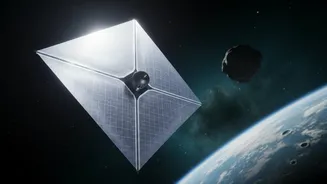
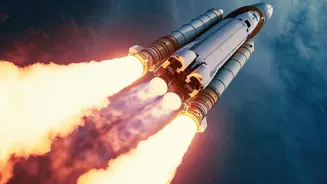
At its core, space travel has always followed one principle: for every action, there's an equal and opposite reaction. Rockets throw mass (hot gas) out the back to push themselves forward. A solar sail does something similar, but its propellant is sunlight.
Light is made of particles called photons. While photons have no mass, they have momentum. When a photon hits a reflective surface, like a giant, ultra-thin mirror in space, it transfers a tiny bit of that momentum, giving the surface a gentle push. In the frictionless vacuum of space, this constant, gentle push adds up. Over weeks and months, a spacecraft can build up incredible speeds without using a single drop of fuel. This force is known as photon pressure or radiation pressure.
The Breakthrough for Small Probes
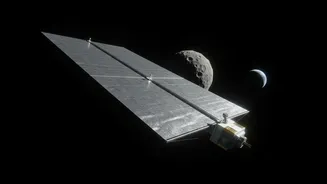
The concept isn't new; scientists have theorized about it for over a century. The real breakthrough is the miniaturization of technology and the development of new, ultra-lightweight materials. Missions like NASA's Near-Earth Asteroid (NEA) Scout, which launched aboard the Artemis I mission, were designed around this very idea. The plan was for a shoebox-sized CubeSat, weighing less than 14 kilograms, to unfurl a sail of about 86 square meters—roughly the size of a racquetball court. This combination of a tiny spacecraft with a large sail is what makes it so effective. Traditional engines and their fuel tanks are simply too big and heavy for such a small probe. Solar sails provide an elegant, high-performance propulsion system for these low-mass spacecraft.
The Perfect Tool for Asteroid Hopping
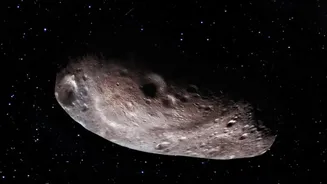
So why is this technology particularly good for studying asteroids? Asteroids are often small, numerous, and in varied orbits. Sending a large, fuel-heavy mission to each one is prohibitively expensive. Lightweight probes powered by solar sails offer a cost-effective alternative. Because they don't rely on finite fuel reserves, these probes can have much longer and more flexible missions. By simply tilting the sail to change the angle of the sunlight, a spacecraft can alter its trajectory, spiraling inward toward the Sun or outward into the solar system. This maneuverability is ideal for a mission that might need to visit multiple asteroids or make a slow, careful approach for detailed study. For example, NEA Scout was planned to perform one of the slowest-ever asteroid flybys, allowing hours for invaluable scientific observation.
Paving the Way for Future Fleets
While the NEA Scout mission unfortunately lost contact after its deployment, it and other projects like The Planetary Society's LightSail have proven the concept and laid crucial groundwork. NASA has also been developing technologies for even larger sails, like those planned for the Solar Cruiser mission. Though Solar Cruiser was ultimately canceled, the research into its advanced composite booms and sail materials continues to inform the field. The goal is to create scalable technology that can be used for a wide range of missions, from small asteroid scouts to large solar observatories. Researchers are now envisioning swarms of even smaller, 10-gram microprobes that could explore objects like the asteroid Bennu faster and more cheaply than conventional spacecraft. These new developments in so-called 'diffractive' solar sails, which use embedded gratings to use sunlight more efficiently, are also pushing the technology forward.