

A Chirp from the Cosmos
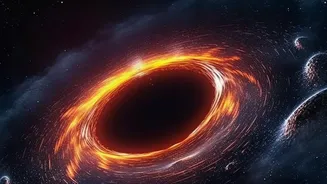
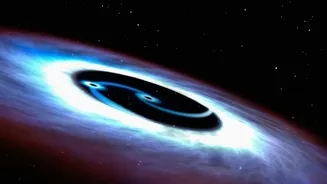
Imagine the universe as a calm pond. Most of the time, it’s placid. But when two massive objects, like black holes, spiral into each other and collide, they create a disturbance. This event sends out ripples in the very fabric of space and time, known
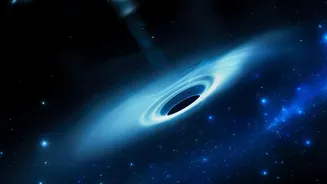
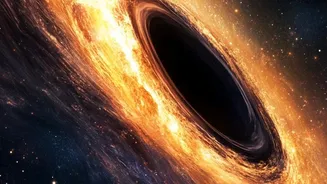
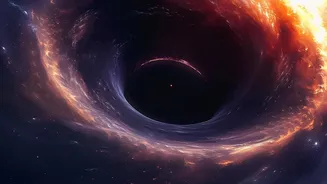
as gravitational waves. First predicted by Albert Einstein a century ago, these waves were only directly detected for the first time in 2015. Now, a collaboration of detectors—the Laser Interferometer Gravitational-Wave Observatory (LIGO) in the United States, Virgo in Italy, and KAGRA in Japan—has captured the faint 'chirp' of a truly special event: the collision of two intermediate-mass black holes (IMBHs). This isn't just another detection; it's the confirmation of a class of objects that scientists have long theorized but struggled to find.
The 'Missing Link' Found
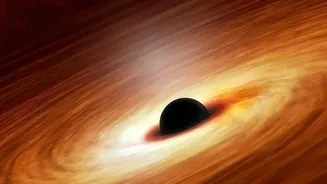
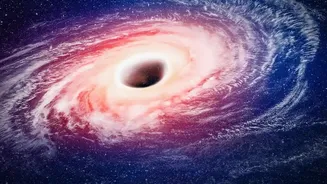
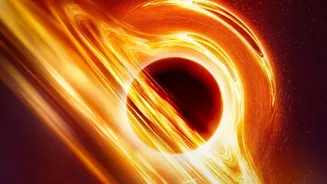
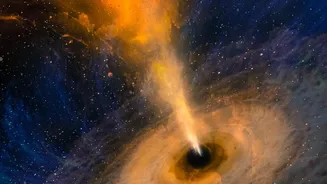
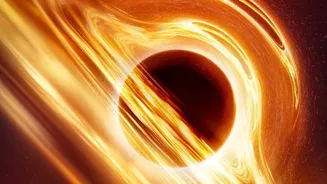
For decades, astronomers have had strong evidence for two main types of black holes. First are stellar-mass black holes, which are typically 5 to 50 times the mass of our sun and form when a single massive star collapses. At the other extreme are the supermassive black holes that sit at the center of most galaxies, including our own Milky Way, weighing millions or even billions of solar masses. But what about the ones in between? The existence of intermediate-mass black holes, with masses ranging from 100 to 100,000 times that of the sun, has been a major puzzle. They are considered a crucial 'missing link' because they could be the seeds from which supermassive black holes grow. Finding them is key to understanding the entire lifecycle of galaxies. This new detection finally provides concrete proof that these mid-sized monsters are not just theoretical.
Hierarchical Mergers and Cosmic Evolution
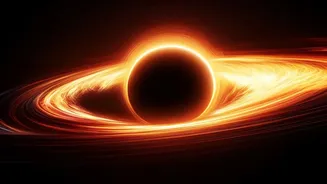
So how do these IMBHs form? They are too big to be created from a single star's death. The leading theory is a process called hierarchical merging. This is a cosmic demolition derby where black holes in dense star clusters repeatedly collide and merge, growing larger with each smash-up. The latest event appears to confirm this model. The observed collision involved two black holes that were themselves likely the products of previous mergers. One of the colliding objects fell squarely into the 'pair-instability supernova mass gap'—a mass range where black holes are not expected to form directly from stars, suggesting it must have been built from smaller black holes. By studying these events, scientists can peel back layers of cosmic history to see how the universe's largest structures were assembled over billions of years.
What This Means for Astronomy
This discovery is more than just ticking a box on a cosmic scavenger hunt. It heralds a new era of gravitational-wave astronomy. With detectors becoming more sensitive, scientists are moving from spotting individual events to mapping entire populations of black holes. Each detection provides new data points that refine our models of the universe. This particular event, with its high mass and the rapid spin of the resulting black hole, pushes our current technology and theories to their limits. It provides a new laboratory for testing Einstein's theory of general relativity in the most extreme conditions imaginable. Furthermore, it offers a glimpse into the 'dark ages' of the universe, a period before stars ignited that is opaque to traditional telescopes but transparent to gravitational waves.