






More Than Just Good Vibrations
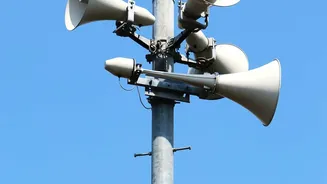
Imagine a nightclub where the music is so specifically annoying to you that you have to leave. That’s the basic premise behind acoustic pest control. This isn't about playing loud music; it's about emitting highly specific sound frequencies to disrupt
the life-sustaining behaviors of insects and other pests. The technology falls into two main categories: sonic, which is audible to humans, and ultrasonic, which exists at frequencies above 20 kHz, beyond our hearing range. The goal is to create an acoustically hostile environment. Instead of killing pests with chemicals, soundwave technology aims to repel them, interfere with their communication, or disrupt their feeding and mating habits. It's a non-toxic, eco-friendly approach that leaves no residue on the plants or in the soil, making it an attractive tool for organic growers.
The Science of Sound vs. Pests
The effectiveness of sound-based pest management depends heavily on the target species and the type of sound used. Some systems, often called 'biosonic', work by mimicking the sounds of natural predators. For example, playing the ultrasonic calls of a bat can trigger an innate flight response in moths, causing them to avoid a specific area. A 2022 study found that broadcasting synthetic ultrasounds that mimicked bat calls significantly suppressed the intrusion of pest moths into crop fields, reducing egg-laying and plant damage. Other approaches use a constant or varied ultrasonic frequency to attack the auditory and nervous systems of pests, creating a stressful environment they want to flee. The science is more advanced for some species than others. While many commercially available ultrasonic devices for home use have shown limited effectiveness against common insects like cockroaches and mosquitoes, more sophisticated, species-targeted systems developed for agriculture show greater promise.
An Ideal Match for Urban Farming
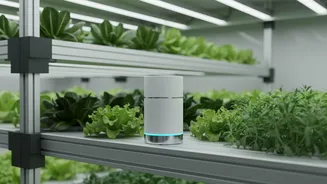
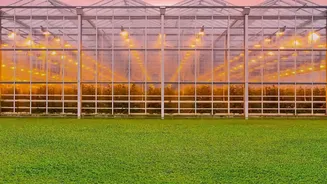
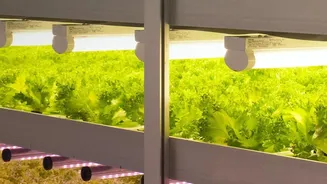
While you won't see giant speakers blasting across a thousand-acre cornfield, acoustic technology is uniquely suited to the controlled environments of urban farms. Rooftop gardens, vertical farms, and indoor hydroponic systems are confined spaces, making it easier to saturate the area with the required frequencies. Sound waves have a limited range and weaken over distance, a challenge in large open fields but an advantage in smaller, enclosed settings. Furthermore, the high-density nature of cities makes chemical drift a major concern. An organic farm on a residential rooftop can't risk pesticides wafting into a neighboring apartment window. Sound offers a clean, contained solution. This technology allows urban farmers to protect their high-value crops without introducing toxins into the tightly packed human environment around them, fitting perfectly with the ethos of sustainable, local food production.
The Future Is... Listening?
Acoustic pest control is still an emerging field, not a silver bullet. Its success varies based on environmental factors like humidity and background noise, and the initial equipment cost can be high. However, the technology is rapidly evolving. Researchers are developing advanced systems that use AI and machine learning to distinguish the sounds of specific pest insects from background noise, allowing for automated, precise monitoring. Some scientists are even exploring 'sonogenetics,' a cutting-edge field that involves genetically modifying pests to be hyper-sensitive to specific sound frequencies, offering a highly targeted and non-lethal control method. While not yet mainstream, these innovations point toward a future where farmers listen for the faint sounds of pests hidden in grain or soil and deploy targeted soundwaves to manage them, making agriculture smarter, safer, and more sustainable.