






The Ultimate Supply Chain Problem
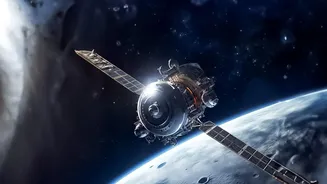
For any long-duration space mission, the tyranny of the supply chain is absolute. Every kilogram of water, food, or oxygen launched into space costs an astronomical sum. The International Space Station (ISS), which orbits just 420 kilometers above Earth,
relies on a steady stream of cargo missions to replenish its supplies. This model, however, is not sustainable for missions to the Moon—roughly 1,000 times farther away—or an eventual journey to Mars. A trip to the Moon is a multi-day journey, not a few hours, making a quick return in an emergency impossible. To establish a permanent lunar presence or send humans to another planet, astronauts cannot depend on a constant lifeline from Earth. They need to become self-sufficient, and that starts with recycling the most essential element: the air they breathe.
Breathing New Life into a Closed System
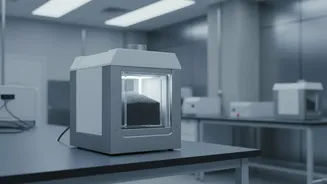
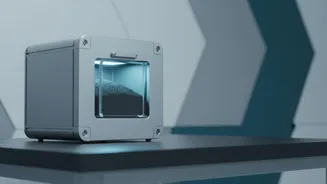
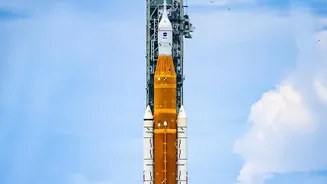
This is where NASA’s next-generation Environmental Control and Life Support System (ECLSS) comes in. For the Orion spacecraft, the heart of the Artemis missions, engineers have developed a regenerative system designed to “close the loop” on life support. The key innovation lies in how it handles the carbon dioxide (CO2) astronauts exhale. Previous systems, like those on the Space Shuttle, used single-use chemical canisters that, once saturated, became dead weight. For perspective, those disposable chemicals took up the volume of nearly 143 basketballs. The new system for Orion is a game-changer. It uses a technology called an amine swing bed, a reusable filter that captures CO2 and humidity from the cabin air. Once a filter is full, it is exposed to the vacuum of space, which vents the captured CO2 and water overboard, effectively cleaning—or regenerating—the filter so it can be used again.
A Leap Beyond the Space Station
While the ISS has sophisticated life support, its systems were designed for a different purpose and with the constant option of resupply and maintenance. The ECLSS on the ISS is a complex web of systems that can recover about 90% of water from sources like urine and humidity. The Artemis systems, while building on lessons learned from the ISS, are designed to be simpler, more reliable, and more autonomous for deep space missions where crewed maintenance is difficult and resupply is not an option. The focus is on robust, regenerative technologies that save precious mass and volume. This leap in technology is crucial for the Lunar Gateway, the planned orbital outpost around the Moon that will serve as a staging point for surface missions. By leveraging Orion’s advanced life support, the initial Gateway modules can be less complex, accelerating the timeline for a sustained human presence.
The Foundation for Deep Space Exploration
Reducing reliance on supply ships does more than just save money; it fundamentally changes what is possible in space exploration. A truly closed-loop system, which can recycle nearly 100% of air and water and even process waste into useful resources, is the holy grail for enabling multi-year missions to Mars. The regenerative CO2 scrubbers on Orion are a major step in this direction. The knowledge gained from operating these systems during Artemis missions will directly inform the design of habitats for the lunar surface and long-duration transit vehicles. Technologies being tested, such as converting waste into useful gases or even extracting oxygen from the Martian atmosphere, all stem from this core principle of living off the land, or 'in-situ resource utilization.' These innovations make missions safer, more resilient, and ultimately more ambitious.