



The Allure of the 'Everything' Menu
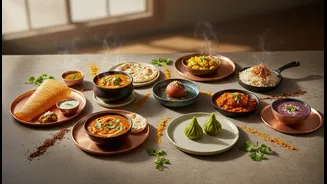
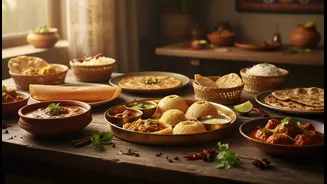
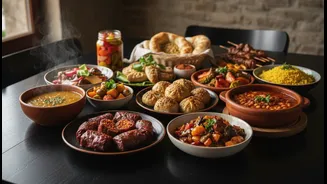
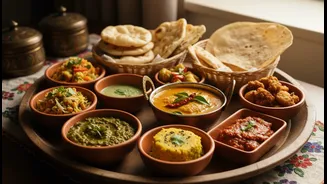
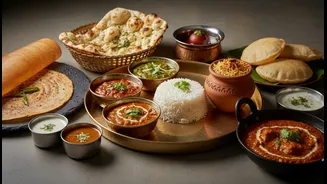
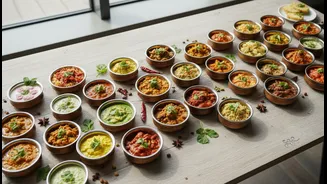
Walk into many Indian restaurants, especially outside of India, and you’re likely to be handed a menu that reads like a novel. It promises the breadth of a subcontinent: tandoori from the north, dosas from the south, maybe a Goan fish curry for good measure.
This is the commercial appeal of the “Pan-Indian” concept. It’s a marketing term more than a culinary one, assuring diners that no matter their preference, there’s a familiar touchstone available. For restaurateurs, it seems like a safe bet—a way to cater to the widest possible audience by offering the cuisine’s greatest hits. The menu becomes a buffet of choices, from Butter Chicken to Masala Dosa, aiming to be all things to all people. But in this effort to please everyone, the kitchen can lose its way, sacrificing depth for breadth and creating a landscape of dishes that are technically Indian but culturally anonymous.
The Pitfall of the Generic Curry
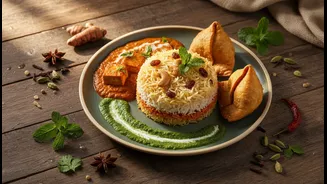
The greatest casualty of the Pan-Indian approach is specificity. A dish like Champaran Mutton from Bihar, traditionally slow-cooked in a sealed clay pot until the meat renders in its own fat, tells a story of place and technique. A Meen Pollichathu from Kerala, with fish steamed in a banana leaf, carries the smoky char of the flame and the fragrance of its coastal home. However, on a sprawling Pan-Indian menu, these nuanced preparations are often simplified. A dozen different regional recipes might be reduced to a single, all-purpose 'makhani' or 'korma' base sauce, with the chosen protein simply swapped in. This 'build-your-own-curry' model is efficient but erases the soul of the dish. The food becomes an approximation, a familiar flavour profile that’s pleasing but hollow. It’s the difference between hearing a story told in its native tongue and reading a brief, translated summary.
Celebrating a Mosaic of Flavours
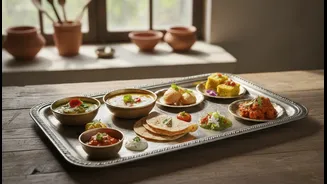
The antidote to this culinary confusion is not to limit choice, but to celebrate it with honesty and pride. A new generation of chefs is pushing back against the idea that Indian food needs to be simplified for a global audience. Restaurants like New York's Dhamaka or Kuala Lumpur's JHOL have earned acclaim by diving deep into provincial and regional cooking, presenting dishes that are unapologetically authentic. Their menus might still be Pan-Indian in scope, but they function like a curated gallery, where each piece is distinct. You might find a fiery Goan vindaloo, a delicate Bengali mustard fish, and a hearty Rajasthani dal on the same menu, but each is prepared with respect for its origin. Chefs are traveling to home kitchens, studying traditional methods, and focusing on sourcing specific regional ingredients to ensure that the story of the dish remains intact. This approach demonstrates that showcasing diversity doesn't require dilution.
A Dish Is More Than a Recipe
Ultimately, what we crave from food is not just sustenance, but connection. Authenticity in food is a form of memory, an emotion tied to a specific place, community, and history. A dish isn't just a list of ingredients; it’s the story of why those ingredients were used, the cultural rituals surrounding its preparation, and the generations who have kept it alive. When a restaurant takes the time to explain that a dish comes from a particular village or is cooked using a time-honoured technique, it enriches the entire experience. It transforms the act of eating into an act of discovery. Diners today are more curious than ever; they want to know the story behind their food. Preserving that narrative is not just about culinary tradition; it’s about respecting the culture from which the food came. Fusion, when done thoughtfully, can build on this, but fusion that erases identity often leads to confusion.