




An August Rain Deficit
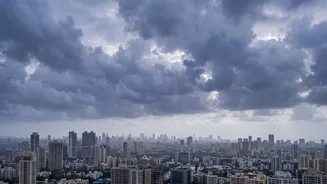
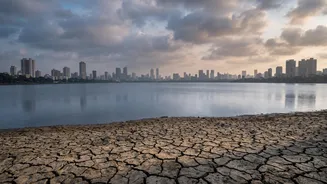
There's no doubt that August 2026 has been unusually dry for Mumbai. Data from the India Meteorological Department (IMD) confirms the city has experienced a significant shortfall. According to one report, rainfall from August 1 to 25 was just 302.3 mm,
a stark contrast to the 1054.2 mm received during the same period in 2025. Another report noted that by mid-August, the city had only recorded 191 mm against a monthly average of 560.8 mm. While the season's total rainfall since June was tracking closer to average thanks to a wet July, this prolonged dry spell in August is noticeable and has rightly put citizens on edge. However, despite the low rainfall, the city's water supply lakes remain in a healthy position, with total storage at 95.84% as of August 27, 2026, which is comparable to levels in 2025 and 2024.
Weather Is Not Climate
This is the most crucial point to understand. The distinction is a matter of time. Weather describes atmospheric conditions over a short period—minutes, hours, or days. Climate, on the other hand, is the average of weather conditions over long periods, typically 30 years or more. A popular saying puts it perfectly: "Climate is what you expect, weather is what you get." A single dry month, a heatwave, or an intense downpour is a weather event. A pattern of increasingly frequent heatwaves, longer dry spells, or more intense deluges over decades is climate change. Attributing a single weak month of rain solely to long-term climate change is like judging a person's entire personality based on one bad mood.
The Role of Natural Variability
The monsoon is a complex system influenced by many factors beyond global warming. Phenomena like El Niño, the Indian Ocean Dipole (IOD), and low-pressure systems over the Bay of Bengal play a massive role in how the monsoon behaves in any given year. For instance, forecasters noted that the 2026 monsoon might be weaker due to developing El Niño conditions. Sometimes, the monsoon trough, a key weather system, shifts towards the Himalayas, leading to heavy rain in the north but causing a dry spell over central and western India, including Mumbai. These are natural, albeit sometimes disruptive, cycles that can lead to significant variations in rainfall from one year to the next, or even one month to the next.
The Real Climate Change Story
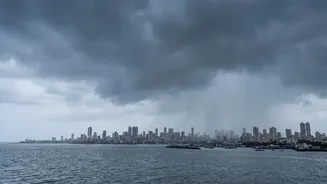
So, if this weak August isn't definitive proof, what does climate change mean for Mumbai's monsoon? The scientific consensus points not necessarily to less rain overall, but to a more chaotic and erratic pattern. The trend is towards longer dry spells punctuated by short, extremely intense bursts of rainfall. Studies show that for every degree Celsius of warming, monsoon rainfalls are likely to increase by about 5%, leading to more extremely wet years. This 'drought-to-deluge' whiplash is what experts are truly concerned about. The problem isn't a gradual decline but an increase in volatility that existing infrastructure wasn't built to handle. We see evidence of this already, with Mumbai experiencing both delayed monsoons and record-breaking deluges within the same seasons in recent years.
What This Means For Mumbai
The real challenge for Mumbai is adapting to this new, more unpredictable reality. A weak August one year might be followed by a September with record-breaking floods the next. This increasing variability poses immense risks to the city's water management, agriculture, and urban infrastructure. Focusing on a single dry spell misses the larger, more critical picture. The conversation shouldn't be if the monsoon is changing, but how it's changing—and whether Mumbai is prepared for a future where rainfall is less consistent and more extreme. Poor urban planning, which has shrunk natural drainage channels, only amplifies the flood risk when the inevitable downpour arrives.