








The Legend of the Seven Pagodas
The story is an enduring part of the region's folklore. It speaks of a time when the magnificent shoreline of Mahabalipuram, a jewel of the Pallava dynasty, was adorned with not one, but seven glorious temples. This complex, so beautiful it was said to have
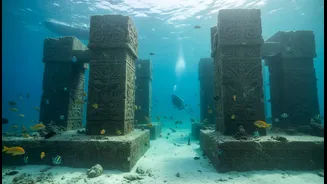
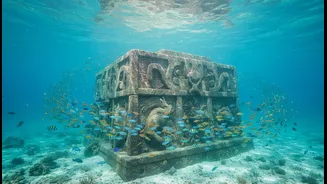
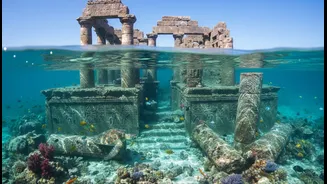
made the gods jealous, was a beacon for mariners. Legend holds that a great storm or a divine flood, spurred by Indra's envy, consumed six of these temples, leaving only the iconic Shore Temple standing as a solitary sentinel against the waves. For generations, local fishermen have passed down stories of glimpsing the glittering spires of these lost temples beneath the waves on clear days, a shimmering mirage of a grand past swallowed by the ocean. This tale, known to European explorers since the 18th century as the legend of the 'Seven Pagodas', has long blurred the line between myth and memory.
Modern Science Meets Ancient Myth
What was once relegated to folklore is now the subject of intense scientific scrutiny. The Underwater Archaeology Wing (UAW) of the Archaeological Survey of India (ASI), in collaboration with institutions like the National Institute of Oceanography (NIO), is leading the charge to unravel this mystery. After initial explorations in the early 2000s yielded tantalizing evidence, efforts have been renewed with greater technological prowess. The teams are deploying advanced equipment, including remotely operated vehicles (ROVs), which can capture high-resolution images and videos of the seabed without disturbing the delicate marine environment. This allows archaeologists to explore deeper and with more precision than ever before, turning anecdotal tales into coordinates on a map and folklore into research targets.
Echoes from the Deep
The hunt has not been in vain. Early explorations in 2001 and 2004-05, though challenging, revealed the first concrete hints that the legends were rooted in reality. Divers discovered submerged man-made structures, including the remains of walls, scattered dressed stone blocks, and what appeared to be steps leading to a platform. Some walls measured over 10 meters in length, suggesting significant constructions. The devastating 2004 tsunami briefly pulled the sea back by nearly 500 meters, giving eyewitnesses a fleeting glimpse of long rows of large rocks and previously concealed statues, further invigorating the search. Subsequent studies have found more walls and carved architectural pieces belonging to ancient temples. Some findings even suggest structures that pre-date the Pallava dynasty, with radiocarbon dating of marine growth on certain ruins pointing to submergence as early as the first century.
A Monumental Task
Uncovering this submerged heritage is a formidable challenge. The Bay of Bengal is not a calm or clear environment for archaeology. Strong underwater currents, poor visibility, and thick aquatic growth that covers potential ruins make the work slow and painstaking. The structures that have been found are often badly damaged and scattered, torn apart by centuries of powerful swells and the shifting seabed. Scientists are not just looking for temples; they are piecing together a complex puzzle involving ancient sea-level changes, coastal erosion, and possible tectonic movements that could have contributed to the submergence of what was once a bustling port city. Every discovery, no matter how small, is a hard-won victory against the concealing power of the ocean.
Why the Search Matters
The quest off the Mahabalipuram coast is more than an attempt to validate a myth. It is a mission to reclaim a significant chapter of India's maritime history. Mahabalipuram was a thriving port during the Pallava period, a gateway for trade and cultural exchange. Uncovering a potentially vast submerged complex would rewrite our understanding of the scale of this ancient metropolis. These explorations help prove that many local traditions and legends are not just stories, but are in fact a form of historical record passed down through generations. By preserving the treasures beneath the waves with the same care as the monuments on the shore, archaeologists are ensuring that this lost heritage can be discovered and cherished by future generations, connecting them to a past that is deeper and more extensive than ever imagined.