


Prioritise Drainage Above All
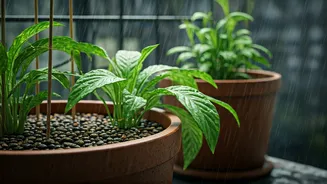
The single biggest threat to balcony plants during the monsoon is waterlogging. When roots sit in soggy soil, they can't access oxygen, leading to root rot. Before the rains intensify, ensure every pot has clear drainage holes. If your pots sit flat on the floor,
elevate them using pot feet, bricks, or even bottle caps. This small gap allows excess water to escape freely and prevents the pot from sitting in a puddle. It's also wise to check your potting mix; heavy, clay-like soils retain too much water. A lighter mix containing cocopeat, sand, or perlite will drain much better and keep roots healthy.
Rethink Your Watering Schedule
It seems counterintuitive, but you need to be mindful of watering during the rainy season. Many gardeners make the mistake of sticking to their summer schedule, which leads to overwatering. With frequent rain and high humidity, the soil stays moist for much longer. Always check the soil before adding more water. A simple finger test is effective: poke your finger about an inch into the soil. If it feels damp, wait another day or two before watering. Remember to empty any saucers or trays that collect rainwater to prevent pots from reabsorbing the excess.
Prune for Health and Airflow
Monsoon triggers a burst of growth, which can make plants dense and overcrowded. This is the perfect time for strategic pruning. Trimming your plants helps maintain their shape and, more importantly, improves air circulation through the foliage. Good airflow is critical for preventing fungal diseases like powdery mildew, which thrive in damp, stagnant conditions. Before the heavy showers begin, remove any dead, damaged, or weak branches. This not only reduces the risk of disease but also ensures the plant focuses its energy on strong, healthy growth.
Provide Sturdy Support
Strong monsoon winds can easily snap stems and topple top-heavy pots. Vulnerable plants, especially climbers, creepers, and those with tall, slender stems, need extra support. Install stakes, trellises, or moss sticks and gently tie the plants to them using soft twine. For larger shrubs or newly planted trees in big containers, anchoring them can prevent them from being uprooted. If possible, group smaller pots together in a cluster or move them to a more sheltered corner of the balcony during intense storms. This provides mutual support and protection from the wind.
Watch for Pests and Diseases
High humidity and moisture create a breeding ground for pests and fungal infections. Snails, slugs, mealybugs, and aphids become more common. Fungal issues like powdery mildew, leaf spot, and root rot are also rampant. Inspect your plants regularly for any signs of trouble, such as white coating on leaves, dark spots, or wilting despite wet soil. To prevent infestations, ensure there is good spacing between plants for airflow and consider a preventive spray of neem oil solution every 10-14 days. Removing fallen leaves and debris from the pots and balcony floor also helps eliminate hiding spots for pests.
Fertilise with Caution
While rain washes some nutrients from the soil, it's best to be cautious with fertilisers during the monsoon. Waterlogged roots are stressed and cannot absorb nutrients effectively, so adding fertiliser can do more harm than good. It's better to wait for a break in the rain to feed your plants. When you do fertilise, opt for organic and slow-release options like vermicompost or well-rotted manure. Liquid fertilisers, such as seaweed extract, can also be effective as they are easily absorbed, but they should be applied to the soil, not during heavy downpours, to avoid immediate runoff.