




Giving Satellites an AI Brain
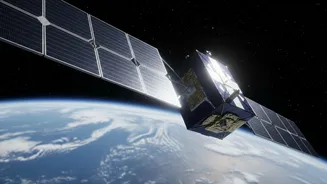
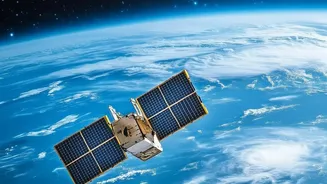
For decades, satellites have been sophisticated but relatively unintelligent, following pre-programmed commands from the ground. Artificial intelligence is set to change that. The Indian Space Research Organisation (ISRO) is actively developing AI and machine
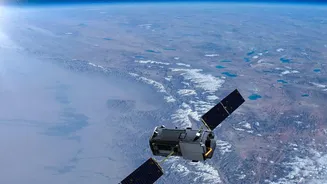
learning solutions to create autonomous satellites that can think for themselves. Instead of waiting for instructions from Earth, these “smart” satellites could independently manage their own health, predict and perform maintenance, and even correct their own orbits. One of the most significant applications is on-board data processing. Currently, satellites collect vast amounts of raw data—like images of Earth—and send it all back, consuming enormous bandwidth. An AI-powered satellite could analyze this data in space, filtering out useless images (like those obscured by clouds) and sending back only relevant, actionable information. This capability, known as edge computing, allows for faster decision-making in critical situations like disaster management and weather forecasting. ISRO has already incorporated AI into missions like the Chandrayaan program for lunar surface analysis, and plans to expand its use for everything from resource mapping to geo-intelligence.
The Unhackable Promise of Quantum
As satellites become more critical for military communication, financial transactions, and navigation, securing them from cyber threats is a paramount concern. This is where quantum technology comes in. India is investing heavily in quantum communication, a revolutionary method for securing data. The core technology is Quantum Key Distribution (QKD), which uses the principles of quantum physics to create theoretically unhackable encryption keys. If a third party attempts to intercept a key being transmitted, the very act of observing it changes its quantum state, immediately alerting the sender and receiver that the communication has been compromised. In 2023, India launched its National Quantum Mission, a multi-year, multi-billion dollar initiative to develop quantum technologies. A key objective is to establish satellite-based secure quantum communication, first within India over thousands of kilometers and eventually with other countries. ISRO has already conducted successful ground-based demonstrations of free-space quantum communication over short distances, laying the groundwork for taking this technology into orbit. This would create an ultra-secure layer for sensitive military and government networks, protecting them from even the most powerful conventional computers.
A New Chapter in a Storied Space Program
India's push into next-generation satellite technology is driven by clear strategic goals: strengthening national security, fostering economic growth, and cementing its status as a major global power. Since the 1960s, ISRO has built a world-class space program, marked by milestones like becoming the first nation to reach Mars on its first attempt and the first to land a probe on the Moon's south pole. Now, the focus is shifting from achieving specific missions to building sustained, cutting-edge capabilities. This ambition is fueled in part by a strategic rivalry with China, which has been rapidly advancing its own space power. By developing sovereign control over critical space technologies, India aims for strategic autonomy. The country is also opening its space sector to private companies and foreign direct investment, hoping to capture a larger share of the booming global space economy, which is projected to reach $44 billion for India by 2033.
Why It Matters for the U.S.
India’s rise as a high-tech space power is not happening in a vacuum. The United States is India's most important strategic partner in the space sector, with close cooperation on security and intelligence matters. As India develops advanced capabilities in satellite imagery, secure communications, and space domain awareness, it becomes an even more valuable partner in a complex geopolitical landscape. India's progress offers a democratic counterweight to the space ambitions of nations like China. Furthermore, ISRO's focus on indigenization and collaboration has made it an attractive partner for agencies like NASA for joint missions. The development of these advanced satellite systems will have wide-ranging impacts, from improving global communication and climate monitoring to enhancing military surveillance and navigation. For the U.S. and its allies, a technologically advanced and strategically aligned India in space is a significant asset for scientific discovery and global security.