





The Gardener's Monsoon Dilemma
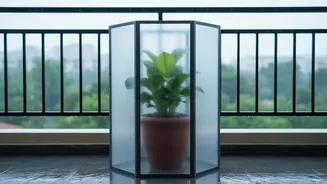
For anyone cultivating a green oasis on their balcony, the Indian monsoon is both a blessing and a challenge. While the rains promise lush growth, they can be relentless. Unlike gardens with natural ground drainage, balconies rely entirely on the limited
capacity of pots and planters. When rainfall is continuous, the soil becomes saturated, and drainage holes can’t keep up. This leads to waterlogging, a condition where roots are starved of oxygen and begin to rot. The result is often yellowing leaves, stunted growth, and the eventual loss of cherished plants. Many gardeners resort to manually tipping out excess water or elevating pots on bricks, but these are temporary fixes for a persistent problem.
An Engineered Solution: Modular Waterproofing
A more permanent and effective strategy is to build efficient drainage right into the balcony floor itself, using a modular waterproofing and drainage system. This isn't about just sealing the concrete, but about creating an invisible, highly efficient network to manage excess water under your planters or artificial turf. At the heart of this solution are components known as drainage cells or modules. These are strong, lightweight, interlocking plastic panels, often made from recycled materials, that create a void or gap between the balcony slab and your garden surface. This gap acts as a subsurface channel, allowing water to flow away freely instead of pooling around plant roots.
How the System Works
The genius of a modular drainage system lies in its layered simplicity. It typically consists of two main components working together. First, the drainage cells are laid out across the balcony floor. These cells, often shaped like a honeycomb, are strong enough to support the weight of soil and planters but are mostly hollow, creating a space for water to collect and move. Second, a layer of permeable geotextile fabric is placed over the drainage cells. This fabric is crucial: it allows water to pass through into the cells below but stops soil, sand, and other debris from getting in and clogging the system. Water that seeps through the planters drains into the cells and is channeled towards the balcony's main drain, ensuring the soil never stays waterlogged.
Benefits Beyond Plant Protection
The advantages of installing a modular drainage system go far beyond simply saving your plants from overwatering. One of the most significant benefits is protecting the structural integrity of your balcony. By preventing water from pooling, the system shields the underlying waterproof membrane and concrete from constant moisture, which can cause degradation, leaks, and costly structural damage over time. These systems are also incredibly lightweight, especially compared to traditional drainage solutions like using a thick layer of gravel, which adds significant weight to the structure. Furthermore, by ensuring roots have access to both moisture and oxygen, these systems promote healthier, more robust plant growth, leading to a more vibrant and resilient balcony garden all year round.
Installation and Practical Considerations
Modular drainage systems are designed for relatively straightforward installation. The interlocking panels can be easily cut to fit any balcony shape. They are often installed under artificial grass, decking, or pavers to create a level, dry surface. For gardeners, they can be used to line large, custom-built planter boxes or across the entire balcony floor before placing individual pots on top. The key to an effective system is ensuring the balcony slab has a gentle slope towards the drain so that the water channeled by the cells has somewhere to go. While a DIY installation is possible, consulting with a professional can ensure the system is set up correctly for maximum efficiency, giving you peace of mind through every downpour.