
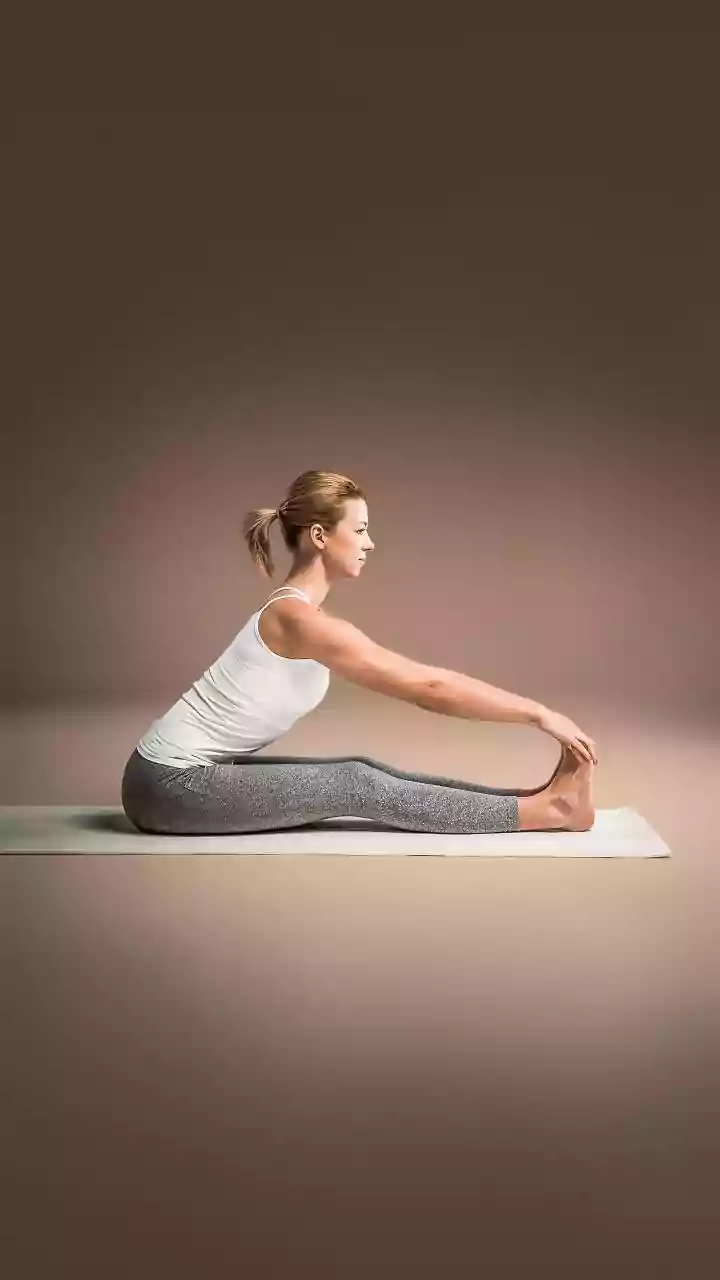

Hours spent sitting at a desk can lead to stiff hips, tired legs, and a sore lower back. Counteract the effects of a sedentary workday with gentle movement that restores mobility and eases discomfort right where you need it most.
The Problem with Prolonged Sitting
Our bodies are designed
for movement, but modern work often demands long hours in a chair. This prolonged sitting can cause the muscles in our lower body, particularly the hip flexors, to shorten and tighten. Meanwhile, our hamstrings and glutes can become weak and underactive. This combination leads to poor posture, reduced circulation, and that all-too-familiar feeling of stiffness and fatigue in the hips, thighs, and lower back. Over time, this can contribute to more persistent discomfort and a decreased range of motion. The good news is that incorporating a few simple, targeted stretches into your day can make a significant difference, helping to awaken dormant muscles and release built-up tension.
Chair Pigeon Pose
This pose is a fantastic opener for tight outer hips and glutes, a common area of tension for desk workers. While seated, scoot toward the edge of your chair with both feet flat on the floor. Cross your right ankle over your left thigh, just above the knee, creating a figure-four shape. Keep your right foot flexed to protect the knee joint. Sit up tall, lengthening your spine. You should feel a gentle to moderate stretch in your right glute and hip. For a deeper stretch, you can hinge forward slightly from your hips, keeping your back straight. Hold for 30 seconds, breathing deeply, before gently releasing and switching to the other side. This pose helps counteract the hip-shortening effects of sitting all day.
Seated Spinal Twist
A gentle twist can help relieve lower back tension and improve spinal mobility. Sit tall in your chair with your feet flat on the floor and your knees aligned over your ankles. Place your right hand on the outside of your left thigh. Place your left hand on the back or side of the chair for support. As you inhale, lengthen your spine. As you exhale, gently twist your torso to the left, using your hands for light leverage. Keep your hips facing forward as much as possible, initiating the twist from your mid-back. Turn your head to look over your left shoulder, but only as far as is comfortable for your neck. Hold for five deep breaths, then slowly unwind and repeat on the other side. This movement increases circulation and can help ease stiffness in the small muscles supporting the spine.
Standing Quad Stretch
The quadriceps, the large muscles at the front of your thighs, can become tight from being in a flexed position while seated. Stand up and hold onto your desk or the back of your chair for balance. Bend your right knee, bringing your heel up toward your glute. Reach back with your right hand to hold your ankle or the top of your foot. Stand up straight, keeping your knees close together and engaging your core to avoid arching your back. You should feel a stretch along the front of your right thigh. Be careful not to pull forcefully on your foot; the goal is a gentle release. Hold the stretch for 20–30 seconds, then slowly lower your leg and repeat with the left leg.
Cat - Cow Stretch
While often done on the floor, you can get similar benefits from a seated version of this classic spinal mobility exercise. Sit at the edge of your chair with your feet firmly on the ground and your hands resting on your knees. On an inhale, gently arch your back, draw your shoulders down and back, and lift your chest, looking slightly upward (Cow Pose). On an exhale, round your spine, tucking your chin to your chest and drawing your navel in toward your spine (Cat Pose). Flow between these two positions for 5 - 10 breaths, moving with your breath. This simple sequence warms up the spine, relieves back tension, and encourages mindful movement.
Legs - Up - the - Wall Pose
This restorative pose is the perfect antidote to a long day on your feet or in a chair. It helps reduce swelling and fatigue by reversing the effects of gravity on your legs and feet. Lie on the floor and swing your legs up so they are resting against a wall. Your sitting bones should be as close to the wall as is comfortable. You can place a folded blanket under your lower back for support if needed. Let your arms rest by your sides with palms facing up. Close your eyes and breathe deeply, allowing the tension to drain from your legs and feet. Stay in this position for 5 to 10 minutes to feel the full restorative effects. It's a passive, calming way to improve circulation and soothe tired muscles.