





The Contenders: A Tale of Two Orange Veggies
Though often used interchangeably, sweet potatoes and butternut squash are quite different. The sweet potato is a root vegetable, dense and starchy. A cup of cooked sweet potato contains around 180 calories and 41 grams of carbohydrates, but it also packs
a punch with more fibre and protein than its counterpart. Butternut squash, technically a fruit, is lighter and more watery. A cup of it has about half the calories and carbs of a sweet potato, making it a less dense option. Both are nutritional powerhouses, famed for their vibrant orange hue which signals a high beta-carotene content, a compound your body converts to Vitamin A.
The Flavour and Texture Face-Off
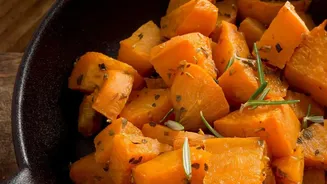
Roasting is all about creating flavour through the Maillard reaction, a chemical process that occurs at high, dry heat. When you toss cubed sweet potato or butternut squash in oil and put it in a hot oven, the natural sugars and amino acids react, creating a deep, caramelised, and nutty flavour with delightfully crispy edges. The inside becomes creamy and tender. Boiling, on the other hand, is a gentler, wet-heat method. It results in a softer, more uniform texture and a milder, cleaner taste. Boiled vegetables don't brown, so you miss out on those complex roasted flavours, but you get a pure expression of the vegetable itself, perfect for mashing or blending into soups.
The Nutritional Showdown: What Cooking Does
How you cook these vegetables significantly alters their nutritional profile. Boiling has one major advantage: it tends to preserve more antioxidants and results in a lower glycemic index, meaning less of a blood sugar spike. This is because some of the sugars leach into the cooking water. However, water-soluble nutrients like Vitamin C can also be lost in the water unless you consume it, like in a soup. Roasting, which concentrates the vegetable by removing water, can lead to a higher concentration of some minerals per bite. However, the high, dry heat can degrade heat-sensitive vitamins like Vitamin C and some antioxidants, particularly in the skin. Studies have shown that baking can cause a significant drop in Vitamin A levels compared to boiling. Roasting also typically involves adding oil, which adds fat and calories to the final dish.
Ease, Speed, and Versatility
When it comes to convenience, boiling cubes of sweet potato or squash is generally faster than roasting, which can take 40 minutes or more to achieve perfect tenderness and browning. Cleanup for boiling is often as simple as washing a pot. Roasting requires a baking sheet, and often a bit more scrubbing if things get caramelised onto the pan. In terms of versatility, it's a draw. Boiled sweet potatoes and squash are ideal for smooth purées, mashes, and as a creamy base for soups and stews. Roasted chunks are fantastic as a standalone side dish, tossed into salads and grain bowls, or added to tacos for a sweet and savoury element.
The Final Verdict: Which Is Best for You?
There is no single 'best' method; the right choice depends entirely on your goals. If you are managing blood sugar levels or want to maximise antioxidant retention, boiling is the superior method. It provides a lower glycemic impact and is gentler on certain nutrients. If your top priority is rich, complex flavour and a satisfying, creamy-meets-crispy texture, roasting is the undeniable winner. For those watching calories, butternut squash is the lighter choice over the denser sweet potato. Ultimately, both vegetables and both cooking methods have a place in a healthy diet. The best approach is to enjoy them in a variety of ways to get a wide range of flavours and nutrients.