





A New Chapter for a Legendary Probe
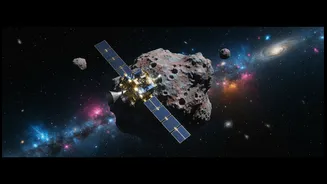
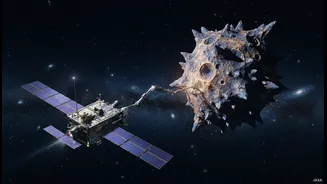
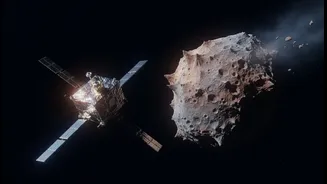
After its historic mission to collect and return samples from asteroid Ryugu in 2020, the Hayabusa2 probe was given a new lease on life. Instead of retiring, the healthy spacecraft was sent on an extended mission. Its first major objective was accomplished
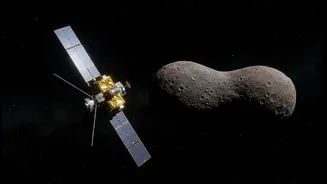
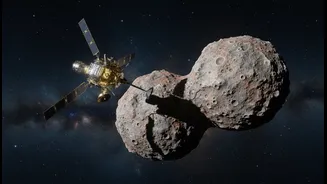
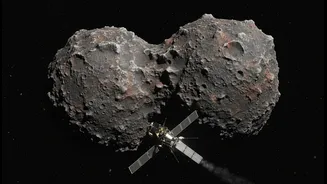
on July 5, 2026, when it sped past the near-Earth asteroid 98943 Torifune (also known as 2001 CC21). The probe captured stunning, detailed images, revealing Torifune's two-lobed, snowman-like shape from millions of kilometres away. This flyby was not just about pretty pictures; it was a complex navigational challenge that tested JAXA's ability to guide a spacecraft in close proximity to a fast-moving, dark object, providing valuable data for future missions.
The Global Hunt for Asteroid Resources
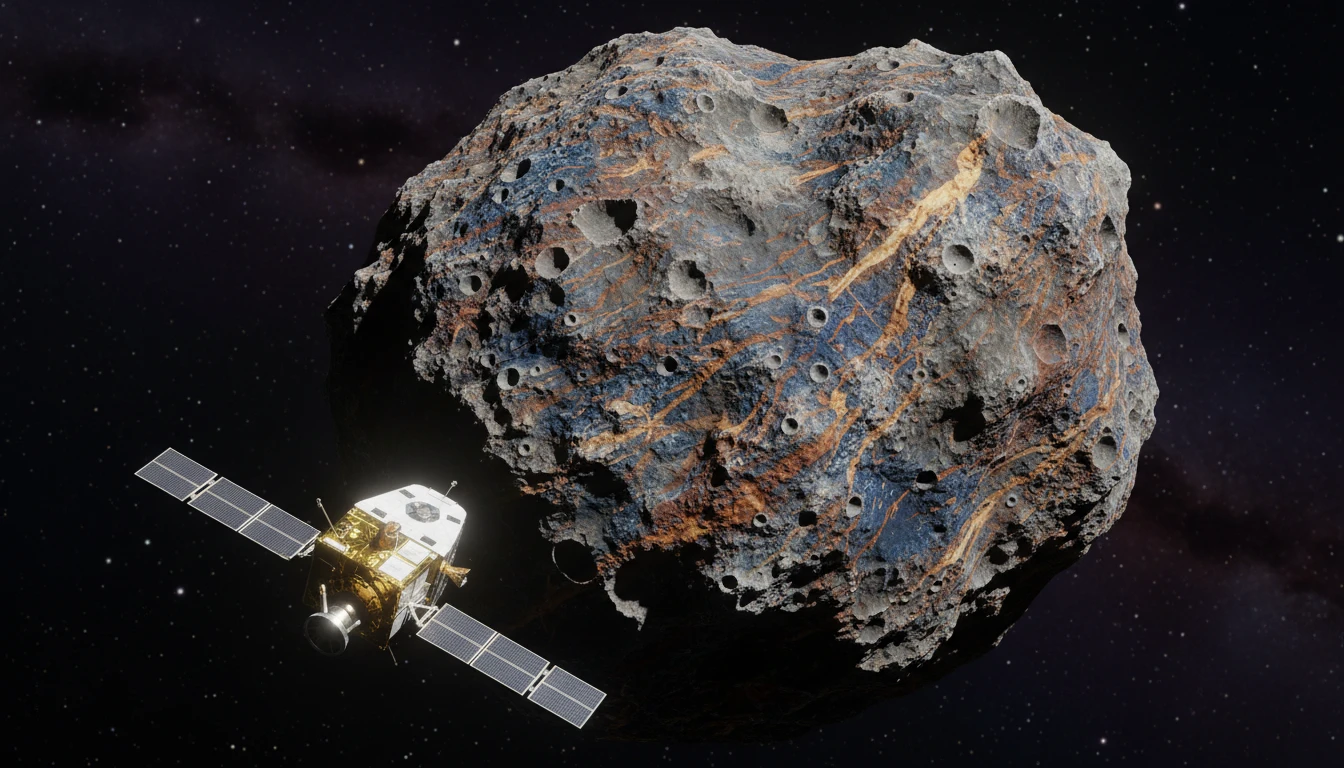
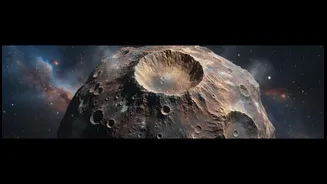
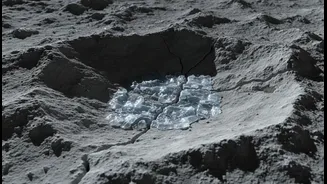
Asteroids are more than just space rocks; they are time capsules from the birth of our solar system, containing primordial materials and clues about the origins of life. They are also seen as future depots for valuable resources. C-type asteroids like Ryugu, Hayabusa2's first target, are rich in water and organic compounds. Others contain vast quantities of metals. As humanity looks towards longer space missions and establishing off-world colonies, the ability to mine asteroids for water (to make rocket fuel) and building materials is becoming a strategic necessity. Japan’s proactive exploration puts it at the forefront of this emerging field. For India, a nation with a burgeoning space programme and growing resource needs, understanding and eventually accessing these celestial resources could be a game-changer for future economic and technological security.
Blueprints for ISRO's Ambitions
The success of Hayabusa2 offers a treasure trove of technical and strategic lessons for the Indian Space Research Organisation (ISRO). Every aspect of the mission—from long-duration spacecraft operation and precision navigation to robotic sample collection and capsule re-entry—provides a blueprint for complex deep-space exploration. This is particularly relevant as ISRO itself has expressed intentions to develop capabilities in planetary defence and asteroid studies. ISRO Chairman S. Somanath has spoken about potentially studying the asteroid Apophis during its close flyby in 2029 and contributing to global planetary defence efforts. Furthermore, the strong collaborative ties between India and Japan in space, highlighted by the joint Lunar Polar Exploration (LUPEX) mission, create a powerful foundation. Lessons from Hayabusa2 could inform joint future endeavours, perhaps even a collaborative asteroid mission.
A Shared Watch Against Cosmic Threats
The Torifune flyby is also a crucial exercise in planetary defence. By practicing high-speed, close-approach manoeuvres, JAXA is refining techniques that could one day be used to intercept or deflect an asteroid on a collision course with Earth. Asteroids like Torifune and Apophis are classified as near-Earth objects, and while neither poses a current threat, the danger of an impact from an unknown object is real. ISRO has acknowledged this existential threat and is building its own monitoring capabilities through projects like NETRA (Network for Space Object Tracking and Analysis). Somanath has emphasised that protecting Earth is a global responsibility that no single nation can shoulder alone. Japan's mission provides vital data on the physical characteristics of these asteroids, which is essential for designing effective deflection strategies, benefiting all space-faring nations, including India.