





The Gallery Rule and Why It Changes at Home
Interior designers and galleries often use the “57-inch rule,” which dictates that the center of a piece of art should hang 57 to 60 inches from the floor. This measurement represents the average human eye level and it creates a comfortable, balanced
viewing experience in a space where people are typically standing and observing, like a museum. In a home, however, our behavior is different. We spend more time sitting, reclining, and interacting with our environment in varied ways. Sticking rigidly to the gallery rule can result in art that feels disconnected or a TV that causes neck strain, which is why the true “eye level” depends entirely on your perspective in that specific room.
For Living Rooms: Think from the Sofa
In living rooms and family dens, the primary viewpoint is seated. Hanging artwork based on a standing eye level means you’ll spend most of your time looking up at it. Instead, artwork should feel visually connected to the furniture it hangs above. A good guideline is to hang a piece so its bottom edge is 6 to 8 inches above the back of your sofa. This anchors the art to the furniture, creating a cohesive vignette. Similarly, TVs should be mounted so the center of the screen is at your seated eye level, which is typically around 42 inches from the floor. This ergonomic placement prevents you from craning your neck during a movie marathon.
For Hallways and Entryways: Where You Stand
Transitional spaces like hallways, corridors, and entryways are where the standard 57-inch rule is most applicable. These are areas you primarily walk through, so hanging art at a standing eye level makes perfect sense. It allows the art to be viewed comfortably as you move through the home. For narrow hallways, consider a vertical stack of smaller pieces to draw the eye upward without making the space feel crowded. If you're creating a gallery wall, treat the entire collection as one single piece. Find the center of the whole arrangement and place that point at 57 to 60 inches from the floor.
The Special Case: Dining Rooms
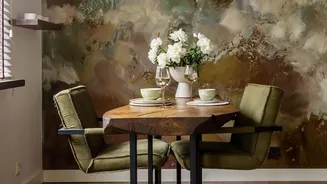
Dining rooms are unique because while you may enter them standing, the main event happens while seated. Artwork hung too high can feel distant and disconnected from the intimate setting of a meal. A better approach is to hang art slightly lower than in a hallway, ensuring it can be appreciated from the table. When placing a piece above a sideboard or buffet, a gap of 4 to 6 inches between the furniture and the bottom of the frame is ideal. This keeps the art grounded. If the art hangs on a wall without furniture beneath it, consider the sightlines from the chairs to find a height that feels inclusive for your seated guests.
Considering Scale and Groupings
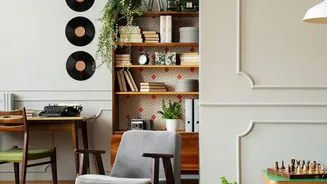
Beyond height, scale is crucial. A common guideline is that artwork should span about two-thirds of the width of the furniture it hangs above. This applies whether it's a single large canvas or a curated group of smaller frames. When arranging a gallery wall, maintain consistent spacing between frames—typically 2 to 4 inches—so the collection reads as a single, cohesive unit. Before you commit, you can trace your frames onto paper and tape the templates to the wall. This allows you to test the height and spacing from different points in the room, ensuring the final placement feels just right.