







What Are Eccentric Movements?
Think about a bicep curl. The effort you exert to bring the dumbbell up towards your shoulder is the 'concentric' phase—your muscle shortens. Now, think about the part you probably rush through: lowering the weight back down. That controlled lowering is the 'eccentric'
phase, where the muscle lengthens under tension. Eccentric training simply means putting the focus on this lowering portion of the movement. Instead of dropping the weight, you actively resist gravity, taking two, three, or even five seconds to complete the downward phase of a rep. It’s the 'braking' system for your muscles, and it’s incredibly powerful.
The Science of the Slow-Down
Why is this seemingly simple tweak so effective? Science points to a few key reasons. During an eccentric contraction, your muscle fibres are placed under greater tension than during a concentric one. This increased tension creates more micro-tears in the muscle—the tiny, harmless damage that signals your body to rebuild the muscle bigger and stronger. Studies have consistently shown that training focused on the eccentric phase can lead to significant increases in muscle mass (hypertrophy) and strength. In fact, your body is capable of handling more weight eccentrically than it can concentrically. This means you can create a powerful stimulus for growth without necessarily needing to lift a 'personal best' weight every single session.
Build Resilience and Prevent Injury
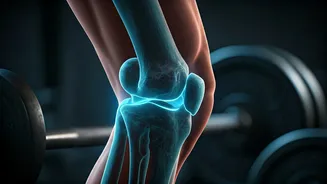
One of the most compelling benefits of eccentric training goes beyond aesthetics. It's a game-changer for injury prevention. Most non-contact injuries, like hamstring strains or torn ACLs, happen when a muscle is forcefully lengthened—essentially, when its 'brakes' fail. By specifically training and strengthening this braking mechanism, you build more resilient muscles and tendons that are better equipped to handle the sudden decelerations common in sports and daily life. It’s a core component of physical therapy for this reason, helping rehabilitate injuries by strengthening connective tissues and improving control without overloading sensitive joints.
How to Put Eccentrics into Practice
You don’t need to overhaul your entire workout. The easiest way to start is by modifying exercises you already do. Pick a few and focus on the tempo. A good rule of thumb is a '1-3' tempo: take one second for the concentric (lifting) phase and three seconds for the eccentric (lowering) phase.
- **Push-ups:** Take one second to push up, then slowly lower your chest to the floor over three to four seconds.
- **Squats:** Descend into your squat slowly and with control (3-4 seconds), then drive back up to the starting position in one second.
- **Bicep Curls:** Curl the weight up in one second, and then fight gravity as you lower it over a three to four-second count.
You will likely need to use a lighter weight than you normally would. This is not a sign of weakness; it’s a sign that you’re doing it right and placing the muscle under a new, highly effective type of stress.
A Tool, Not a Replacement
So, should you really 'ditch' heavy lifting entirely? Not necessarily. Heavy lifting has its own distinct benefits for bone density and maximal strength. A smarter approach is to view eccentric training as another powerful tool in your fitness arsenal. You can dedicate entire workouts to it, or simply incorporate eccentric-focused sets into your existing routine. It’s particularly useful for breaking through strength plateaus, for individuals who find heavy lifting aggravates their joints, or for anyone looking to build a more functional, resilient body. The goal isn't to replace one method with another, but to understand and use both to become a more well-rounded athlete.