

Our Dazzling Evening Star
Venus is often called the 'Evening Star' or 'Morning Star' for a simple reason: its orbit is inside Earth's, meaning it always appears close to the Sun in our sky. You will only ever spot it for a few hours after sunset or before sunrise. This September,
it's dominating the western evening sky. What makes Venus a perfect target for city dwellers is its sheer brightness. It's the third-brightest object in the sky after the Sun and Moon, easily outshining every actual star. Its intense luminosity, caused by a thick, highly reflective cloud cover, can cut through a surprising amount of light pollution, making it visible even from city rooftops. This month is particularly special as Venus reaches its peak brightness, or 'greatest illuminated extent', making it appear as a dazzling, unmistakable beacon.
When and Where to Look
The key to spotting Venus is timing. Start looking about 20 to 30 minutes after the sun has fully set. Your target direction is the west, or more specifically, the west-southwest — the same part of the sky where the sun just disappeared. In early September, Venus will be visible for a good while after sunset, setting around 9 p.m. local time. As the month progresses, it will appear lower on the horizon each evening, so your viewing window will shorten. To give yourself the best chance, find a location with an unobstructed view of the western horizon. A rooftop, a balcony facing west, a park, or even an overbridge with a clear view away from direct streetlights will work wonders. The clearer your horizon, the longer you will be able to track it before it sets.
How to Identify Venus
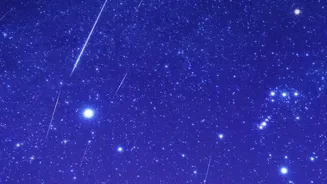
Once you are looking in the right direction at the right time, finding Venus is easy. It will be the first and brightest point of light to appear in the darkening sky. Its light is a steady, silvery-white, and it doesn't twinkle like stars do. Stars twinkle because their distant, pinpoint light is disturbed by Earth's atmosphere. Venus is a planet, much closer to us, so its larger apparent disc remains steady and brilliant. At first glance, you might mistake it for an approaching airplane, but you’ll quickly notice that Venus remains stationary in its part of the sky, while a plane will move noticeably across your field of view within seconds. Keep an eye out on September 14th, when a thin crescent Moon will appear near Venus, making for a beautiful pairing in the twilight.
Essential Tips for Urban Astronomers
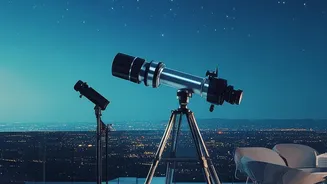
While Venus is bright, a few simple tricks can dramatically improve your experience. First, get away from direct glare. Simply stepping into the shadow of a building to block a nearby streetlight can make a huge difference. Second, give your eyes time to adjust. It takes about 20-30 minutes for your eyes to become fully 'dark-adapted', which will help you see more than just Venus. Avoid looking at your bright phone screen; if you need light, use a red torch or a screen filter app, as red light is less damaging to your night vision. You don't need a telescope, but if you have a pair of binoculars, you might be able to see that Venus has a phase, much like our Moon. For identifying other objects, stargazing apps like Star Walk 2, SkyView, or Stellarium Mobile are fantastic tools for beginners.