

More Than Just Calories
For decades, space food was about function over form: lightweight, calorie-dense, and shelf-stable. But as missions extend from weeks to years, scientists now view nutrition as a primary medical tool. The extreme environment of deep space—including microgravity
and constant radiation—wreaks havoc on the human body, causing bone density loss, muscle atrophy, and a weakened immune system. Simply packing enough food isn't the answer, as nutrients degrade over time. The new goal is to create a food system that actively counteracts the harsh effects of spaceflight, turning every meal into a dose of preventative medicine.
The Hazards of Deep Space
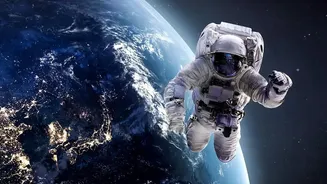
On Earth, gravity constantly works our bones and muscles. In space, this stimulus vanishes. Astronauts can lose 1% to 1.5% of their bone mass for every month in microgravity, a condition similar to accelerated osteoporosis. Muscle wasting is also a significant concern. Furthermore, without the protection of Earth's magnetic field, astronauts are exposed to high levels of galactic cosmic radiation, which can damage DNA and increase cancer risk. Research is now focused on how specific nutrients and functional foods can mitigate this damage. For example, diets rich in protein, calcium, vitamin D, and antioxidants are being intensely studied as essential countermeasures to keep crews healthy.
The Evolving Space Pantry
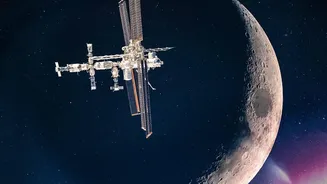
A mission to Mars is too long to rely solely on pre-packaged meals. The sheer mass and volume of food required for a multi-year trip is a major engineering hurdle. This has sparked a revolution in bioregenerative food systems. NASA’s Deep Space Food Challenge is encouraging innovators to develop technologies that allow astronauts to grow their own food. On the International Space Station (ISS), experiments like the Vegetable Production System, or "Veggie," have successfully grown lettuce, kale, and tomatoes. Future concepts involve cultivating algae like spirulina, which is high in protein and converts carbon dioxide to oxygen, or even using fungi and insects as sustainable protein sources. These systems aim to create a closed-loop ecosystem, recycling waste and resources to create fresh, nutrient-rich food millions of miles from Earth.
Food for the Mind
The psychological impact of food is just as critical as its nutritional content. For astronauts isolated in a confined space for years, meals are a vital link to home and a crucial source of comfort and morale. The monotony of a repetitive menu can lead to "menu fatigue," causing astronauts to eat less and risk dangerous weight loss. Providing variety, flavour, and familiar textures is essential for crew well-being. Even the simple act of smelling fresh produce, like an onion brought on a resupply mission, has been reported as a powerful positive experience for astronauts accustomed to packaged food. Future missions may incorporate 3D food printers to create customized meals or allow crews to cook, re-establishing food's important social and cultural role.
Benefits Back on Earth
The quest to perfect space nutrition has significant implications for life on our own planet. Research into creating long-lasting, nutrient-dense foods can be applied to military rations and disaster relief supplies. The development of compact, efficient, and water-wise agricultural systems could help address food insecurity in remote regions and harsh environments. Furthermore, studying the accelerated bone loss that occurs in space provides valuable insights into osteoporosis, a condition affecting millions on Earth. As we solve the challenge of feeding astronauts in the cosmos, we are also pioneering solutions for a more sustainable and food-secure future at home.