





An Ambitious Mission to an Alien World
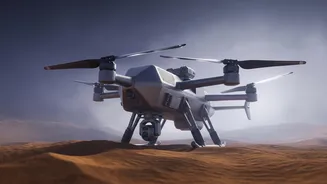
The Dragonfly mission is unlike any other planetary exploration effort. Scheduled to launch in July 2028, it involves sending a car-sized rotorcraft—essentially a nuclear-powered drone—to fly through the thick, hazy atmosphere of Titan. After its arrival
in 2034, Dragonfly will explore dozens of locations on the moon's surface. Its goal is to study prebiotic chemistry, the complex chemical processes that occurred on Earth before life began. By examining Titan's unique environment, scientists hope to find clues about the building blocks of life itself. The mission represents a bold new chapter in our search for habitable conditions beyond our own planet.
Why Titan is So Fascinating
So, why all the focus on Titan? Saturn's largest moon is one of the most Earth-like worlds in our solar system, yet profoundly alien. It has a dense atmosphere, weather, clouds, and even rivers and lakes—but they are filled with liquid methane and ethane, not water. The surface is rich in organic materials, the carbon-based molecules that are fundamental to life as we know it. Scientists believe that beneath its icy crust, Titan may harbor a vast ocean of liquid water. This combination of complex organics and potential liquid water makes Titan a prime target for astrobiology and understanding how life might arise elsewhere in the universe.
How to Send Your Name to Titan
Becoming a part of this historic mission is simple. NASA has opened a public campaign called 'Journey to Titan' for anyone around the world to participate. To add your name, you need to visit the official NASA Dragonfly mission website. There, you will find a form to enter your first and last name. The deadline to submit your name is January 15, 2027. After you sign up, your name will be etched onto a microchip that will be attached to the Dragonfly spacecraft. As a souvenir, you will also receive a commemorative digital 'boarding pass' with your name on it, perfect for sharing.
A Legacy Etched in Silicon
This public engagement campaign follows a long tradition at NASA of allowing people to send their names on groundbreaking missions. For the Mars 2020 mission, the Perseverance rover carried over 10 million names on silicon chips. Similarly, the Europa Clipper mission to one of Jupiter's moons carried the names of over 2.6 million people. These campaigns create a powerful personal connection between the public and the vast, often abstract work of space exploration. While you won't physically be on board, your name will serve as a symbolic passenger on one of the most ambitious journeys humanity has ever undertaken, a digital message in a bottle sent to another world.