
A Pin Code on a Plate
Some of the most beloved dishes in India carry their geographical origins right in their names, serving as a delicious declaration of their roots. Think of Hyderabadi Biryani; the name itself transports you to the royal kitchens of the Nizams. This celebrated
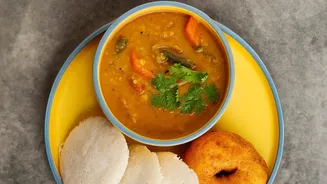
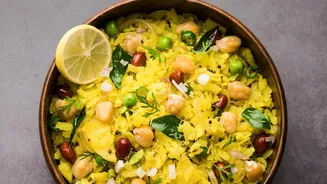
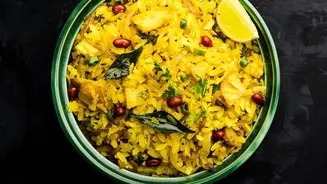
dish is a testament to the city's unique blend of Mughlai and Iranian culinary traditions. Similarly, the Malabar Parotta, a flaky, layered flatbread, is intrinsically linked to the Malabar Coast of Kerala. While its exact origins are debated, with theories pointing to influences from Sri Lanka or even West Asia, its name firmly anchors it to the region where it became a popular staple. Likewise, dishes like Indori Poha and Ramassery Idli point directly to the cities and villages that perfected them, Indore and Ramassery, respectively. These names act as a mark of authenticity, a promise that the recipe carries the specific taste and tradition of its home.
A Story in Every Word
Many food names are simply descriptive, rooted in the languages of their origin. Dal Makhani, a creamy, luscious lentil dish from the Punjab region, translates literally to “buttery lentils”. 'Makhan' is Punjabi for butter, and 'makhani' means buttery, perfectly describing the rich character of the dish. Another fascinating example is the Gujarati winter delicacy, Undhiyu. The name comes from the Gujarati word 'undhu', meaning 'upside down'. This refers to the traditional method of cooking, where a medley of winter vegetables is packed into an earthen pot called a 'matlu', which is then sealed and placed upside down in a fire pit dug into the ground. The name itself is a recipe, a clue to the unique cooking process that gives the dish its distinct, earthy flavour.
An Echo of a Bygone Era
Culinary history is often shaped by migration, trade, and colonisation, and food names are the historical records. The fiery Goan curry, Vindaloo, has a name that tells a story of Portuguese influence. It is derived from the Portuguese dish 'carne de vinha d'alhos', which means meat in garlic wine marinade. Portuguese explorers brought this preservation technique to Goa, where local cooks adapted it, swapping wine for palm vinegar and adding a host of local spices, transforming it into the iconic dish we know today. The word Biryani itself has Persian roots, derived from 'birian' (to fry before cooking) and 'birinj' (rice). It was brought to India by Mughal rulers, where it evolved in royal kitchens into the aromatic, layered rice dish celebrated across the subcontinent.
The People Behind the Plate
Sometimes, a dish carries the name not of a place or a language, but of a person. The legendary Tunday Kebab of Lucknow is a prime example. These melt-in-your-mouth galouti kebabs were created for an ageing, toothless Nawab of Awadh who desired a kebab that required no chewing. The creator was a master chef named Haji Murad Ali, who had lost an arm in an accident. In the local dialect, a person with one arm was called 'tunday'. His remarkable creation soon became famous as 'Tunday ke Kebab', a name that honours the ingenuity of its one-armed creator. The dish's name is now inseparable from the story of the man who, despite his disability, crafted a culinary masterpiece that has endured for centuries.