



The Challenge of the Body Clock
Working against the natural rhythm of day and night is more than just inconvenient; it's a direct challenge to our biology. Every person has an internal 24-hour clock, known as the circadian rhythm, that governs everything from hormone release to body
temperature and, most importantly, our sleep-wake cycle. This internal timer is primarily regulated by light. Bright, blue-toned light—like that from the morning sun and our digital screens—tells the brain to be awake and alert. As natural light fades in the evening, the brain gets the signal to produce melatonin, the hormone that prepares the body for sleep. Night shift work throws this entire system into disarray, forcing the body to try and sleep when it's biologically programmed to be active.
Why Standard Lighting Fails Shift Workers
When a night shift worker finishes their shift in the morning, they walk out into bright daylight, which bombards their brain with 'wake up' signals. Then, they often go home to a house filled with standard artificial light, which also contains significant amounts of blue light that can suppress melatonin production. This makes falling asleep difficult and reduces the amount of time spent in the most restorative stages of sleep, like deep sleep and REM sleep. A study in the Journal of Clinical Endocrinology and Metabolism found that exposure to regular room light in the hours before bed can significantly delay the onset of melatonin. For a shift worker, whose 'before bed' hours are during the day, this effect is magnified, leading to chronic sleep debt, fatigue, and other health issues.
Creating an Artificial Sunset
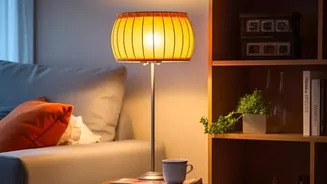
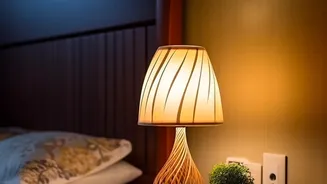
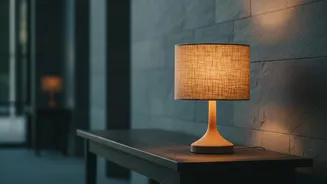
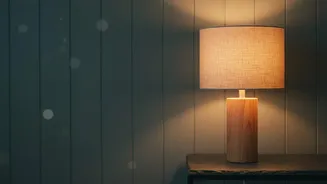
This is where adjusting your indoor lighting comes in. The key is to mimic the natural progression of sunset. As the sun goes down, the light it emits becomes warmer, shifting towards red and orange wavelengths. These longer wavelengths of light have a much smaller effect on melatonin suppression compared to blue light. By switching to warm, dim, reddish, or amber-toned lights in the hours before you plan to sleep—even if it's 8 a.m.—you can send a powerful signal to your brain that it's time to wind down. Research suggests this simple change can help your body produce the melatonin needed for sleep. One 2012 study on athletes found that 30 minutes of red light exposure each night improved their sleep quality and boosted melatonin levels. While more research is needed, the principle is a powerful one for shift workers trying to reclaim their rest.
Practical Steps for Better Sleep
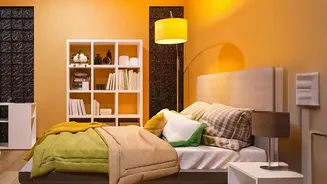
Implementing an indoor sunset routine doesn't have to be complicated. Start by dimming the lights an hour or two before your intended bedtime. Swap out standard LED or fluorescent bulbs in your bedroom and living areas for warm-toned ones, ideally with a colour temperature between 2700K and 3000K, or even lower. Many smart bulbs allow you to change both the brightness and the colour, making it easy to schedule a gradual shift to warmer tones. For a more targeted approach, you can use red light therapy devices for 10-20 minutes as part of your pre-sleep routine. It’s also crucial to avoid blue light from phones, tablets, and televisions during this wind-down period; if you must use screens, use night mode settings or blue-light-blocking glasses. The goal is to create a low-light, warm-hued environment that tells your brain it's evening, no matter what time the clock says.
Beyond Lighting: A Holistic Approach
While controlling your light exposure is a critical step, it works best as part of a broader sleep hygiene strategy. On your commute home, wear dark sunglasses to block out the alerting effects of morning sunlight. Once home, make your bedroom as dark, cool, and quiet as possible using blackout curtains, eye masks, and earplugs or a white noise machine. Try to stick to a consistent sleep schedule, even on your days off, to help your body clock adapt. Avoid caffeine in the second half of your shift and try to have your last meal several hours before you plan to sleep. Combining these habits with a carefully managed light environment can significantly improve your ability to get the deep, restorative sleep you need to stay healthy and safe.