




The Journey of the Monsoon
To understand Spiti’s unique climate, we first need to follow the path of the Indian summer monsoon. These powerful weather systems gather immense moisture from the Indian Ocean and sweep northwards across the subcontinent. As they move inland, they release
heavy rainfall, bringing life to forests and farmlands. This annual deluge defines the climate for much of India, leading to lush green landscapes but also causing flooding and travel disruptions in many mountainous areas.
A Giant Himalayan Barrier
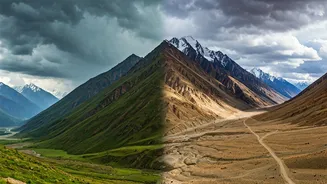
The monsoon's journey northward eventually meets a formidable obstacle: the mighty Himalayas. When the moisture-laden clouds encounter the initial ranges, such as the Pir Panjal and the Great Himalayan Range, they are forced to rise. As the air ascends, it cools, and its ability to hold moisture decreases dramatically. This process, known as orographic lift, forces the clouds to shed their water content as heavy rainfall on the southern, windward slopes of the mountains. This is why areas like Himachal Pradesh and Uttarakhand receive such intense monsoon downpours.
The Rain Shadow Effect
Spiti Valley is located on the other side of this massive mountain barrier. By the time the monsoon clouds have crossed the towering peaks, they have already released most of their moisture. The air that descends on the leeward side—the side sheltered from the wind—is now dry. This phenomenon is called the 'rain shadow effect', and it is the primary reason for Spiti's arid climate. The valley sits in the rain shadow of the main Himalayan range, which acts as a protective wall, blocking the heavy rains from ever reaching it.
Life in a Cold Desert
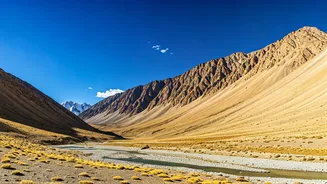
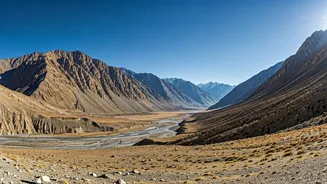
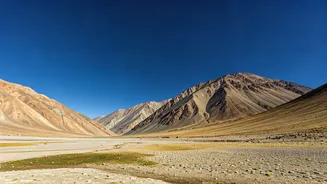
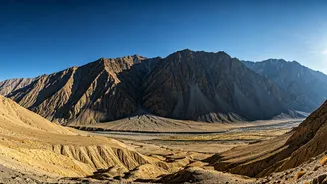
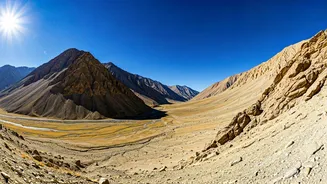
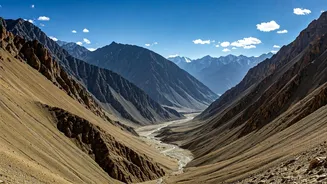
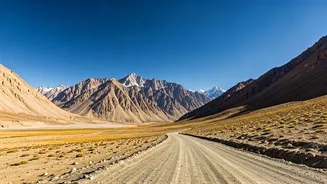
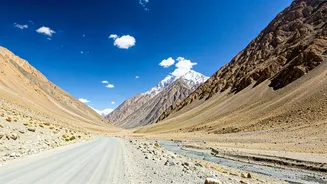
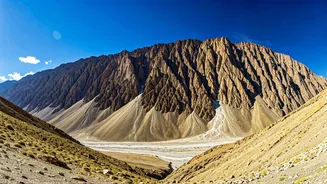
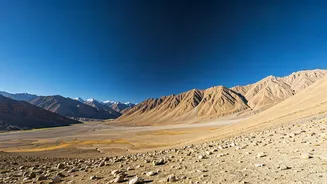
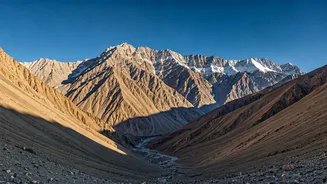
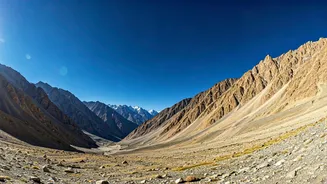
This lack of precipitation defines Spiti's character as a high-altitude cold desert. With an average elevation of over 12,500 feet, the landscape is stark, barren, and almost lunar. Instead of the lush greenery found elsewhere in the Himalayas during monsoon, Spiti offers dramatic vistas of rugged, brown mountains, deep gorges, and impossibly blue skies. The annual rainfall is negligible, often less than 50 mm. While it's not completely devoid of rain—occasional light showers or drizzles can occur—it escapes the relentless downpours that isolate other mountain regions. The climate is marked by intense sun and cold, dry air.
A Perfect Monsoon Travel Escape
This unique weather pattern makes Spiti Valley one of the few Himalayan destinations that is ideal for travel during the monsoon months of July and August. While roads leading to the valley, particularly from Manali, can be affected by rain and landslides in the lower reaches, the valley itself remains accessible and safe. For travelers, this means clear, sunny days perfect for exploring ancient monasteries, high-altitude villages like Komic and Langza, and the stunning Chandratal Lake. The challenging conditions to get there are often rewarded with fewer tourists, serene landscapes, and an otherworldly sense of peace that is hard to find anywhere else.