





Tyres: Your Grip on Wet Roads
Your tyres are the single most critical safety feature during the monsoon. Their ability to grip slick asphalt is what keeps you in control. Worn tyres significantly increase the risk of aquaplaning, a dangerous situation where a layer of water builds
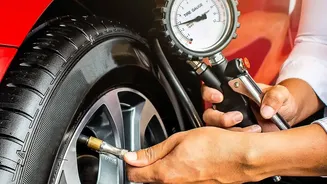
between the tyre and the road, causing a complete loss of traction. Before you leave, inspect the tread depth; if it’s insufficient, it’s time for a replacement. Also, check the tyre pressure, including the spare. Incorrect pressure affects handling and braking, which are compromised even further on wet surfaces.
Brakes: Your Ultimate Safety Net
Effective brakes are non-negotiable, but their performance can be surprisingly different on wet roads. Water on brake pads and discs can reduce their initial bite, increasing your stopping distance. If you've noticed any squealing, vibrations, or a spongy feeling in the pedal, get your braking system inspected by a professional before your trip. An expert can check the brake pads, discs, and fluid to ensure they are in top shape for the demanding conditions of monsoon driving. After driving through a waterlogged patch, it's a good practice to tap your brakes gently a few times to help dry them out.
Wipers and Windshield: Your Window to the World
Visibility is one of the biggest challenges during a downpour. Wiper blades that are cracked or hardened from the summer heat will only smear water across the windshield, making things worse. Test them before you need them. If they leave streaks or skip across the glass, replace them immediately. While you're at it, top up your windshield washer fluid. This will help you clear away the mud and grime that gets kicked up by other vehicles, ensuring you have a clear view of the road ahead.
Lights and Electricals: See and Be Seen
In heavy rain and fog, seeing the road is only half the battle; being seen by other drivers is just as crucial. Do a quick walk-around of your car and check all your lights: headlights (both low and high beams), tail lights, brake lights, and indicators. A non-functional brake light or indicator can be extremely hazardous in low-visibility conditions. Ensure your headlamp lenses are clean and not clouded, as this can severely reduce their brightness and effectiveness. Remember to use your low beams in the rain, as high beams can reflect off the raindrops and cause glare.
Battery and AC System: Comfort and Reliability
The monsoon puts extra strain on your car’s electrical systems. Constant use of wipers, lights, and the defogger can tax your battery. An old or weak battery is more likely to fail in damp conditions. Check the terminals for any corrosion and ensure the connections are tight. Your air conditioning system also plays a key safety role. It's essential for defogging your windshield and windows, which can fog up quickly due to the high humidity. A functioning AC and defogger ensure you maintain clear visibility from all angles.
An Emergency Kit: Your Roadside Companion
Even with the best preparation, unexpected situations can arise. A well-stocked emergency kit can be a lifesaver. Your kit should include essentials like a torch with extra batteries, a basic toolkit, jumper cables, and a first-aid kit. It’s also wise to include a tow rope and a reflective warning triangle to alert other drivers if you have to pull over. Keeping some dry snacks and a bottle of water is also a good idea, just in case you're stranded for a while waiting for conditions to improve or for assistance to arrive.