






The Currency of Football: Goals
When it comes to the most fundamental statistic, career goals, Cristiano Ronaldo holds the edge. As of September 2026, the Portuguese forward has scored more than 975 senior career goals for club and country. Lionel Messi is not far behind, having found
the net over 925 times. While Ronaldo leads in the sheer volume of goals, having also played more matches, Messi often boasts a superior goals-per-game ratio. The Argentinian forward averages approximately 0.79 goals per game, slightly ahead of Ronaldo's 0.73. This highlights the two profiles: Ronaldo, the relentless accumulator of goals across a long and varied career, and Messi, the slightly more efficient scorer over his appearances. The Portuguese star is also the all-time leading scorer in men's international football.
Beyond Goals: The Art of Creation
A footballer's contribution isn't just measured in goals. Assists, the final pass before a goal, reveal a player's ability to create for his teammates. In this department, Lionel Messi has a commanding lead. Throughout his career, Messi has recorded over 420 assists, making him the player with the most official recorded assists in football history. Cristiano Ronaldo, while a capable creator, has a significantly lower tally, with figures around the 260-300 mark. This statistical difference points to the fundamental divergence in their playing styles. Ronaldo evolved into an ultimate finisher, a clinical presence in the box. Messi, on the other hand, has always been both a scorer and a supreme playmaker, often dropping deep to orchestrate attacks and slice open defences with his vision and passing. Recent stats from their last 100 matches further illustrate this, with Messi providing vastly more assists than his rival.
The Pinnacle of Club Football
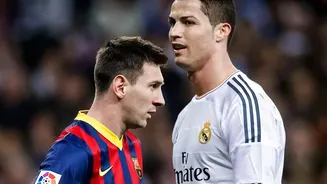
The UEFA Champions League is where modern legends are made, and both players have dominated the competition. Cristiano Ronaldo has more Champions League winners' medals, with five to his name compared to Messi's four. He is also the tournament's all-time leading goalscorer, with 140 goals. However, in head-to-head matches between the two, which often came in high-stakes El Clásico battles, Messi's teams have had more wins. He has also scored more goals and provided far more assists in the 36 times they have faced each other. This presents a fascinating contrast: Ronaldo's overall dominance and longevity in the competition versus Messi's superior performance when they went directly head-to-head on the pitch.
For Country and Glory
For years, the biggest question mark against both players was their success with their national teams. Both have now emphatically answered their critics. Cristiano Ronaldo led Portugal to victory at Euro 2016, the nation's first major international trophy. Lionel Messi, after years of final-match heartbreaks, guided Argentina to the Copa América in 2021 and, most momentously, the FIFA World Cup in 2022. Winning the World Cup is seen by many as the crowning achievement of Messi's career, giving him an edge in the major international trophy debate. While Ronaldo remains the all-time top scorer in men's international football, Messi's World Cup triumph is a powerful counterpoint that many feel tilts the balance in his favour.
Trophies and Individual Accolades
When comparing their trophy cabinets, Messi has the advantage in overall team trophies won. The most cited individual award in football is the Ballon d'Or, and here Messi also has a clear lead, having won the prestigious award eight times to Ronaldo's five. This signifies that over the course of their careers, journalists and voters have more often judged Messi to be the best player in the world. Ronaldo can point to his unique achievement of winning league titles in England, Spain, and Italy, a testament to his adaptability. Meanwhile, Messi holds numerous scoring records, including the most goals in a calendar year (91 in 2012) and the most European Golden Shoe awards (6).