


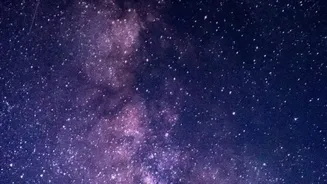
The Challenge of Deep Space
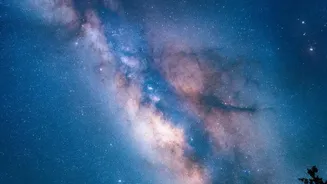
Photographing deep space objects like nebulae and galaxies is fundamentally difficult. These objects are incredibly faint, and the light that reaches us is sparse. Traditional cameras overcome this with large lenses and long exposures, keeping the shutter
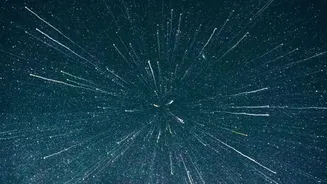
open for minutes or even hours to collect enough light. However, this approach has two major problems for phones: their sensors and lenses are tiny, and long exposures capture the Earth's rotation, causing stars to appear as streaks instead of points. Furthermore, all digital sensors produce inherent 'noise'—random speckles of color and brightness that can easily overwhelm the faint signal from a distant galaxy.
Computational Photography's Answer: Stacking
Instead of trying to beat traditional cameras at their own game, smartphones changed the rules with a technique called computational photography. The core principle is simple: take many short photos instead of one long one. This process, known as image stacking, is the key to modern smartphone astrophotography. By capturing dozens or even hundreds of images over a few minutes, the phone's processor can then merge them. For example, Google's Astrophotography mode can take multiple 15- or 16-second exposures over a four-minute period. This method cleverly bypasses the issue of star trails from Earth's rotation while gathering a huge amount of data.
How Stacking Reveals Hidden Detail
The magic of stacking happens in the processing. When the phone combines the multiple images it has taken, it uses algorithms to align the stars in each frame. Once aligned, the software averages the pictures together. The light from the stars and nebulae—the 'signal'—is consistent in every photo, so it gets reinforced. The random sensor noise, however, is different in each frame. By averaging them, this random noise is effectively cancelled out, dramatically improving what photographers call the 'signal-to-noise ratio'. The faint, consistent light from the deep space object shines through, while the distracting digital grain fades away, revealing details that were completely invisible in any single frame.
The Role of AI and Smart Processing
Modern phone processors do more than just stack images. They employ artificial intelligence and machine learning models to refine the final photo even further. These AI systems are trained on thousands of professionally captured astrophotographs, teaching them to differentiate between desirable details, like the faint arms of a galaxy, and unwanted artefacts like sensor noise or light pollution glow. This allows the phone to perform intelligent noise reduction without sacrificing sharpness, adjust colors for a more natural look, and enhance contrast to make celestial objects pop. It's an automated version of what a professional astrophotographer would spend hours doing in editing software.
Automated and Manual Controls
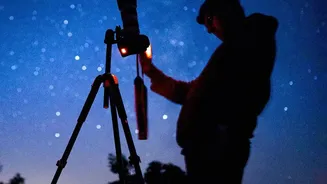
Many flagship phones now have dedicated astrophotography modes that automate this entire process. On a Google Pixel, for instance, placing the phone on a tripod and pointing it at the sky in Night Sight mode will automatically trigger the astrophotography sequence. However, for those who want more creative freedom, a growing number of third-party apps and even native camera 'Pro' modes offer manual control. Apps like NightCap for iPhone or DeepSkyCamera for Android allow users to set their own exposure times and ISO, and capture images in RAW format. This preserves the maximum amount of data, giving enthusiasts the ability to use desktop software like Starry Landscape Stacker or Sequator for even more advanced stacking and editing.