



1. Mint (Pudina)
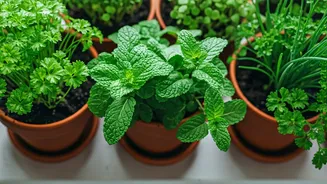
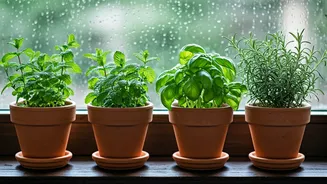
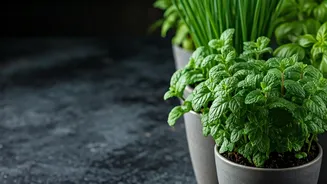
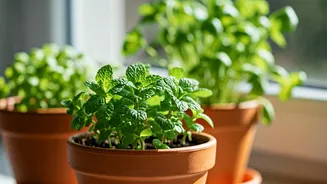
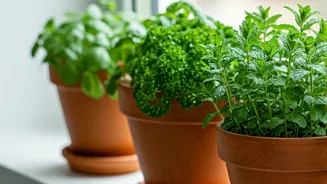
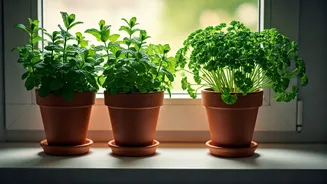
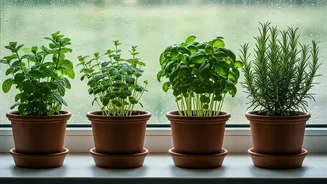
Arguably the easiest and most rewarding herb for an indoor garden, mint is a resilient plant that flourishes in the moist, humid conditions of the rainy season. Well-known in Indian households as pudina, this herb is famously vigorous and adapts well
to the partial sunlight of a monsoon-season windowsill. In fact, it often prefers indirect light. To keep it happy, plant it in a pot with good drainage and water only when the top layer of soil feels dry. Be warned: mint spreads aggressively, so it's best to give it its own container to prevent it from taking over. A steady supply is perfect for adding a refreshing kick to your morning chai, blending into chutneys and raitas, or simply garnishing a cool drink on a humid afternoon.
2. Parsley
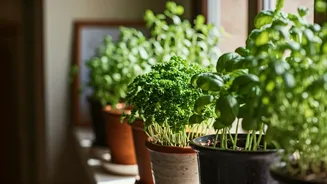
Often overlooked, parsley is a wonderfully versatile herb that handles lower light conditions better than many of its sun-loving counterparts, making it an excellent choice for a gloomy windowsill. Both flat-leaf and curly varieties grow well indoors, though flat-leaf is often preferred for its stronger flavour. Parsley has a long taproot, so choose a pot that is at least six to eight inches deep to give it room to grow. It thrives in rich, well-draining soil and prefers consistent moisture, but not soggy feet. A spot that receives gentle morning sun is ideal. Harvest the outer stems first, which encourages the plant to become bushier and more productive. Its bright, clean taste is perfect for brightening up soups, salads, and curries, or as a final flourish on nearly any savoury dish.
3. Chives
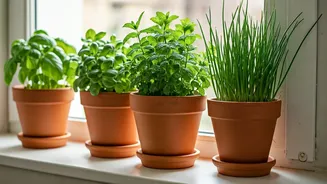
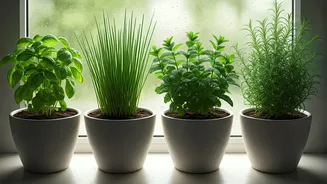
With their delicate, mild onion flavour, chives are a low-maintenance herb that performs exceptionally well in containers. They are quite tolerant of lower light conditions and can thrive with just a few hours of sun per day, making them a reliable choice for a rainy season garden. Chives have a shallow root system, so a pot that is about six inches deep is sufficient. Use a well-draining potting mix and water whenever the top inch of soil feels dry. One of the best things about growing chives is how quickly they regrow after being harvested; simply snip the leaves about two inches above the soil to encourage new growth. Their subtle flavour is fantastic when sprinkled over scrambled eggs, mixed into dals, or used as a garnish for soups and sandwiches.
4. Lemon Balm
As a member of the hardy mint family, lemon balm is another forgiving herb that adapts beautifully to indoor container life. It has a wonderfully uplifting citrusy aroma and flavour. This herb can tolerate partial shade and actually benefits from being shielded from intense, direct sun. An east-facing window that gets morning light is a perfect spot. Like its minty cousin, lemon balm appreciates consistently moist but well-drained soil. It's important to prevent the plant from flowering, as this can cause the leaves to turn bitter; simply pinch off any flower buds you see forming. The fragrant leaves are a delightful addition to herbal teas, infused water, or as a zesty note in salads and desserts.