


A World More Complex Than Imagined
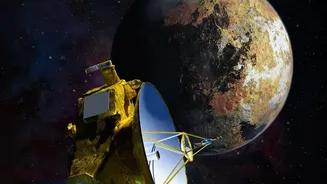
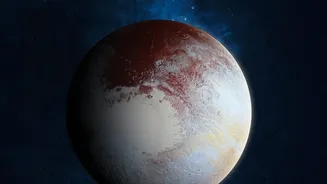
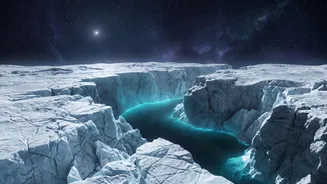
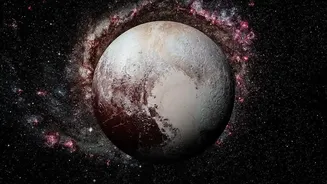
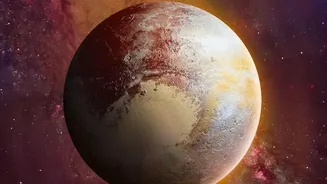
The Pluto that New Horizons revealed was nothing short of extraordinary. The centerpiece was a vast, heart-shaped glacier of frozen nitrogen larger than Texas and Oklahoma combined. This feature, informally named Sputnik Planum, is one of the largest
known glaciers in the solar system. Scientists also discovered towering mountains made of water ice, which may float atop softer nitrogen ice, and a hazy blue atmosphere. Perhaps most shocking was the evidence of ongoing geological activity. Some of Pluto's surfaces are estimated to be just 100 million years old, a geological blink of an eye in our 4.6-billion-year-old solar system. There were even signs that liquid nitrogen may have flowed on the surface recently. These findings upended models that predicted such a small, cold, and distant world should be largely inert.
Pluto: A Gateway to a New Class of Worlds
Pluto’s reclassification as a dwarf planet in 2006 was controversial, but its exploration has made the entire category more compelling. Dwarf planets are worlds large enough to be rounded by their own gravity but not massive enough to have cleared their orbits of other objects. Most, like Pluto, reside in the Kuiper Belt, a disc of icy bodies beyond Neptune considered a relic of the solar system's formation. What we learned about Pluto—its potential for a subsurface water ocean, its active geology, and its complex atmosphere—suggests that other dwarf planets could be equally dynamic. These are not just frozen rocks, but unique worlds with their own stories. Pluto was simply the first one we've visited up close, offering a tantalizing preview of what else might be out there.
The Unanswered Questions Deepen
For every answer New Horizons provided, it raised a dozen more questions. What powers Pluto's geological engine so far from the Sun's warmth? Does a liquid water ocean still slosh beneath its icy shell? Its largest moon, Charon, is also a world of mysteries, with a massive canyon system and a strange reddish polar cap that may be made of material captured from Pluto's own atmosphere. Even Pluto's smaller moons behave bizarrely, tumbling chaotically instead of keeping one face locked toward their parent world. And recent studies using the James Webb Space Telescope suggest that other distant dwarf planets, like Eris and Makemake, may also show signs of internal heat and geologic activity, deepening the puzzle of how these small worlds function.
Beyond Pluto: A Belt of Enigmas
The dwarf planet family is diverse. Ceres, located in the asteroid belt between Mars and Jupiter, was explored by the Dawn mission, which found bright salt deposits left by evaporated briny water, suggesting past or present hydrothermal activity. Scientists even found organic molecules, the basic building blocks of life. Farther out in the Kuiper Belt, we have Makemake, the second-brightest object in the region after Pluto, and Eris, which is even more massive than Pluto. These worlds remain largely unobserved, known to us only as distant points of light. We have no close-up images and can only infer their properties from afar. The discoveries at Pluto suggest these bodies aren't just similar—they could be fundamentally different, each with its own unique evolutionary path.