



The Dual-Use Dilemma
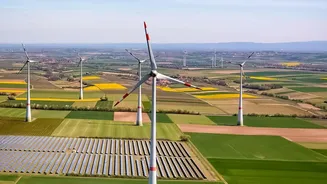
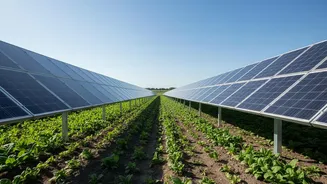
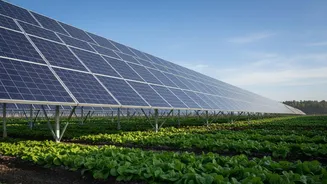
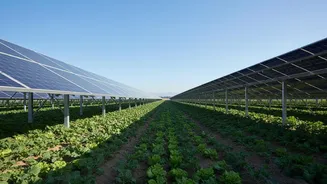
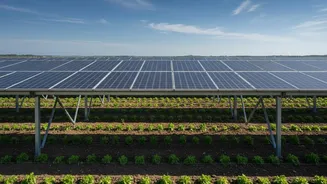
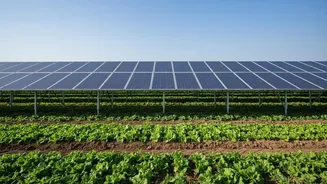
Agrivoltaics, the practice of using the same piece of land for both solar energy generation and agriculture, sounds like a perfect solution. It promises to boost farmer incomes, enhance India's energy security, and make efficient use of our most valuable
resource: land. With the government backing a significant push towards this technology, farmers are looking at a potential new revenue stream—selling electricity as a reliable 'third crop'. However, the synergy is delicate. The primary concern for any farmer is the potential impact on crop yield. Solar panels, by their very nature, cast shadows. The wrong setup could lead to diminished harvests, defeating the purpose of dual-use land and turning a promising investment into a financial burden. This is where precise assessment becomes not just important, but essential.
Introducing Crop Shade Assessment
At its core, crop shade assessment is a method to predict and analyze the impact of shadows cast by solar panels on the crops growing beneath them. It's a critical feasibility study that moves beyond simple guesswork. Using specialized software and on-site analysis, this assessment models how shadows will move across a field throughout the day and across different seasons. This isn't just about whether a shadow exists, but its duration, intensity, and a crop's specific tolerance to it. Some crops thrive with a bit of protection from the harsh midday sun, which can reduce heat stress and water evaporation. Others require full sun exposure to flourish. A proper shade assessment provides a clear, data-driven picture of these complex interactions, allowing for an optimised design before a single pile is driven into the ground.
A Farmer's Guide to Shade Assessment
For farmers considering agrivoltaics, shade assessment is the most powerful tool for de-risking the investment. It helps answer the most critical questions. First, what is the best panel layout? The assessment will determine the optimal height, density, and spacing of the solar arrays to balance energy generation with the light requirements of the crops. Second, which crops are most suitable? The analysis can confirm if your current crops are shade-tolerant or suggest alternative, more profitable crops that would thrive in the modified environment. Several analytical tools, some in the form of accessible spreadsheets, are being developed to help farmers estimate costs, revenues, and yield changes under different solar configurations. This allows a farmer to project the trade-offs and potential income from both electricity sales and crop harvests, ensuring the entire system is economically viable for their specific farm.
Policy Implications of Shade Modeling
For policymakers, crop shade assessment provides the empirical data needed to craft effective and sustainable agrivoltaics policies. Ambiguous regulatory frameworks have been a barrier to adoption, and robust assessment data can change that. By understanding the relationship between panel configuration, region-specific crops, and climatic conditions, governments can develop smarter subsidy programs that incentivise optimal designs rather than just installed capacity. It allows for the creation of regional guidelines and 'best practice' blueprints for different agro-climatic zones across India. Furthermore, this data helps in standardising the sector, giving financial institutions the confidence to fund projects by providing them with more reliable yield and revenue forecasts. It transforms agrivoltaics from a series of isolated experiments into a scalable, predictable, and bankable part of India's energy and agricultural future.