






The Hidden Hazard Under Your Feet
Many modern Indian homes feature beautiful, easy-to-clean flooring like polished marble, glazed tiles, or laminate. While aesthetically pleasing, these surfaces can become incredibly hazardous during a workout. They offer very little grip, and even a small
amount of sweat can make them as slick as an ice rink. When you perform exercises that challenge your stability, you need a surface that provides reliable traction to prevent your feet from sliding. Without a stable base, your body has to work overtime just to stay upright, reducing the effectiveness of the exercise and dramatically increasing your risk of a fall. Concrete floors in garages or basements are also notoriously slippery and unforgiving.
What Are 'Challenging' Balance Drills?
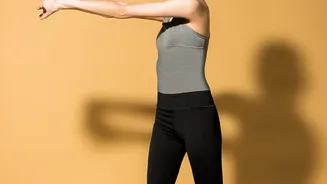
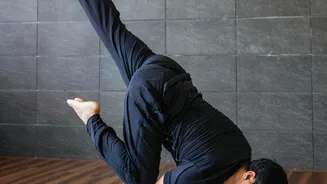
A 'challenging' balance drill is any exercise that intentionally creates instability to strengthen your core and smaller stabilising muscles. This includes a wide range of popular movements you might be doing at home. Examples include single-leg deadlifts, pistol squats, standing on one leg, yoga poses like Tree Pose or Warrior III, and walking in a straight line with one foot directly in front of the other. Even seemingly simple movements become risky when your footing is insecure. Any activity that requires you to lift a foot, narrow your base of support, or shift your centre of gravity demands a non-slip surface to be performed safely.
The Real Risks of a Slip and Fall
A slip during a balance exercise is not just a minor stumble. It can result in significant injuries. When you fall unexpectedly, your body has little time to react, and the impact can be severe. Common injuries from such falls include ankle sprains, torn ligaments in the knee, and fractures of the wrist or arm as you instinctively reach out to break your fall. More serious consequences can include hip fractures, back and spinal cord injuries, or even head injuries if you hit furniture or the hard floor. These injuries can require long recovery periods, rehabilitation, and can significantly set back your fitness journey. The pursuit of better balance should never come at the cost of a debilitating injury.
How to Create a Safe Workout Zone
The good news is that making your workout space safe is simple and doesn't require a complete renovation. The most effective solution is to use a high-quality exercise or yoga mat. Look for one with a non-slip texture on both sides—one to grip the floor and one to grip your feet. Before every session, ensure your mat and the floor underneath are completely dry. If you don't have a mat, a carpeted room is a much safer alternative to a tiled or wooden floor. If possible, perform your balance exercises near a sturdy wall or a heavy piece of furniture that you can use for support if you feel unsteady. This simple precaution allows you to challenge your balance without the risk of a serious fall.
Smarter, Safer Alternatives
If you're new to balance training or know your floor is slick, start with supported exercises. For example, when doing a single-leg stand, lightly touch a wall or countertop for stability. As you get stronger, you can progress to using just one fingertip, and eventually, no support at all. Another strategy is to perform the exercises on a surface that challenges your balance in a controlled way, like a firm cushion or a folded towel placed on a non-slip mat. This forces your stabiliser muscles to work harder without the danger of a sudden slip. Remember to clear your workout area of any clutter like toys, shoes, or other obstacles that could cause a trip.