







A Galaxy's Sudden Change
In late 2019, the galaxy known as SDSS1335+0728, located in the Virgo constellation, was just another quiet corner of the universe. For years, it had been unremarkable. Then, automated sky surveys noticed something extraordinary: the galaxy's core began
to shine dramatically brighter than ever before. This sudden and sustained change in brightness captured the attention of astronomers worldwide, who quickly trained some of the world's most powerful telescopes, including the European Southern Observatory's Very Large Telescope (VLT) in Chile, on the phenomenon to figure out what was happening. The initial alert flagged a change in visible light, but the mystery only deepened from there.
Unraveling a Cosmic Mystery
As research teams dug into the data, they found the galaxy wasn't just brighter; it was transforming. By comparing archival data with new observations, they discovered that SDSS1335+0728 was radiating much more light across multiple wavelengths, including ultraviolet and infrared. Then, in early 2024, it began emitting X-rays, a tell-tale sign of high-energy activity. These changes were unlike other known cosmic events. Supernova explosions or tidal disruption events (TDEs), where a star is torn apart by a black hole, cause a galaxy to light up, but they typically fade over a few hundred days. This galaxy, however, has continued to brighten for more than four years, pointing to a much more significant and long-lasting event.
The Science of a Waking Giant
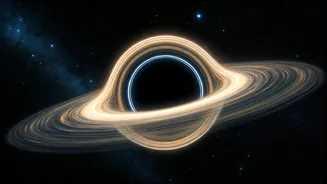
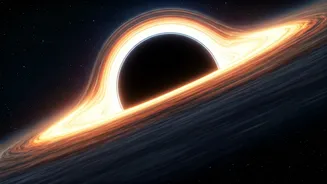
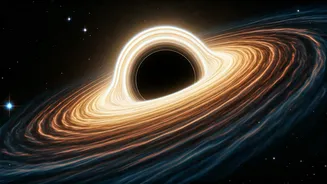
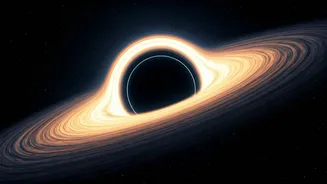
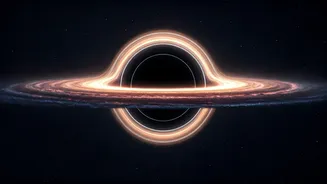
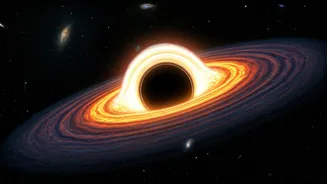
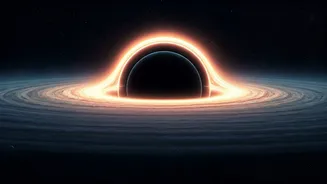
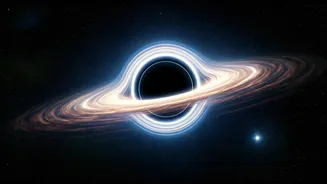
So what does it mean for a black hole to 'wake up'? Most supermassive black holes, which have masses millions to billions of times that of our sun, are dormant. They are not actively consuming large amounts of matter and are therefore invisible. However, when a vast supply of gas and dust becomes available, it begins to fall toward the black hole, forming a swirling, superheated structure called an accretion disk. The immense friction and energy in this disk cause it to emit incredible amounts of radiation, outshining all the stars in the host galaxy combined. This ferociously bright and energetic state is known as an Active Galactic Nucleus (AGN). The changes seen in SDSS1335+0728 suggest its central black hole is transitioning from a dormant state into an AGN.
An Epic Meal or a Natural Process?
Scientists are currently exploring two primary explanations for this awakening. One possibility is an unusually long and slow tidal disruption event, where a star was shredded and is now being consumed gradually. However, the prolonged and steady brightening makes this less likely than a typical TDE. The more tantalizing theory is that astronomers are witnessing the natural activation process of a black hole for the very first time. This could be triggered by internal processes within the galaxy that have suddenly funnelled a massive amount of gas toward its hungry core. Distinguishing between these scenarios is the next critical step for researchers.
A New Window into the Cosmos
This discovery is monumental because it's the first time the process of a black hole's awakening has been caught in the act. Previously, astronomers had only seen galaxies that were already active or inactive, with no observation of the transition itself. Watching this unfold provides a unique laboratory to test theories about how galaxies and their central black holes grow and evolve. It allows scientists to study the physics of accretion disks and the formation of AGNs in real-time, offering invaluable insights that were previously only theoretical. Even our own Milky Way's central black hole, Sagittarius A*, is currently dormant but could awaken in a similar fashion. Continued observation of SDSS1335+0728 will help astronomers understand the lifecycle of these cosmic giants and the powerful influence they have on the universe around them.