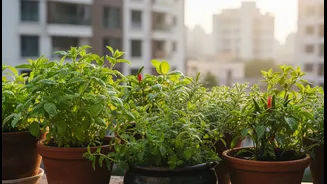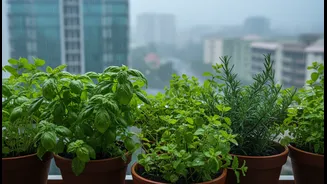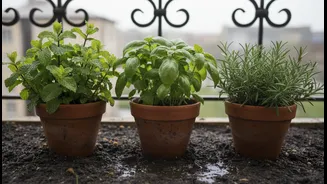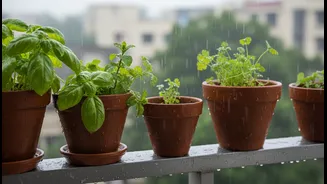






Why Grow Your Own Herbs?
There’s a unique satisfaction in snipping fresh herbs for your cooking. Beyond the joy of nurturing a plant, a home herb garden offers tangible benefits. The flavour and aroma of freshly harvested herbs are far more potent than store-bought alternatives,
which can elevate your everyday dal, chutney, or biryani. Growing your own produce is also cost-effective, eliminating repeat purchases of herb bunches that often wilt in the fridge. Furthermore, it gives you complete control over what goes into your food, allowing you to grow organic herbs free from pesticides. A small balcony garden becomes a patch of accessible nature, a therapeutic hobby that reduces stress and connects you with the food you eat.
The Monsoon Advantage in Bengaluru
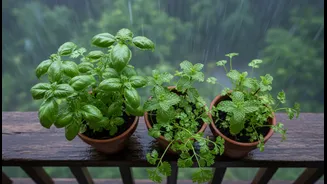
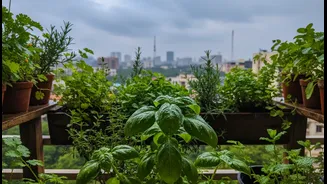
The period from June to September marks Bengaluru's prime planting season. The monsoon brings cooler temperatures, higher humidity, and consistent moisture, creating ideal conditions for seeds to germinate and young plants to establish strong roots. For balcony gardeners, this means nature does a lot of the work for you, reducing the need for constant watering. The humid air helps cuttings root more quickly, making it a great time to propagate plants like mint. This season is particularly forgiving for beginners, as the survivability of plants is significantly higher compared to the hot, dry summer months.
An Essential Indian Herb Starter Pack
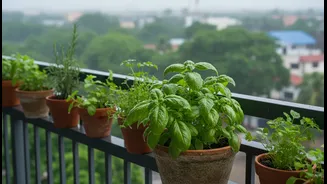
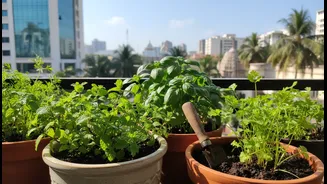
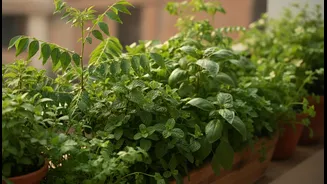
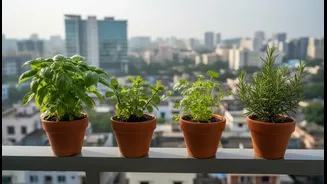
For a truly useful Indian kitchen garden, start with the herbs you cook with most often. Tulsi (Holy Basil) is a must-have, revered for its medicinal properties and a great addition to chai or kadha. It’s a hardy plant that thrives in Bengaluru's climate. Pudina (Mint) is another easy-to-grow herb, perfect for chutneys, raitas, and refreshing drinks. It grows aggressively, so it’s best to give it its own pot. No Indian kitchen is complete without Dhaniya (Coriander), used as a garnish for countless dishes. It grows quickly from seed and can be ready to harvest in just a few weeks. Finally, Curry Leaves (Kadi Patta) are essential for tempering. While it's a slower grower, once established, this plant will provide flavour for years.
Setting Up Your Balcony Garden
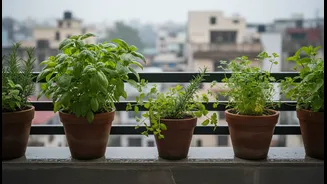
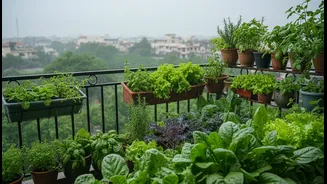
You don’t need expensive equipment to get started. Recycled containers like plastic bottles, old buckets, or takeaway boxes work perfectly, as long as they have drainage holes at the bottom. Most herbs do well in 6 to 8-inch deep pots. The right soil is crucial for success. A well-draining potting mix is key. You can create your own by combining garden soil, compost (or vermicompost), and coco peat. This mixture retains adequate moisture while preventing waterlogging, which can harm the roots. Ensure your chosen spot receives at least four to six hours of sunlight daily; a south or west-facing balcony is often ideal.
Simple Care for a Thriving Garden
While the monsoon provides plenty of water, be careful not to overwater. Check if the top inch of the soil is dry before watering again, as waterlogged pots can lead to root rot. Regularly harvesting your herbs is the best way to encourage fuller, bushier growth. Pinching off leaves from the top stimulates the plant to produce more. Keep an eye out for pests. A simple, organic solution of neem oil mixed with water can be sprayed weekly to keep common pests at bay. With a little care, your balcony will transform into a fragrant, edible oasis that keeps on giving.