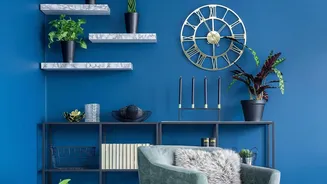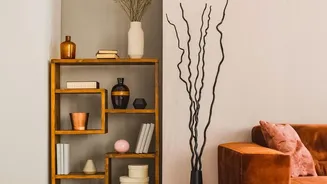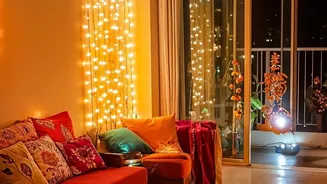



Empty shelves can feel daunting, a blank canvas that’s tricky to fill. But the secret to a beautifully styled shelf isn't about having more stuff; it’s about creating visual harmony by playing with height, texture, and thoughtful placement.
The Power of Varied Heights
Monotony is
the enemy of a well-styled shelf. When every object is the same height, the eye has nowhere to go, and the display can feel flat and uninspired. The key is to create a visual rhythm that encourages the eye to travel up, down, and across the display. By placing tall items next to shorter ones, you create a dynamic landscape. A tall, slender vase might sit beside a squat, round bowl, or a vertical stack of books could be next to a small, framed photo. This contrast in scale is what makes a shelf feel curated and interesting. Think of it as creating a miniature skyline where the different heights work together to form a pleasing whole.
Anchor With Vases and Vertical Lines
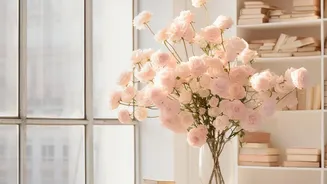
Every good arrangement needs an anchor, and tall items like vases, sculptures, or even lean-to art prints serve this purpose perfectly. These pieces create strong vertical lines that draw the eye upward and add a sense of scale. A tall vase, whether filled with dried stems or left elegantly empty, can act as a focal point on a shelf. Place it slightly to one side rather than dead-centre to create a more natural, less rigid look. You can then build the rest of your arrangement around this anchor piece, layering smaller objects in front or beside it to create depth and balance.
Ground With Horizontal Book Stacks
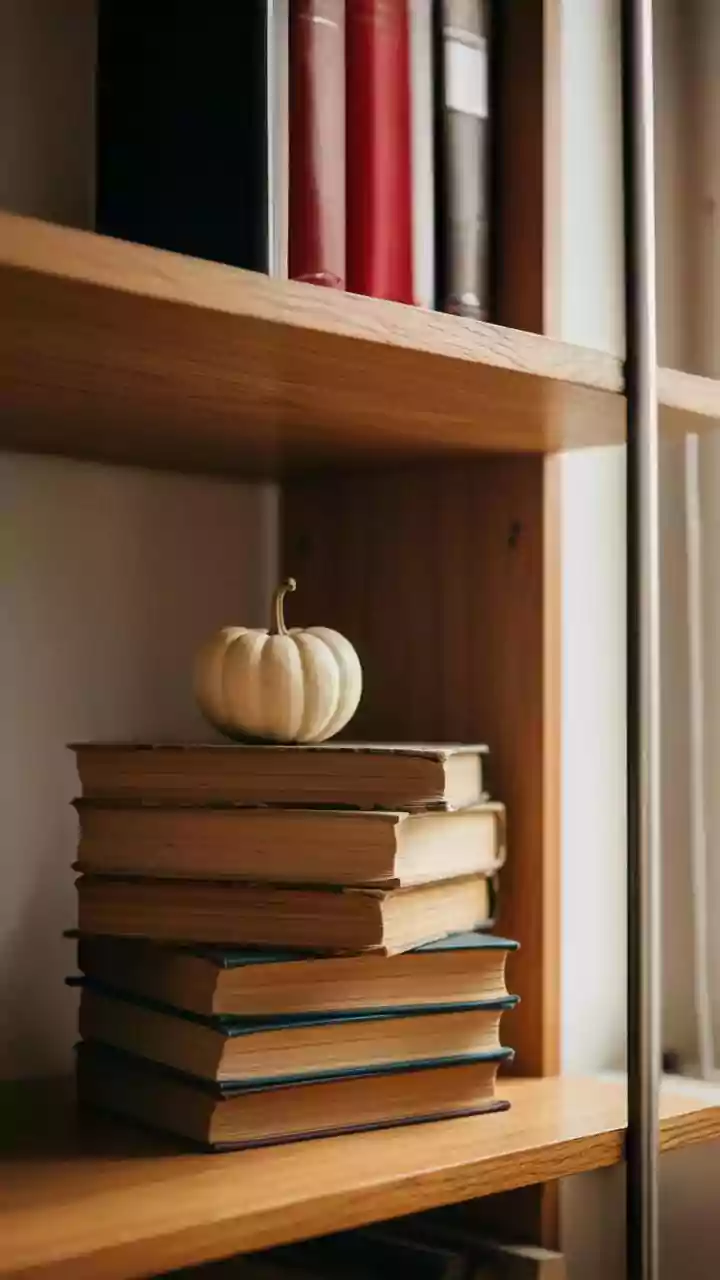
While vertical books give a shelf a traditional library feel, horizontal stacks are a stylist’s secret weapon. Stacking a few books on their side breaks up the monotony of endless spines and creates a platform for other decorative items. A low pile of two or three coffee table books instantly creates a new level, providing the perfect perch for a small plant, a decorative box, or a scented candle. This trick not only adds height variation but also introduces horizontal lines that ground the arrangement and prevent it from feeling too busy. Try alternating vertical rows with horizontal stacks across your shelves for a balanced rhythm.
Create Visual Triangles
One of the most effective principles in design is the 'rule of three'. Grouping objects in odd numbers—particularly threes—creates arrangements that are more visually appealing and dynamic than even-numbered groups. A simple way to apply this is by creating a visual triangle with your objects. Arrange three items of varying heights—one tall, one medium, and one small—so that they form a triangle. For example, place a tall vase at the back, a medium-sized framed photo slightly to one side, and a small decorative object in front. Your eye naturally follows this triangular shape, making the grouping feel balanced and complete.
Layer and Mix Materials
A truly beautiful shelf isn’t just about height; it’s also about depth and texture. Avoid placing everything in a single, flat row. Create depth by layering items, placing smaller objects slightly in front of larger ones. A small bowl can sit in front of a stack of books, or a tiny framed photo can lean against a larger piece of art. Also, pay attention to texture. Mix smooth, glossy surfaces with rough, matte ones. A sleek metal object next to a rustic wooden bowl, or a smooth ceramic vase paired with a woven basket, creates a rich, tactile experience that adds another layer of interest to your display. This interplay of textures makes the shelf feel collected over time, rather than staged.