

The Golden Healer: Turmeric's Curcumin
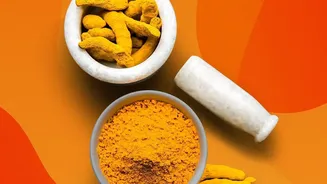
At the heart of many Indian dishes is turmeric, the vibrant yellow spice celebrated for its health properties for centuries. The main active compound responsible for its fame is curcumin. Curcumin is a potent antioxidant with powerful anti-inflammatory
effects, which science has linked to a wide range of health benefits. However, there's a catch: on its own, curcumin has very poor bioavailability. This means our bodies struggle to absorb it effectively from the gut into the bloodstream. If you simply sprinkle raw turmeric powder into a glass of water, most of its beneficial curcumin will pass through your system without being used.
The Perfect Partner: Pepper's Piperine
This is where black pepper enters the story. The sharp, pungent kick of black pepper comes from a compound called piperine. By a remarkable stroke of natural synergy, piperine acts as a 'bio-enhancer' for curcumin. It works by inhibiting certain enzymes in our liver and intestinal wall that are responsible for breaking down and flushing out foreign substances, including curcumin. By running interference on this metabolic process, piperine allows curcumin to remain in the body for longer and at higher concentrations. Studies have shown that combining even a small amount of black pepper with turmeric can boost curcumin absorption by a staggering amount, sometimes cited as up to 2,000%.
Hot Oil: The Activation Vehicle
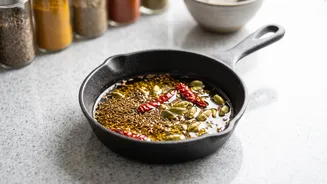
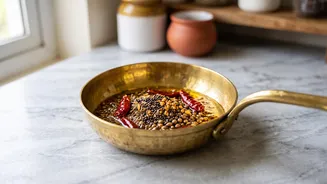
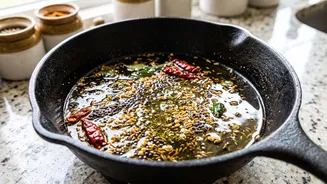
So we have our power couple, curcumin and piperine. But there is one more crucial element: fat. Curcumin is lipophilic, which is a scientific way of saying it is fat-soluble, not water-soluble. It dissolves in oils and fats, not water. This is precisely why the practice of hot oil tempering, also known as 'tadka', 'vaghar', or 'chaunk', is so ingenious. This technique involves briefly frying spices in hot oil or ghee before adding them to a dish. When turmeric is added to this hot fat, the curcumin dissolves and is effectively 'activated', making it far more accessible for your body to absorb. The fat acts as a transport vehicle, helping to shuttle the curcumin through the gut wall and into your system where it can get to work.
Bringing It All Together In The Pan
The tempering process creates a perfect storm of bioavailability. The heat from the oil helps release the aromatic and medicinal compounds from the spices. The oil itself provides the necessary fat to dissolve the curcumin. And when black pepper is included in the tempering mix, its piperine ensures that the now-dissolved curcumin can be absorbed effectively. This triple-action synergy is a testament to the deep-seated wisdom of traditional culinary practices. It’s a system perfected over generations, long before modern science could explain exactly why it worked so well. A word of caution is prudent: the heat should be managed. The goal is to bloom the spices, not burn them. A short, controlled sizzle is all that's needed, as excessive heat can eventually degrade the beneficial compounds.
Making It A Daily Habit
Incorporating this powerful trio into your daily meals is simple. Almost every dal (lentil soup), sabzi (vegetable dish), and curry can be finished with a tempering. A basic tempering might involve heating a tablespoon of ghee or coconut oil, adding mustard seeds until they pop, followed by cumin seeds, a pinch of asafoetida (hing), and finally, turmeric powder and a crack of black pepper. This fragrant, sizzling mixture is then poured directly over the finished dish. This final step not only adds a massive burst of flavour and aroma but also transforms your meal into a more potent, health-promoting dish by ensuring every bit of golden goodness from the turmeric is put to good use by your body.