


The Main Event: The Vitamin A Victor
Let’s get straight to the headline attraction: Vitamin A. Both vegetables are celebrated for their rich orange hue, which comes from beta-carotene, a compound your body converts into Vitamin A. This essential nutrient is crucial for healthy vision, immune
function, and skin health. When you compare them cup for cup, however, a clear winner emerges. One cup of cooked sweet potato delivers a staggering 1,730 micrograms (mcg) of retinol activity equivalents (RAE), which is the standard unit for Vitamin A. This accounts for about 192% of the recommended daily value. Butternut squash is no slouch, providing an impressive 1,144 mcg of RAE per cooked cup, or about 127% of the daily value. While both are excellent sources, sweet potato unequivocally dominates the Vitamin A contest.
Understanding Beta-Carotene Conversion
It’s important to know that the Vitamin A in these vegetables is 'provitamin A', meaning the body has to do some work to make it usable. The efficiency of converting beta-carotene to retinol (the active form of Vitamin A) varies significantly from person to person, influenced by genetics and overall diet. Some individuals are 'low responders' and convert very little. For most people, the body only converts what it needs, which is why there's no established upper limit for beta-carotene from food, unlike the preformed Vitamin A found in animal products like liver. So, while the numbers are high, you don't need to worry about overdoing it on Vitamin A from these plant sources.
The Calorie and Carbohydrate Count
If you’re watching your calorie intake, butternut squash has a distinct advantage. A cup of cooked butternut squash contains only about 82 calories and 22 grams of carbohydrates. In contrast, the same amount of cooked sweet potato has around 180 calories and 41 grams of carbohydrates. The squash’s higher water content makes it a lighter choice, allowing for a larger serving size for fewer calories. For those managing carbohydrate intake or aiming for weight loss, butternut squash is the more macro-friendly option of the two.
A Look at Fiber and Other Nutrients
Beyond Vitamin A, both vegetables are packed with other important nutrients. Sweet potato generally has a slight edge in a few key areas. It provides more fiber per cup (about 6.6 grams versus roughly 7 grams in squash, though some sources state sweet potato has more). Sweet potato is also significantly richer in potassium, a mineral critical for blood pressure and muscle function, offering about 950 mg per cup compared to squash's 582 mg. Both are good sources of Vitamin C, with sweet potato again slightly ahead at 39 mg per cup versus 31 mg for butternut squash.
Taste, Texture, and Culinary Uses
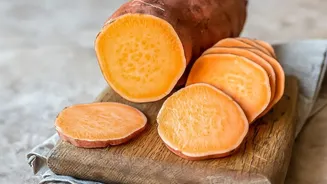
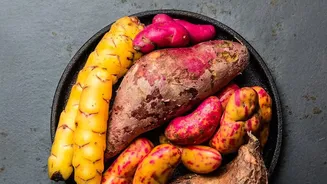
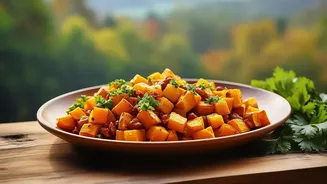
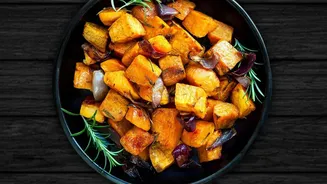
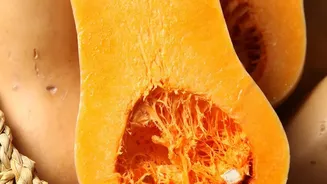
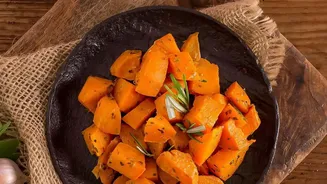
Nutritional stats are only part of the story; taste and texture determine how you’ll enjoy them. Sweet potatoes have a denser, starchier texture, similar to a regular potato. They hold up well to various cooking methods and are famously used for fries, pies, and fluffy mash. Butternut squash has a more watery and fibrous texture. When cooked, it becomes exceptionally creamy and smooth, making it a perfect base for puréed soups, sauces, and risottos. Its flavour is often described as sweet and nutty.