








The Problem with Uranium
Uranium contamination is a significant threat to environmental and human health. When present in its hexavalent state (U(VI)), uranium is highly soluble in water. This means it can easily travel through groundwater, spreading far from the original source
of contamination, such as a mine or a former nuclear facility. Its toxicity and long radioactive half-life make this mobility a serious concern, posing risks to drinking water supplies and entire ecosystems. Traditional cleanup methods often involve pumping massive amounts of water through complex and expensive chemical filtration systems, a process that can take decades and generate secondary waste.
Nature's Cleanup Crew
Scientists have discovered a surprising and sustainable alternative: bioremediation. This approach harnesses the natural metabolic processes of living organisms to neutralize pollutants. It turns out that certain types of bacteria, many of which live in oxygen-free environments, have evolved remarkable abilities to interact with heavy metals. Genera such as Geobacter and Shewanella are particularly noteworthy. These microbes were first isolated from contaminated sites, where they were not just surviving but thriving in conditions that would be lethal to most other life forms. This discovery opened up an entirely new avenue for environmental cleanup.
How Bacteria 'Fix' Uranium
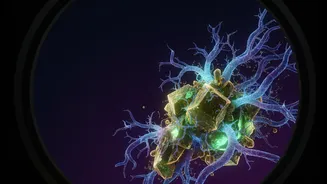
The secret lies in how these bacteria breathe. In the absence of oxygen, some microbes use metals as a substitute to generate energy. They perform a chemical process called bioreduction. They take in soluble hexavalent uranium (U(VI)) and, using specialized proteins like c-type cytochromes, add electrons to it. This transforms the uranium into its tetravalent state (U(IV)), which is insoluble in water. The result is that the dissolved, mobile uranium precipitates into a stable, solid mineral form, essentially locking it in place and preventing it from spreading further through the groundwater. Some bacteria, like certain species of Microbacterium, use another trick called biomineralization, releasing phosphate that chemically binds with uranium to form stable mineral crystals.
From the Lab to the Field
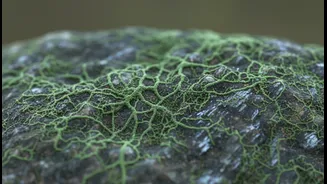
This isn't just a laboratory curiosity. Field studies have demonstrated that stimulating the growth of these native bacteria can be highly effective. In one well-documented case at a contaminated site in Rifle, Colorado, injecting acetate—a simple food source for the bacteria—into the groundwater led to a dramatic decrease in uranium concentrations. As the population of Geobacter species flourished, they began to immobilize the uranium. Researchers have also found that these bacteria can be grown as biofilms—slimy, resilient colonies—that are even more effective at capturing and reducing uranium, and can tolerate higher concentrations of the toxic metal. However, scaling this up for widespread use presents challenges, such as ensuring the right environmental conditions for the bacteria to thrive and dealing with other competing microbes.
A New Frontier in Remediation
The focus on uranium-fixing bacteria highlights a broader shift in how we approach environmental cleanup. The field of microbial remediation is rapidly expanding, with researchers exploring the potential of microbes to degrade everything from oil spills and plastics to other toxic heavy metals. These biological solutions are often cheaper, more environmentally friendly, and more sustainable than conventional physicochemical methods. By studying the planet's tiniest inhabitants, scientists are developing powerful tools to undo some of the environmental damage caused by human activity. It's a testament to the idea that sometimes the most effective solutions have been here all along, just waiting to be discovered.