






Beyond the Monochrome Moon
For as long as humans have stared at the night sky, the Moon has appeared as a faithful, if monochromatic, companion. Its surface, a canvas of whites, greys, and blacks, seemed to tell a simple story. However, the four astronauts aboard NASA's Artemis
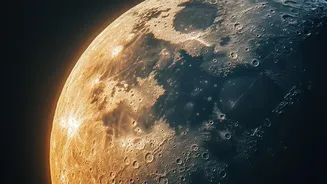
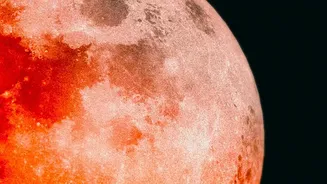
II mission have returned with a very different tale. During their flyby in April 2026, the crew witnessed a surprisingly diverse palette of colours. Recently released data, including over 11,000 high-resolution images and hours of astronaut observations, confirms what the crew saw with their own eyes: subtle but distinct shades of yellow, green, brown, and tan splashed across the lunar landscape. These observations, especially around regions like the Aristarchus Plateau, have provided a fresh perspective on our celestial neighbour.
A Rainbow of Minerals
These faint hues are more than just a pretty picture; they are geological fingerprints. The different colours correspond to the real chemical and mineral composition of the lunar surface. Scientists believe the greenish tints, for example, could be linked to magnesium-rich volcanic glass beads, similar to those collected during the Apollo missions. Meanwhile, yellowish and orange tones may indicate areas rich in titanium, like the mineral ilmenite. The colours are often too subtle for the naked eye from Earth or even for robotic cameras, which are programmed to capture specific data. This is where the trained eyes of the Artemis II astronauts proved invaluable, as they could interpret the landscape in real-time, integrating context and visual cues in a way no machine can.
Reading the Moon's Volcanic Past
Each coloured patch on the Moon is a chapter in its explosive history. The Aristarchus Plateau, which particularly captivated the crew, is a hotbed of ancient volcanic activity. The colours observed there are thought to be evidence of different types of volcanic eruptions that spewed chemically distinct materials onto the surface billions of years ago. When molten rock from the Moon's interior erupted, it cooled rapidly, forming tiny glass beads of varying composition. These deposits, now visible as faint colour variations, can tell scientists about the composition of the lunar mantle and the conditions under which these ancient eruptions occurred, offering a window into the Moon's fiery youth.
A Roadmap for Future Landings
The science findings from Artemis II are not just academic; they have profound implications for the future of human space exploration. Understanding the mineral composition of the lunar surface is a critical component of In-Situ Resource Utilization (ISRU), the practice of using local materials to support missions. For instance, titanium-rich areas, potentially identified by their blue or orange hues, are of great interest because the mineral ilmenite contains both iron and titanium, but also oxygen, a crucial resource for life support and rocket propellant. By mapping these colourful regions, NASA can more effectively identify scientifically interesting and resource-rich locations for future landings, including the upcoming Artemis III mission, which aims to put astronauts back on the lunar surface. These colour maps essentially serve as a treasure map for the resources needed to build a sustainable human presence on the Moon.