


What Is a Functional Core?
Your core is more than just your abs. It's a complex system of muscles including your lower back, hips, glutes, and deep abdominals like the transverse abdominis. These muscles work together as a powerful stabiliser for your entire body. Functional core training
focuses on strengthening this system to work as it's intended: to brace against force, prevent injury, and transfer power during activities like lifting, twisting, or simply maintaining good posture while sitting. This is the strength that helps you carry groceries, play with your kids, and reduce back pain.
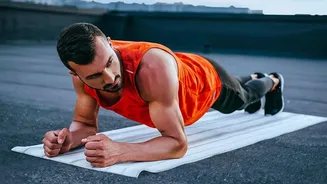
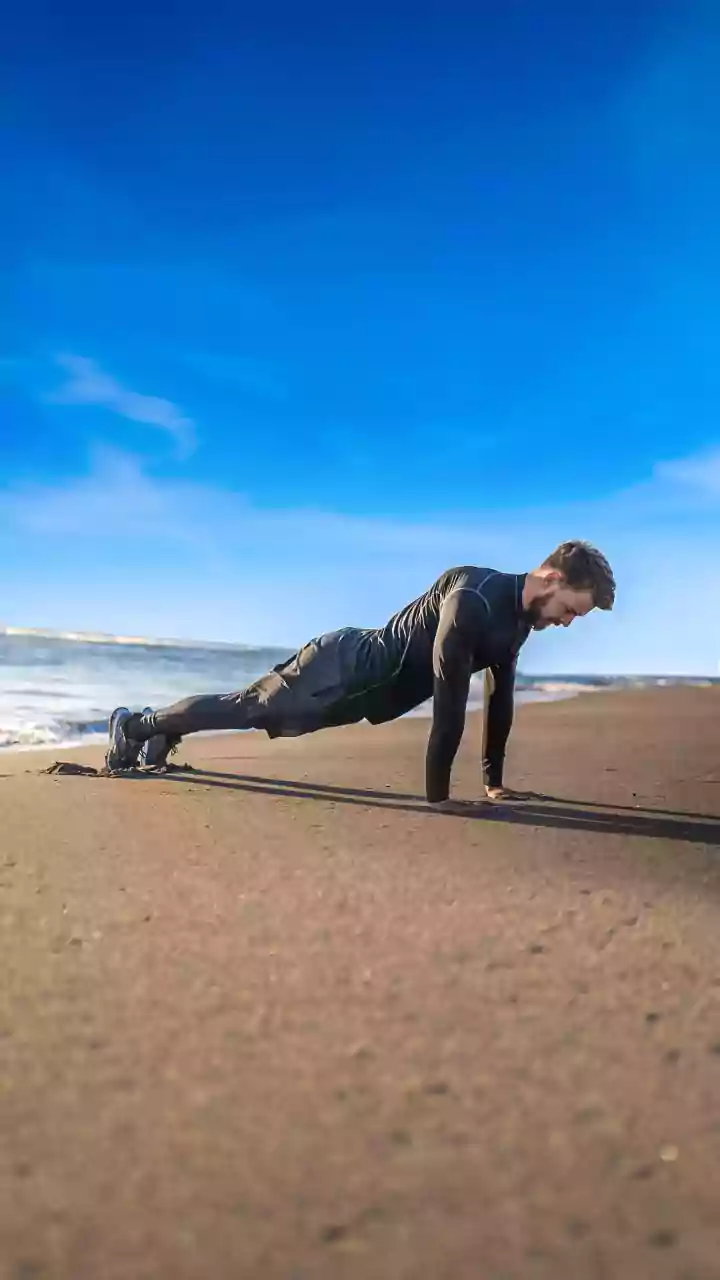
The Forearm Plank
The plank is a foundational isometric exercise that builds endurance in the entire core. It teaches you to brace your abdominals and resist spinal extension, a key function for protecting your lower back. How to do it: Lie on your stomach and prop yourself up on your forearms, with your elbows directly under your shoulders. Lift your hips so your body forms a straight line from your head to your heels. Engage your core and glutes to prevent your hips from sagging. Keep your gaze neutral, just ahead of your hands. Hold this position, focusing on steady breathing. Start by aiming for 30 seconds and gradually increase the time as you get stronger.
The Bird-Dog
This move looks simple, but it's a powerhouse for improving stability and coordination. The bird-dog challenges your core to prevent rotation in your torso while your limbs are in motion, which directly translates to better balance in daily life. How to do it: Start on all fours with your hands directly under your shoulders and your knees under your hips. Keep your back flat and your spine neutral. Engage your core, then slowly extend your right arm straight forward and your left leg straight back, keeping both parallel to the floor. The key is to keep your hips and shoulders square to the ground without tilting. Hold for a few seconds before returning to the start with control. Repeat on the other side, extending your left arm and right leg. That's one rep.
The Dead Bug
Named for its resemblance to an insect on its back, the dead bug is one of the safest and most effective exercises for targeting the deep core muscles that support your spine. It teaches you to maintain a stable core while coordinating the movement of your opposite arm and leg. How to do it: Lie on your back with your arms extended toward the ceiling. Bring your legs up so your hips and knees are bent at a 90-degree angle (the 'tabletop' position). Press your lower back gently into the floor and brace your abs. Slowly lower your right arm and left leg toward the floor, moving them only as far as you can without your lower back arching. Exhale as you lower, then inhale as you return to the starting position with control. Repeat with the opposite arm and leg.
The Glute Bridge
A strong core includes strong glutes. The glute bridge is fantastic for activating your gluteus maximus, which is a primary mover for hip extension and a key supporter of the lower back and pelvis. How to do it: Lie on your back with your knees bent and your feet flat on the floor, about hip-width apart and a comfortable distance from your glutes. Rest your arms at your sides. Squeeze your glutes and engage your core, then lift your hips off the floor until your body forms a straight line from your shoulders to your knees. Hold for a moment at the top, making sure not to over-extend your back, then slowly lower your hips back down.
Lying Leg Raises
This exercise is a classic for a reason. It targets the lower part of the rectus abdominis and challenges your ability to keep your pelvis stable. The most important part is to protect your lower back. How to do it: Lie on your back with your legs straight. You can place your hands under your lower back for extra support. Press your lower back into the floor and engage your core. Slowly raise your legs toward the ceiling, keeping them as straight as possible. Then, with control, slowly lower them back down, stopping just before they touch the floor. If this is too difficult, start with bent-knee raises, bringing your knees toward your chest instead of lifting straight legs.