
Reading the Real Signs of Distress
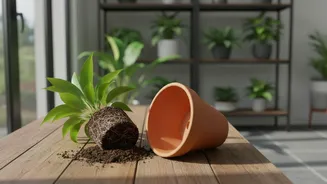
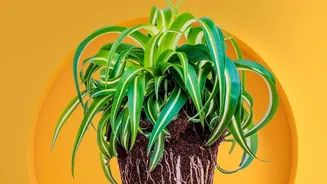
Rapid foliage growth alone isn't a definitive sign that your plant needs a new home. In fact, most plants are perfectly happy to be a little snug in their pots. Before you reach for a new container, look for more telling clues. The most obvious sign is roots
growing out of the drainage holes. Another clear indicator is how the plant behaves after watering. If water runs straight through the pot without being absorbed, it often means the roots have taken up most of the space, leaving little soil to hold moisture. You might also find yourself watering far more frequently than you used to. Other signals include slowed or stunted new growth despite good conditions, or the plant becoming top-heavy and unstable. If you don’t see these signs, the rapid growth is likely just a happy plant enjoying its environment.
The Dangers of Upgrading Too Soon
Moving a plant into a pot that is too large, a practice known as 'overpotting', can do more harm than good. A larger pot holds a much larger volume of soil, which in turn holds more water. A small root system in a big pot can't absorb all that moisture quickly enough. This leads to waterlogged soil that stays wet for extended periods, cutting off the oxygen supply to the roots and creating a perfect environment for root rot. Symptoms of overpotting can look deceptively like underwatering—wilting, yellowing, and dropping leaves—which can confuse owners into watering even more. Furthermore, repotting can be a stressful event for a plant, and doing it unnecessarily can cause shock that sets back its growth.
Alternative 1: Pruning for Health and Size
If your plant is getting too large for its space but isn't necessarily root-bound, pruning is your best friend. Trimming the foliage doesn't just manage size; it can also encourage the plant to grow fuller and bushier. For plants that are genuinely out of pot space but you don't want to size up, root pruning is an excellent, albeit more advanced, option. This involves carefully removing the plant from its pot and trimming about an inch of roots from the sides and bottom of the root ball before placing it back in the same container with fresh potting mix. This technique allows you to maintain the plant's current size for several more years. It's best done in the spring or summer when the plant is in an active growth phase and can recover more easily.
Alternative 2: Offer Structural Support
For many vining or tall-growing plants like Monsteras, Philodendrons, and Pothos, what they truly crave isn't more soil, but something to climb. Adding a moss pole, trellis, or simple stake can provide the support they need to continue their upward growth without becoming unruly or top-heavy. This redirects the plant's energy into climbing rather than just expanding outwards. By giving it a structure to latch onto, you can manage its shape and size effectively, keeping it happy in its current pot for much longer and creating a more visually striking display.
Alternative 3: Tweak Its Environment
A plant's growth rate is a direct response to its environment. If a plant is growing too quickly for your space, you have some control over its speed. Light is the primary driver of growth. Gradually moving a plant a bit further from its light source can slow down photosynthesis and, consequently, its growth rate. You can also be more conservative with fertilizer. During the active growing season, you might reduce the frequency or concentration of feeding to temper its expansion. This doesn't mean starving your plant, but rather providing just enough nutrients to keep it healthy without encouraging explosive growth.