



The Land That Waits for Rain
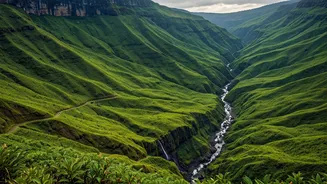
Locally known as Sohra, Cherrapunji holds a mythical status in our minds as one of the wettest places on Earth. But to truly understand its monsoon magic, one must first picture it in the drier months. The landscape is a maze of deep gorges, rolling hills,
and limestone caves, but the dominant palette is brown and grey. The rivers shrink, waterfalls quieten to a trickle, and the air carries a dusty stillness. It’s a beautiful but stark terrain, a sleeping giant awaiting its annual awakening. This period of quiet makes the arrival of the monsoon not just a change in weather, but a full-blown resurrection.
When the Heavens Open
The arrival of the southwest monsoon in Meghalaya is unlike anything else. It isn’t a gentle pitter-patter; it is a declaration. The skies darken, and the first drops of rain release an intoxicating scent from the parched earth—petrichor so potent it feels like the land itself is exhaling in relief. Then comes the deluge. For months, Cherrapunji is enveloped in a constant state of rain, mist, and cloud. The soundscape changes entirely, from silence to a symphony of water—a steady drumming on rooftops, the rush of overflowing streams, and the distant, thunderous roar of waterfalls being reborn. The air becomes thick with moisture, and visibility often drops to just a few feet, wrapping the town in an ethereal, misty shroud.
A World Washed in Green
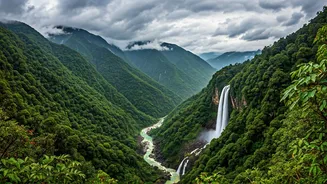
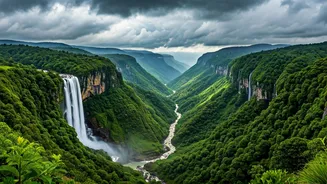
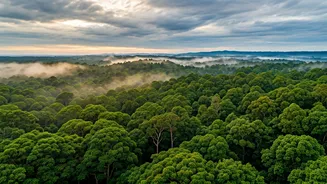
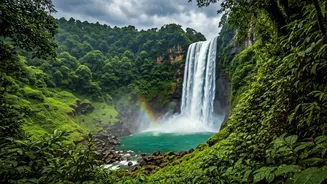
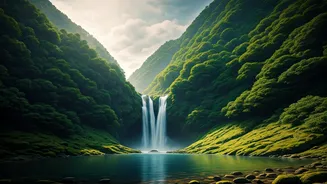
The transformation is astonishingly swift. Within days, the dormant hills explode into an impossible spectrum of greens. Every inch of soil, rock, and tree trunk becomes a canvas for life. Mosses, ferns, and exotic orchids carpet the landscape, creating a velvety texture that seems to swallow the entire terrain. The ruggedness disappears under a lush, vibrant blanket. The most dramatic change is the reawakening of the waterfalls. Streams that were barely visible before become powerful torrents, plunging hundreds of feet into the gorges below. Iconic cascades like the Nohkalikai and Seven Sisters Falls, impressive year-round, become truly majestic spectacles, their roars echoing through the valleys. Driving through Cherrapunji during this time feels like navigating a land from a fantasy novel—a world where water flows from the sky and the earth in equal measure.
Life Forged by Water
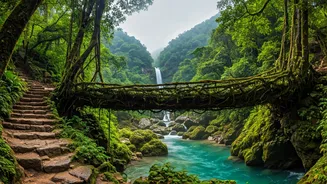
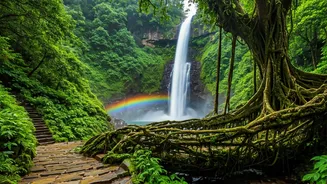
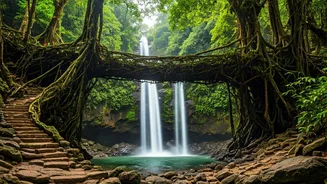
This extreme environment has shaped a unique and resilient culture. The Khasi people, indigenous to these hills, have developed ingenious ways to coexist with the relentless rain. The most famous of these are the ‘Jingkieng Jri’, or living root bridges. Instead of building wooden bridges that would rot in the damp conditions, the Khasi guide the aerial roots of the Ficus elastica tree across rivers and streams. Over decades, these roots grow and strengthen, intertwining to form sturdy, living structures that become stronger with time and rainfall. These bridges are a breathtaking symbol of sustainable engineering and a profound harmony between humans and nature. They are not just a tourist attraction; they are a living, breathing part of the local infrastructure, a testament to a way of life dictated by the clouds.
The Soul of the Mist
To visit Cherrapunji during the monsoon is to experience more than just rainfall; it's an immersion into a different state of being. It's the taste of 'jadoh' in a small local eatery while the rain drums outside. It’s the thrill of walking through a cloud that has descended upon the road. It’s spotting rare insect-eating pitcher plants hidden amongst the green. The mist plays with the landscape, revealing and concealing stunning vistas in a matter of seconds. One moment you are looking at a deep gorge, the next, it’s gone, replaced by a wall of white. This constant play of mist and rain gives the place a mysterious, contemplative soul, inviting you to slow down and simply watch the world be washed anew.