
Worlds of Fire and Shadow
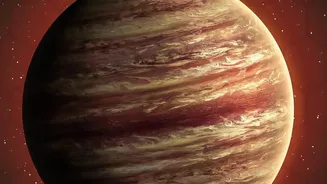
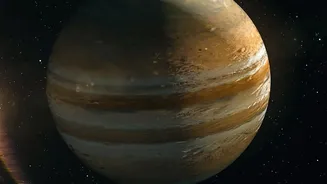
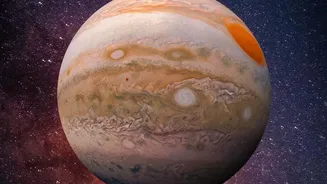
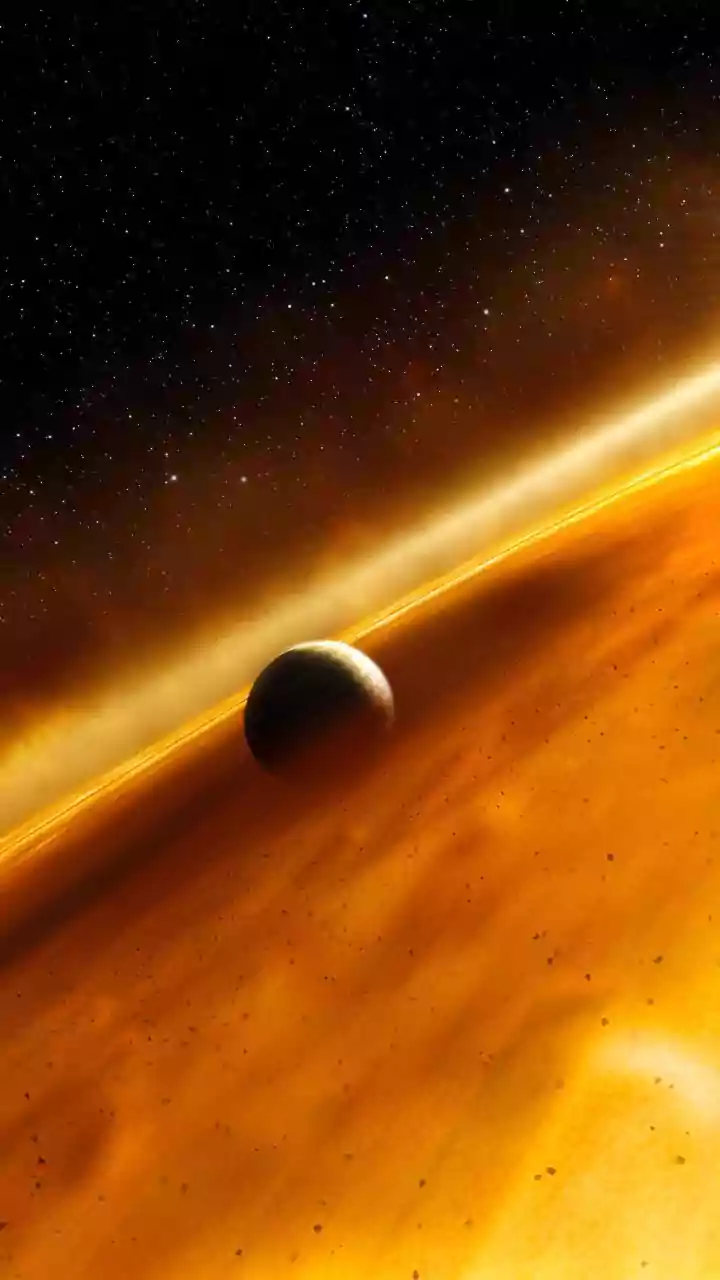
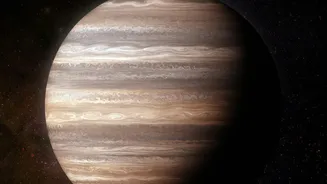
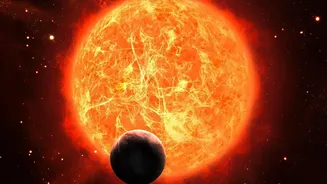
The planets in question are often a type called 'hot Jupiters'. These are massive gas giants, similar in size to our own Jupiter, but they orbit incredibly close to their host stars—sometimes completing a full year in just a few Earth days. One of the most
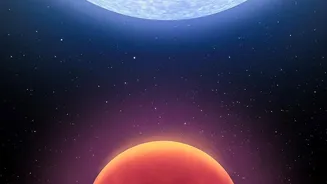
famous examples is WASP-76b, a world located about 640 light-years away. It's 'tidally locked' to its star, meaning one side perpetually faces the star while the other is locked in endless night. This creates an environment of unimaginable extremes. The day side of WASP-76b receives thousands of times more radiation than Earth does from the Sun, pushing temperatures above 2,400 degrees Celsius. This is hot enough to vaporise metals, turning solid iron into a gas. The night side, while still incredibly hot by our standards at around 1,500 degrees Celsius, is cool enough for those metals to condense.
Reading the Shadow of a Planet
So, how can scientists possibly know what’s happening in the atmosphere of a planet they can't see directly? The primary technique is called transit spectroscopy. Most exoplanets are detected when they pass in front of their star from our point of view, causing a tiny, temporary dip in the star's brightness. While this 'transit' is happening, a small fraction of the starlight shines directly through the upper layers of the planet’s atmosphere. This is the crucial moment. By capturing that filtered light, astronomers can analyse it to look for the chemical fingerprints of the gases within the atmosphere.
The Atmosphere's Chemical Barcode
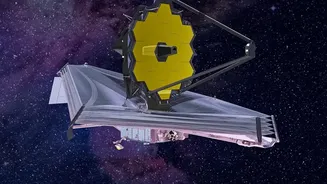
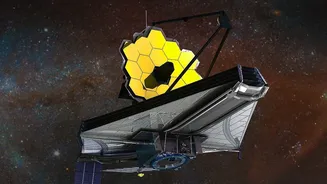
The tool for reading these fingerprints is a spectrograph, an instrument that splits light into its constituent colours, much like a prism creating a rainbow. When light passes through a gas, different elements and molecules absorb very specific wavelengths, or colours, of that light. This leaves a unique pattern of dark lines in the spectrum, like a chemical barcode. For WASP-76b, astronomers used the powerful ESPRESSO instrument on the European Southern Observatory's Very Large Telescope. When they analysed the starlight filtering through the planet’s atmosphere, they found the unmistakable spectral signature of iron vapor. But the discovery came with a twist: the iron barcode was only visible at a specific point in the planet’s orbit.
Clocking the Supersonic Winds
Finding the iron was one thing; understanding its movement required another clever technique based on the Doppler effect. You experience this effect every time an ambulance siren changes pitch as it passes you. The same principle applies to light. If a gas is moving towards an observer, its light waves get compressed and shift towards the blue end of the spectrum. If it's moving away, the waves stretch out and shift towards the red end. By measuring the tiny shift in the position of the iron 'barcode' lines in the spectrum, scientists can calculate the speed of the atmospheric winds. On worlds like WASP-76b, this method has revealed winds blowing at several kilometres per second—far faster than the speed of sound.
From Vapor to Iron Rain
By putting all the pieces together, a complete weather report emerges. Astronomers observed a strong signal of iron vapor at the 'evening' terminator of WASP-76b—the line where the scorching day side rotates out of view and the cooler night side comes into view. However, when they looked at the 'morning' terminator, where the night side rotates back into daylight, the iron vapor signal was gone. The conclusion was astonishing: powerful winds, driven by the extreme temperature difference, were whipping the iron vapor from the day side across to the night side. In the relative cool of the night, the iron condenses into liquid droplets and rains down into the deeper layers of the atmosphere. This explains why there's no iron vapor left to be detected on the morning side—it has literally rained out of the sky.