





The Perfect Travel Food
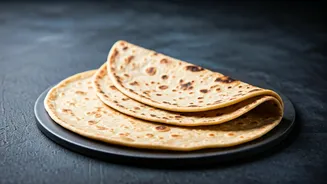
For generations of Indians, the humble thepla has been the undisputed champion of travel food. It’s a title earned not through marketing, but through sheer, unadulterated performance. What makes this simple Gujarati flatbread so perfect for a journey?
The answer lies in its brilliant design. Unlike a paratha, which can turn stiff, or a roti, which needs a companion curry, the thepla is a self-contained meal. It’s flavourful enough to be eaten on its own, yet versatile enough to be paired with a simple pickle (achaar) or a dollop of yoghurt. It doesn't crumble, it doesn’t create a mess, and it can be eaten hot, cold, or at room temperature. It asks for nothing but delivers everything, making it the most low-maintenance, high-reward travel partner you could ask for.
Engineered for the Road
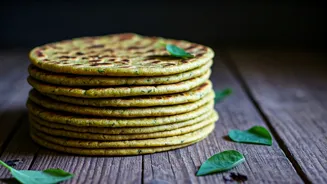
Thepla's remarkable shelf life is not an accident; it's a work of culinary genius rooted in preservation. The traditional recipe is a masterclass in creating food that lasts. The dough is often kneaded with oil or yoghurt instead of just water, which helps keep it soft for days. The most popular variant, methi (fenugreek) thepla, uses dried fenugreek leaves (kasuri methi) or carefully sautéed fresh leaves to remove moisture, a key factor in preventing spoilage. Spices like turmeric and ajwain (carom seeds) don't just add flavour and aid digestion; they also have mild preservative properties. By deliberately avoiding ingredients that spoil quickly, like onions or an excess of water-heavy vegetables, our ancestors engineered a food that could withstand the rigours of long-distance travel in a pre-refrigeration world. It was designed to endure, just like the journeys it was meant for.
A Taste of Home, Miles Away
Beyond the practicalities, the true power of the thepla lies in its emotional weight. It’s more than just sustenance; it’s a taste of home. For students leaving for hostels, professionals relocating to new cities, or families on vacation, a stack of homemade theplas is a tangible link to their kitchen, their family, their roots. Each bite is a reminder of the hands that lovingly prepared it, often at an odd hour just before the journey began. In the sterile, anonymous environment of a train compartment or airport terminal, unwrapping a thepla releases a familiar, comforting aroma that instantly creates a small pocket of home. It’s a quiet declaration that even when you are leaving, you are carrying a piece of home with you. It’s nourishment for the soul as much as for the body.
The Hero of the Tiffin
The thepla is the star player in a uniquely Indian tradition: the travel tiffin. While the world embraces packaged snacks and fast-food chains, many in India still hold fast to the culture of carrying home-cooked meals for journeys. This tiffin is an act of care, planning, and defiance against the unpredictable quality and cost of outside food. And in this culture, the thea is the versatile hero. It can be breakfast, lunch, or a 4 PM snack. It’s the first thing to be offered to fellow passengers, a gesture of community and shared experience that turns strangers into temporary travel family. In a world of shrink-wrapped sandwiches, the humble, foil-wrapped stack of theplas is a symbol of a food culture that prioritises warmth, community, and the unparalleled taste of a meal made with love.