


A Vision for Green Heritage
Indian Railways has launched an ambitious initiative called 'Hydrogen for Heritage', which aims to introduce eco-friendly hydrogen-powered trains on its most iconic and ecologically sensitive routes. This project is a key part of the national carrier's
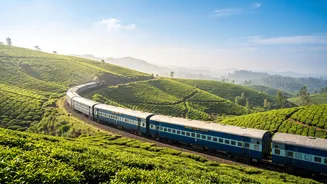
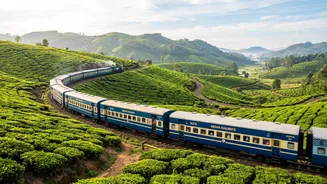
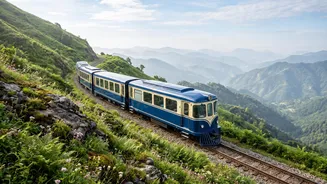
larger goal to achieve 'Net-Zero Carbon Emitter' status by 2030. The plan involves retrofitting existing diesel-powered trains with advanced hydrogen fuel cell technology. The first phase targets 35 trains across several UNESCO World Heritage corridors, including the famous Kalka-Shimla Railway, the Darjeeling Himalayan Railway, and the Nilgiri Mountain Railway. By replacing diesel engines, the initiative promises to preserve the pristine natural beauty of these scenic landscapes by eliminating harmful emissions and reducing noise pollution.
What Exactly is a Hydrogen Train?
Think of a hydrogen train as a self-contained electric train. Instead of drawing power from overhead wires, it generates its own electricity onboard. The core of the technology is the Proton Exchange Membrane (PEM) fuel cell. Inside this cell, hydrogen stored in high-pressure cylinders on the train reacts with oxygen drawn from the air. This electrochemical reaction produces electricity, which powers the motors that move the train. The beauty of this process is its byproduct: the only emission is pure water vapor and some heat. This makes it a truly zero-emission mode of transport at the point of use, offering a clean alternative to diesel on routes where electrification is difficult or undesirable.
The First 'Hydrail' Takes to the Tracks
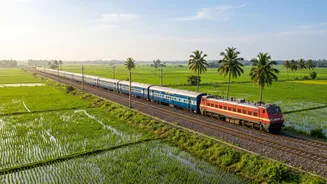
To test the technology in Indian conditions, a prototype was developed by retrofitting a Diesel Electric Multiple Unit (DEMU) rake. This first indigenously built hydrogen train was successfully launched on July 17, 2026, on the Jind-Sonipat section of the Northern Railway. This pilot project is crucial for gathering data on operational viability, safety, and reliability before wider deployment. An integrated ecosystem, including hydrogen production, storage, and refuelling infrastructure, was established at Jind to support the operations. The experience gained from this 89-kilometre route will be directly applied to the more challenging terrain of the heritage railways.
The Kalka-Shimla Line: A Heritage Reimagined
The Kalka-Shimla Railway, a UNESCO World Heritage site known for its 102 tunnels and breathtaking views, is a prime candidate for this green transformation. Plans have been in motion to deploy hydrogen trains here to replace the current diesel locomotives. The challenging terrain makes traditional overhead electrification difficult and potentially harmful to the line's heritage status. The 'Hydrogen for Heritage' project envisions a quieter, cleaner journey through the Himalayas, enhancing the tourist experience while protecting the fragile ecosystem. Though initial plans faced delays, the successful pilot on the Jind-Sonipat line has renewed momentum for bringing this clean technology to one of India's most beloved railway journeys.
The Road Ahead: Challenges and Opportunities
While the promise is immense, the transition is not without its hurdles. The initial cost of retrofitting trains and setting up ground infrastructure is significant. Each train is estimated to cost around ₹80 crore, with an additional ₹70 crore for infrastructure per route. Furthermore, the cost and availability of 'green' hydrogen—which is produced using renewable energy—is a key factor for the project's long-term environmental success. However, Indian Railways anticipates that costs will decrease as the technology is scaled up. This initiative also serves to boost India's National Green Hydrogen Mission and supports the 'Atmanirbhar Bharat' mission by fostering domestic manufacturing and technical expertise.