




The Crucial Role of Fibre
The single biggest difference between eating a whole fruit and drinking its juice is fibre. Whole fruits are packed with dietary fibre, which is found in the pulp, skin, and cellular walls. This fibre is a powerhouse. It aids digestion, helps you feel
full, and, most importantly, slows down the absorption of sugar into your bloodstream. When a fruit is juiced, almost all of this beneficial fibre is stripped away and left behind in the pulp. What remains is a liquid that, while containing some vitamins, is a much more concentrated source of sugar.
Sugar: Natural vs. Free
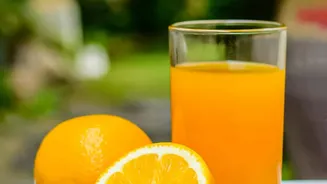
An orange and a glass of orange juice both contain natural fruit sugar (fructose). However, your body processes them very differently. In a whole orange, the sugar is bound within a fibrous matrix. Your digestive system has to work to break down this structure, leading to a slow, gentle release of sugar into the blood. In contrast, the sugar in juice is considered a 'free sugar'. With no fibre to act as a brake, it is absorbed rapidly, causing a sharp spike in blood sugar and insulin levels, much like a sugary soda would. It is easy to consume the sugar of three or four oranges in a single glass of juice, a quantity you would be unlikely to eat as whole fruit in one sitting.
The Nutrient Question
While juicing provides a convenient way to get vitamins and minerals, the process isn't without nutritional cost. Many important plant compounds, including antioxidants and flavonoids, are bound to the fibre in the fruit's pulp and skin, so they get discarded during juicing. Furthermore, some vitamins, especially vitamin C, are sensitive to heat and oxygen. The process of juicing, especially with high-speed centrifugal juicers, can expose the liquid to both, leading to a loss of these delicate nutrients. The longer the juice sits after being made, the more its nutritional value declines.
Feeling Full and Managing Weight
Have you ever noticed that you can drink a large glass of juice and still feel hungry? That’s because liquid calories are not as satisfying as solid food. Eating a whole apple, for instance, provides that feeling of fullness, or satiety, which helps regulate appetite and prevent overeating. The fibre and the physical act of chewing send signals to your brain that you are consuming a substantial food. Juice bypasses this, providing a quick dose of calories and sugar without satisfying your hunger, which can lead to consuming more calories overall.
What About Cold-Pressed Juice?
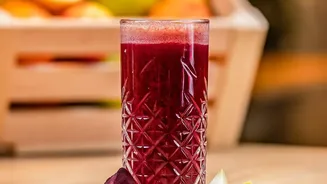
Cold-pressed juices have gained popularity, and for good reason. This method uses a hydraulic press to extract juice without generating the heat associated with traditional centrifugal juicers. In theory, this process preserves more heat-sensitive vitamins and enzymes. However, while cold-pressed juice may be nutritionally superior to its centrifuged counterpart, it still suffers from the same fundamental issue: the near-total removal of fibre. So, while it might retain more nutrients, it will still cause a more rapid blood sugar spike compared to eating the whole fruit.