







A Microscopic Time Capsule
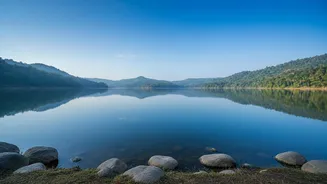
In the Korba district of Chhattisgarh, scientists from the Birbal Sahni Institute of Palaeosciences (BSIP) in Lucknow have uncovered a remarkable record of the past. By extracting a 40-centimetre sediment core from the bottom of Raja Rani Lake, they drilled
into a library of environmental history stretching back roughly 2,500 years. Trapped within these layers of mud were countless microscopic pollen grains, shed by plants that lived and died in the region over millennia. These tiny, resilient grains have provided compelling evidence that the Indian Summer Monsoon was significantly stronger around a thousand years ago than previously believed, offering new insights into a period known as the Medieval Climate Anomaly.
The Science of Reading Pollen
The science of studying ancient pollen, known as palynology, is like environmental forensics. Pollen grains have an incredibly tough outer wall called sporopollenin, which allows them to survive for thousands, even millions, of years in sediment layers, where they are protected from decomposition. Each plant species produces pollen with a unique shape and size, acting as a botanical fingerprint. Scientists carefully extract these grains from sediment cores, identify them under a microscope, and count them. The type and quantity of pollen found in a specific layer reveal which plants were dominant at that time. For example, an abundance of pollen from forest-loving trees suggests a warm, wet climate, while a rise in grass and herb pollen indicates drier, more open landscapes. This allows researchers to reconstruct past vegetation and, by extension, the climatic conditions that supported it.
Secrets of an Ancient Landscape
The pollen from Raja Rani Lake tells a fascinating story of climatic shifts in India's Core Monsoon Zone, a region critically dependent on seasonal rains. The analysis showed that around 2,500 years ago, the landscape was a wooded savannah. Over time, this transitioned into mixed tropical deciduous forests, signaling an increase in rainfall. The most significant finding relates to the period between roughly 1060 and 1725 CE. During this time, which coincides with the global Medieval Climate Anomaly, the pollen record shows a clear dominance of dense, moist forest species. This points to a period of intensely strong and sustained monsoon rainfall in central India. Crucially, the study found no evidence of major dry spells in the region during this warm phase, challenging some existing climate models.
Why Tiny Grains Matter Today
Understanding past climate variability is not just an academic exercise. It is essential for refining the models used to predict future climate trends. The Chhattisgarh discovery provides a vital data point, showing how the Indian Summer Monsoon system can behave during prolonged warm periods. By seeing how ecosystems responded to stronger monsoons in the past, scientists can better anticipate the potential impacts of current and future climate change. This knowledge is crucial for a region where the monsoon underpins agriculture, water security, and the livelihoods of millions. Furthermore, pollen records can also shed light on human history, revealing the introduction of agriculture through the appearance of cereal crop pollen or mapping the rise and fall of civilizations through changes in land use and deforestation. Each sediment core is a chapter in Earth’s diary, and this latest reading from Chhattisgarh adds crucial detail to our understanding of India's dynamic past.