




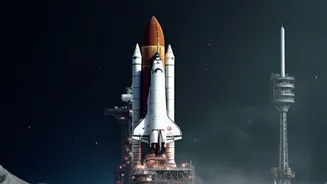
The Artemis Program: A New Era on the Moon
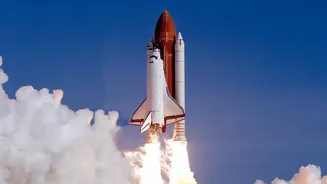
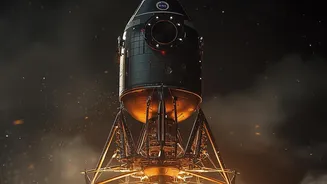
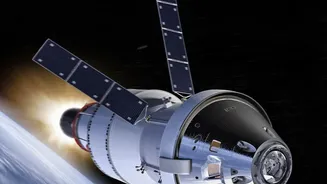
NASA's Artemis program represents humanity's monumental return to the Moon, with goals far grander than the historic Apollo missions. Following the successful crewed flyby of Artemis II in April 2026, focus has shifted to Artemis III, a 2027 mission set
to test the critical docking capabilities for lunar landers in Earth orbit. The first crewed landing is now targeted for 2028 with Artemis IV. This isn't just about planting a flag; it's about establishing a sustainable human presence and a permanent lunar base. For Indian students, this translates into burgeoning fields like robotics, advanced materials, life support systems, and lunar geology. The recent invitation for ISRO to join NASA's Moon Base program further cements the potential for collaboration, building on India's signing of the Artemis Accords and the success of Chandrayaan-3.
NISAR: A Joint Vision for Earth
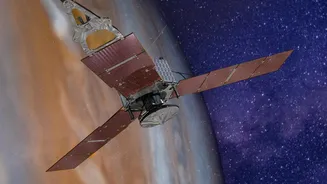
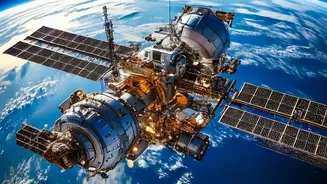
Closer to home, the NASA-ISRO Synthetic Aperture Radar (NISAR) mission is a landmark collaboration between the two space agencies. Having become operational in July 2026, this advanced satellite is providing an unprecedented, detailed view of Earth. Using two different radar frequencies, NISAR is designed to observe complex processes on our planet, including ecosystem disturbances, the collapse of ice sheets, and natural hazards like earthquakes, volcanoes, and landslides. Data from the mission became publicly available shortly after it went live. For Indian students passionate about Earth sciences, climate change, and data analysis, NISAR offers a wealth of information and highlights a successful model for international scientific partnership that directly benefits India.
The Search for Life: Europa and Titan
Two of NASA's most exciting future missions are venturing to the outer solar system in search of habitable environments. The Europa Clipper mission, which launched in 2024, is journeying to Jupiter's icy moon Europa, expected to arrive in 2030. Beneath its frozen crust, Europa is believed to hold a vast saltwater ocean with more water than all of Earth's oceans combined, and Clipper's goal is to determine if it has the right conditions for life. Looking even further ahead, the Dragonfly mission is set to launch in 2028. This revolutionary rotorcraft-lander will fly through the dense atmosphere of Saturn's largest moon, Titan, landing at dozens of sites to sample materials and search for signs of prebiotic chemistry. These missions are at the forefront of astrobiology and require expertise in chemistry, planetary geology, autonomous systems, and engineering.
Your Pathway to a Career in Space
While direct employment at NASA is generally restricted to U.S. citizens, the agency's work creates a massive global ecosystem of opportunity. For Indian students, the path forward involves building a strong foundation in a relevant STEM discipline. The most common fields at NASA include aerospace, computer, and general engineering. However, there is also high demand for degrees in computer science, meteorology, astrophysics, materials science, and mathematics. Many research positions require a master's degree or a PhD. The key is to gain practical experience. The NASA International Internship (I²) program offers a direct path for students from countries with which NASA has an agreement to gain hands-on experience. Students should also explore programs at related organizations, such as the LPI Summer Intern Program, and seek research opportunities at Indian institutions that collaborate with NASA.