







The Silent Crisis Beneath Our Feet
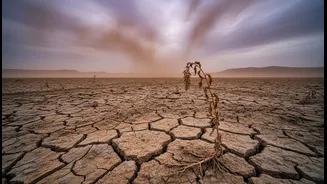
The ground beneath our feet is in trouble. For decades, intensive farming practices, while successful in boosting food production, have come at a cost. Over-reliance on chemical fertilisers, monoculture cropping, and deforestation have stripped away vital
nutrients and organic matter. In India, it is estimated that nearly 30% of the country's total land area is affected by some form of degradation. Every year, the nation loses billions of tonnes of precious topsoil to wind and water erosion, a process that removes essential nutrients and weakens the land's productivity. This isn't just an abstract environmental issue; it directly threatens rural livelihoods, inflates costs for farmers, and compromises the nutritional quality of the food we eat.
A New and Urgent Awakening
So why the sudden urgency? The new attention on soil health is driven by a convergence of critical challenges. Firstly, the link between soil and climate change is clearer than ever. Healthy soils act as a massive carbon sink, trapping carbon from the atmosphere. Degraded soils, on the other hand, release it. Secondly, with a growing population, ensuring food security is paramount. However, degraded land means lower crop yields and a greater reliance on costly chemical inputs, which farmers are finding increasingly unsustainable. Finally, there's a growing policy push. Government initiatives like the Soil Health Card scheme, which provides farmers with data on their soil's nutrient status, aim to encourage more balanced and sustainable practices. This combination of climate necessity, economic pressure, and policy support has created a perfect storm, pushing soil restoration into the national spotlight.
The Promise of Regenerative Farming
The response to this crisis is a movement known as regenerative agriculture. This approach goes beyond simply sustaining the soil; it aims to actively rebuild and restore it. It involves a suite of practices designed to work with nature, not against it. Key methods include minimising soil disturbance (no-till farming), using cover crops to protect bare soil from erosion, rotating diverse crops to break pest cycles and replenish nutrients, and integrating trees into farms (agroforestry). Another cornerstone is returning organic matter to the land through composting and using animal manure, which feeds the billions of microorganisms that make soil fertile. These practices help rebuild soil organic carbon, a key indicator of health, which in turn dramatically improves the soil's ability to retain water—a crucial benefit in a country facing erratic monsoons.
The Tangible Payoffs of Healthy Soil
The benefits of restoring soil health ripple across the entire agricultural ecosystem and economy. For farmers, it means reduced costs. Healthier soils require fewer chemical fertilisers and pesticides, directly improving profitability. They also hold more water, making farms more resilient to drought and reducing the need for irrigation. This leads to more stable and often higher crop yields over the long term. For the nation, the payoffs are even greater. Rebuilding soil health is a powerful tool for climate change mitigation, sequestering significant amounts of carbon. It enhances biodiversity, improves water quality by reducing chemical runoff, and leads to more nutrient-dense food, which can help address public health issues like malnutrition. By investing in the ground up, we are building a more resilient foundation for food security, rural prosperity, and environmental stability.