



Hanle, Ladakh: India’s Dark Sky Sanctuary
Nestled high in the Changthang region, Hanle is a stargazer’s paradise and officially recognised as India's first Dark Sky Reserve. At an altitude of 4,500 metres, the thin, dry air and near-zero light pollution provide exceptionally clear views of the cosmos.
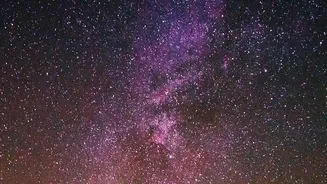
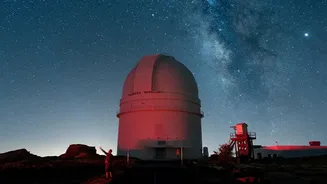
This is home to the Indian Astronomical Observatory, one of the world's highest, for a reason: Hanle boasts over 250 clear nights a year. On a moonless night, the Milky Way is so vivid it appears as a bright, textured band across the sky, and thousands of stars are visible to the naked eye. The best time to visit for this celestial spectacle is between May and October when the weather is more accessible. A permit is required to visit this remote wonderland, but the reward is a front-row seat to the universe.
Spiti Valley, Himachal Pradesh: A High-Altitude Desert Canvas
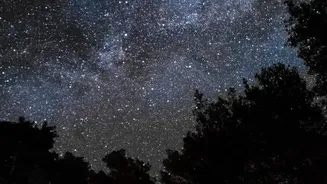
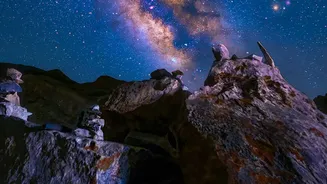
Often called 'Little Tibet', the cold desert of Spiti Valley offers some of the darkest and clearest skies in the country. Its high-altitude villages, like Kibber, Langza, and Komic, sit above 4,000 metres, far from the haze and glare of urban centres. The region's rain shadow position ensures minimal cloud cover, especially from May to October, which is the prime season for stargazing. During these months, the core of the Milky Way is brilliantly visible. Photographers flock here to capture the iconic image of the Langza Buddha statue against a backdrop of a billion stars, while places like Chandratal Lake offer the magical sight of stars reflected on its still, high-altitude waters.
Rann of Kutch, Gujarat: Stars Over an Endless Salt Flat
The Great Rann of Kutch provides a stargazing experience like no other. This vast, flat expanse of white salt desert offers an uninterrupted 360-degree view of the night sky. Its remoteness ensures extremely low light pollution, making it one of India's darkest spots. During the winter months, from November to February, the dry air enhances clarity, making celestial observation ideal. This period coincides with the popular Rann Utsav festival. On a new moon night, the sky is a dense carpet of stars, perfect for spotting constellations and the Milky Way. On a full moon night, the landscape transforms into a surreal, glowing desert, offering a different kind of magic.
Neil Island, Andamans: A Tropical Cosmic Beach
For those who dream of watching the stars with their feet in the sand and the sound of waves in the background, Neil Island (Shaheed Dweep) is the perfect destination. As a smaller, less commercialised island in the Andamans, it has minimal light pollution, allowing the night sky to shine brightly. The wide, open beaches provide unobstructed horizons, creating a natural amphitheatre for the cosmos. The best time for this tropical stargazing experience is during the dry season, from November to April, when the skies are reliably clear. Here, you can witness the Milky Way rising over the ocean—a truly unforgettable sight that adds a reflective, peaceful dimension to a beach holiday.
Coorg, Karnataka: Stargazing from the Southern Hills
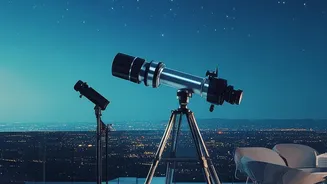
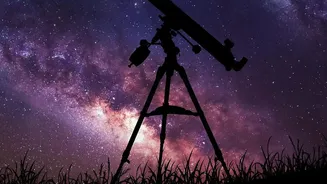
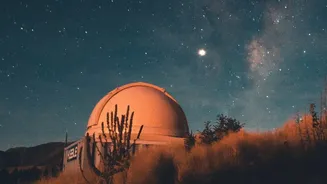
The misty hills and sprawling coffee plantations of Coorg (Kodagu) offer a serene escape and surprisingly dark skies for South India. Away from the main towns of Madikeri and Virajpet, especially in the southern valleys near the Brahmagiri Wildlife Sanctuary, the skies are dark enough to reveal the Milky Way. Sitting at an elevation of 900 to 1,500 metres, these spots are above the coastal haze. The stargazing season runs from October to May, after the monsoons have cleared. Several homestays and dedicated observatories, like Starscapes, offer guided sessions with telescopes, making it an accessible destination for both casual observers and serious hobbyists.
Thar Desert, Jaisalmer: A Desert Sky Odyssey
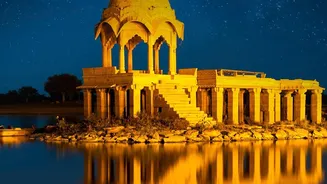
The golden sand dunes of the Thar Desert near Jaisalmer offer a classic desert stargazing adventure. The dry climate and remote location, particularly around the Sam Sand Dunes, result in crystal-clear night skies with very little artificial light. Many desert camps offer overnight packages that include camel safaris followed by an evening spent under the stars. The ideal time to visit is during the cooler winter months from October to March. On a clear, moonless night, the silence of the desert combined with the sheer number of visible stars, planets, and the faint band of our galaxy creates a profoundly magical and immersive experience.